Night carp fishing can turn a quiet evening into the most productive part of a carp session, but darkness also makes simple mistakes much harder to fix. Casting, baiting, landing fish, finding equipment, and even walking around the swim become more difficult once you can no longer see clearly.
The solution is not a special nighttime rig or a completely different bait. It is preparation. Find the fish and organize the swim while you still have daylight, fish tackle you trust, and make sure everything needed to deal with a run is ready before the sun disappears.
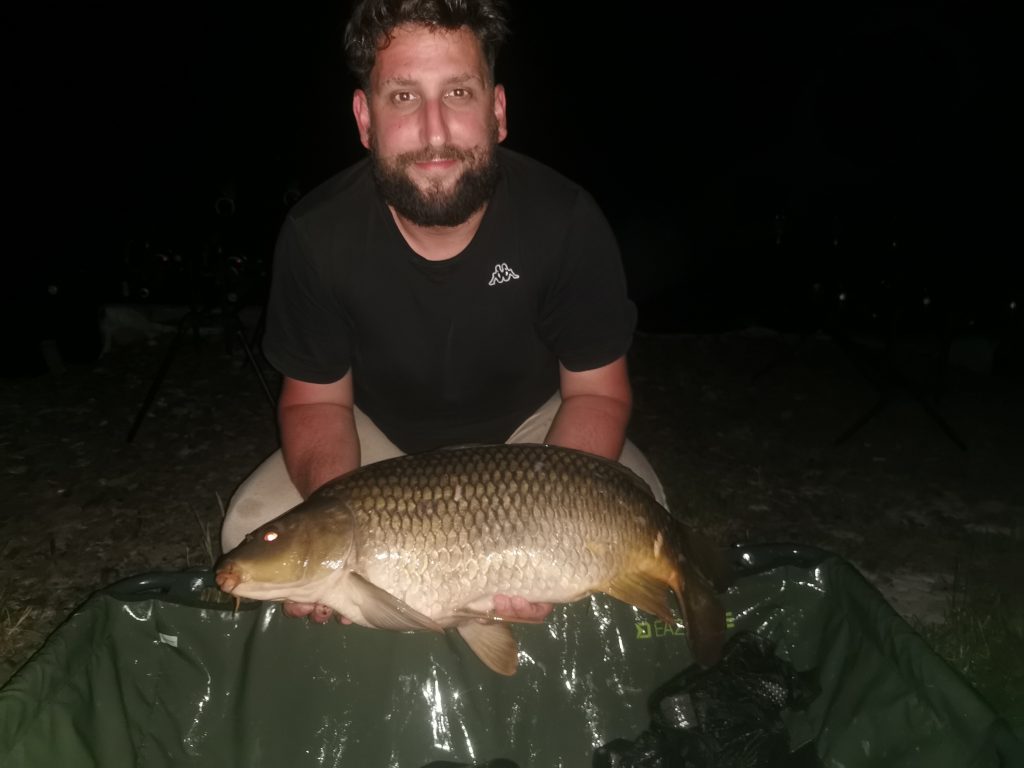
Why Night Carp Fishing Can Be So Effective
Carp do not simply stop feeding when daylight disappears.
For a closer look at the science behind nighttime feeding, including when carp eat and why feeding patterns differ between waters, see our guide to do carp feed at night.
Conditions on the bank also change. Human activity often decreases, boat traffic may disappear, and areas disturbed throughout the day can become quieter.
Carp may use those changes to move differently around a venue. On some waters that means fish coming closer to the margins. Elsewhere, the productive nighttime route may be a gravel area, weed edge, channel, plateau, or feeding spot farther out.
The important point is not to assume where they will be. Use the last hours of daylight to work that out.
Find the Carp Before It Gets Dark
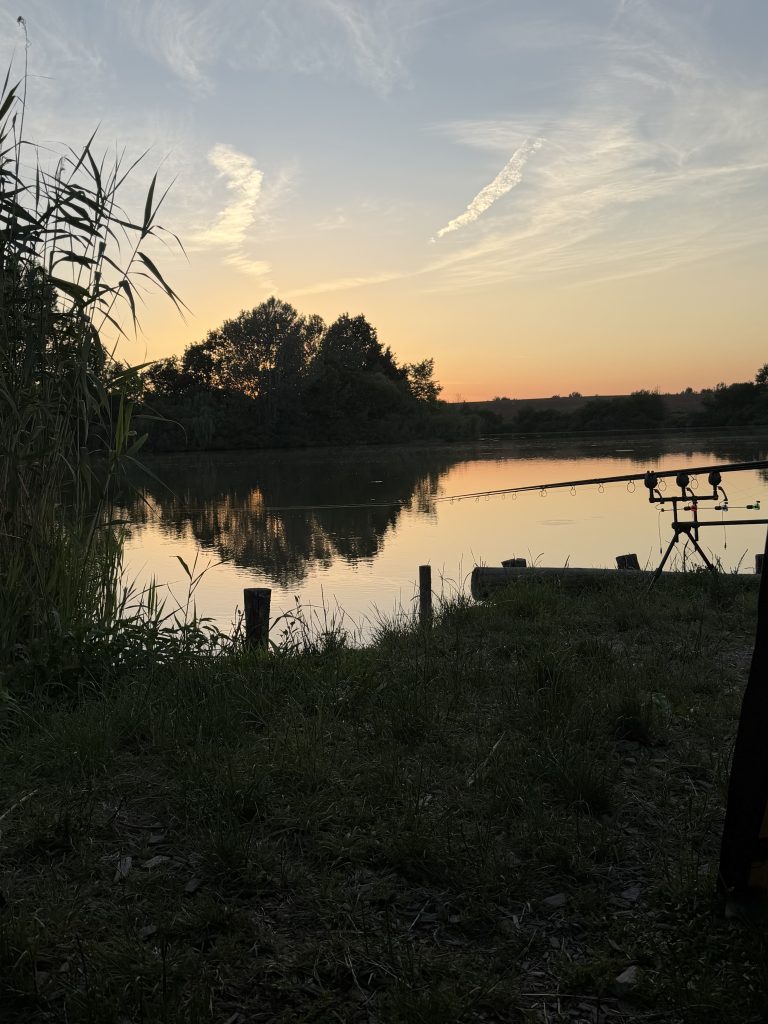
One of the biggest advantages an angler can give themselves is arriving early enough to watch the water.
Look for rolling fish, bubbles, disturbed weed, muddy patches, repeated movement along a margin, or carp showing in the same general area. Listen as well as watch once the light starts fading. A carp crashing somewhere beyond your line of sight can be more useful than blindly recasting because the clock says it is time.
However, visible activity does not automatically mean active feeding. Carp can roll, jump, or move through an area without showing any interest in the bait beneath them.
Features should also be identified before darkness where possible. If you need to cast close to weed, reeds, an island, a drop-off, or another feature, establish a safe target while you can actually see it.
Night is a poor time to discover that the spot you were aiming at is several feet closer to a snag than you thought.
How to Set Up for Night Carp Fishing
A good night setup should allow you to react to a bite almost automatically.
That does not mean carrying more equipment. It means giving the equipment you already need a fixed place.
Reel choice matters too, especially on larger waters. If you are deciding between common carp-reel sizes, this 6000 vs 8000 reel comparison explains the differences in line capacity, weight, spool size and rod balance.
Set up the landing net before dark rather than leaving it folded in a bag. Lay out the unhooking mat. Keep forceps or pliers, hook-removal tools, scales if you use them, and fish-care equipment together.
Put a headlamp somewhere you can reach instantly.
If you use electronic bite alarms, check them before settling down. Make sure batteries are healthy, the volume is appropriate, and any receiver you depend on is working.
Most importantly, keep the route between your sleeping or sitting position and the rods clear.
A run at 2 a.m. is not the time to remember that a bucket, tackle bag, spare rod, and guy line are lying between you and the rod pod.
Cast and Bait Accurately Before Darkness
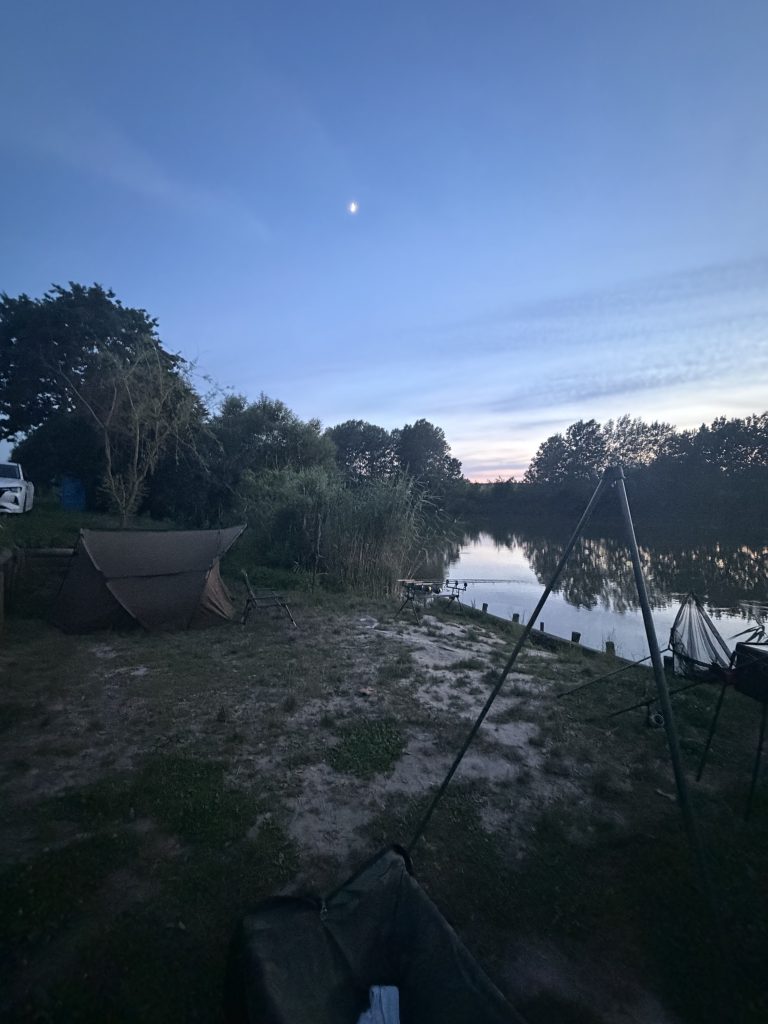
If possible, get the rods fishing properly before you lose the light.
Once you find a productive spot, record the casting distance. A line clip, distance sticks, measured wraps, or another repeatable system lets you return to the same area if a fish is caught during the night.
Choose a visible landmark on the opposite bank as a casting reference too.
This matters because repeated inaccurate casting after dark can gradually move the rig away from the area that produced the bite in the first place.
If you are not confident you can recast safely and accurately at night, there is nothing wrong with waiting until first light rather than repeatedly throwing rigs toward unseen snags.
Keep the Rig Simple
There is no special rig required for catching carp at night.
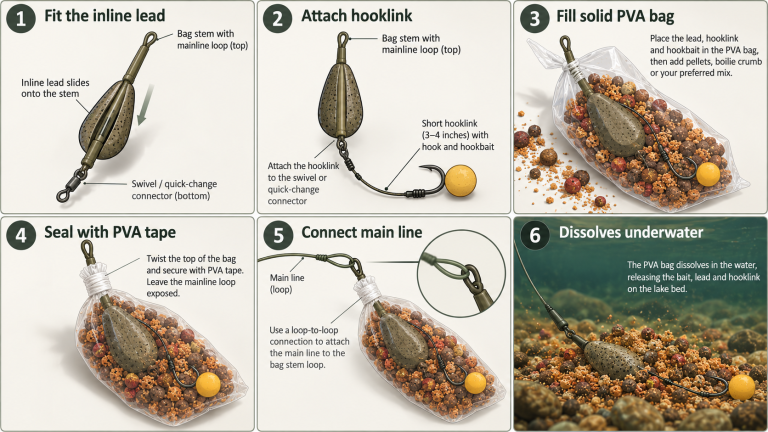
A familiar bottom-bait, balanced hookbait, or pop-up presentation that suits the lake is normally a better choice than experimenting with something complicated simply because the sun has gone down.
Night fishing rewards reliability. The fewer things that can tangle, twist, or require detailed inspection under a headlamp, the better.
Check the rig carefully before the initial cast and after every fish.
What Is the Best Bait for Carp at Night?
Your normal carp bait does not suddenly stop working after sunset.
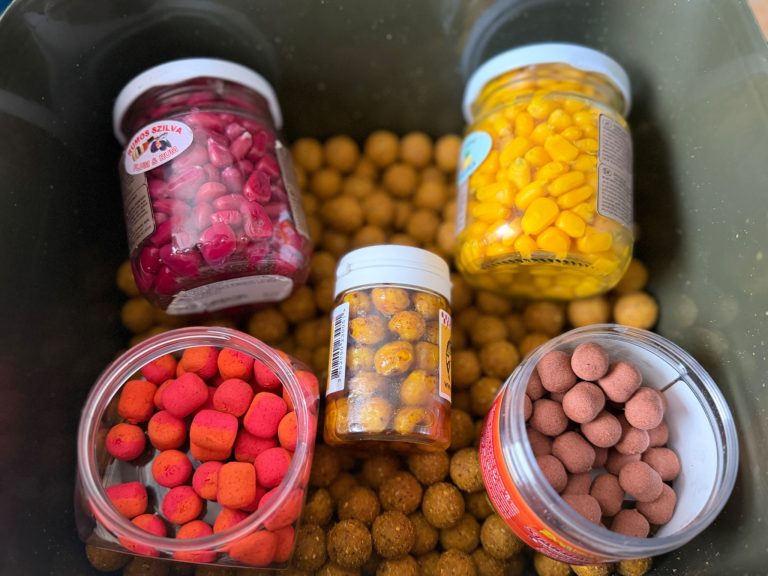
Boilies, corn, pellets, prepared particles, and other established carp baits can all catch fish at night where they are appropriate and permitted.
Venue rules still matter with particles, and some fisheries restrict or ban tiger nuts even when other carp baits are allowed.
The bigger decision is often how much bait to use, not which bait has the strongest smell or brightest color.
If carp are already moving through the area, a small concentrated patch or several hookbait-sized offerings may be enough. If fish are feeding confidently and bites are coming regularly, topping the swim up after a capture can keep them interested.
Avoid automatically putting out a large amount of bait just because you intend to fish until morning. If the carp do not arrive—or are feeding lightly—you cannot take that bait back out of the lake.
Start from what you have actually observed and adjust from there.
What Changes After Dark?
| After dark | Practical Adjustments |
|---|---|
| You lose visual casting references | Mark direction and distance while it is still light |
| Finding dropped or misplaced gear becomes difficult | Give essential equipment a fixed position |
| Fish may reveal themselves by sound | Listen for rolling, splashing, and repeated activity |
| Recasting becomes less precise | Avoid unnecessary casts and record productive distances |
| A run can happen while you are resting | Keep alarms and indicators properly set if using them |
| Landing becomes harder | Assemble the net and clear the landing area in advance |
| Snags and uneven banks become harder to judge | Inspect the swim in daylight and avoid blind wading |
The theme running through the table is simple: do as little problem-solving in complete darkness as possible.
Preparation turns a night session from improvisation into normal carp fishing with reduced visibility.
Moonlight can also change how much natural illumination reaches the swim, but fishing on a full moon should be treated as one condition rather than a guarantee of better feeding.
When Do Carp Bite at Night?
There is no universal hour when carp suddenly switch on.
Dusk can produce bites as fish begin moving around the lake. Some venues fish consistently through the middle of the night, while others produce short feeding windows.
The period approaching dawn is also worth taking seriously, although the strength and timing of that bite window can vary considerably between waters.
That still does not justify setting a clock and assuming the fish will follow it.
Keep track of when your own venue produces fish. If several sessions repeatedly produce bites between similar hours, that local pattern is more valuable than a generic rule about the “best” nighttime hour.
Season and water conditions can shift those patterns as well.
Don’t Recast Just Because the Lake Goes Quiet
Darkness can make an angler impatient.
You cannot see much happening, so it becomes tempting to reel in, inspect the bait, change rigs, add more feed, or cast somewhere else.
Every one of those actions creates disturbance.
If you placed a good rig on a location where carp were showing before dark, constant recasting can remove the advantage you created.
A quiet alarm does not necessarily mean nothing is happening underwater.
Change something when there is a reason: repeated indications without a proper bite, obvious fish activity somewhere else, a suspected tangle, a problem with the presentation, or clear evidence that the original area has gone dead.
Otherwise, give a correctly positioned bait time to work.
Playing and Landing Carp at Night
Once a carp is hooked, the major difference is that you cannot easily see where the fish is going.
Keep the headlamp available, but concentrate on line angle and pressure rather than trying to illuminate the whole lake.
If the swim contains serious snags, weed, steep margins, or other hazards, that should already have influenced where you chose to fish before darkness.
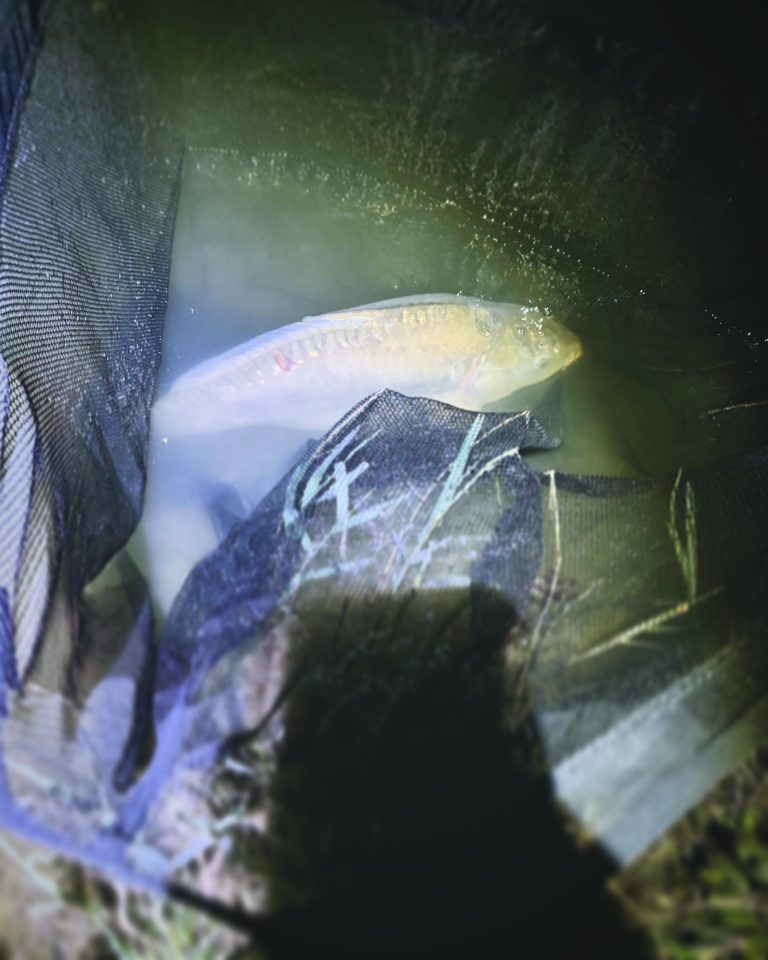
Once the carp is netted, have the unhooking area ready before lifting or moving the fish. Searching through bags while a carp is waiting unnecessarily is avoidable.
That preparation matters because there is no useful countdown for how long carp can survive out of water; when a fish is going back, the goal should always be to keep air exposure as short as possible.
Photography can also be planned beforehand. If you want a picture, know where the camera or phone will be positioned and have any lighting ready before a fish arrives.
Keep the process efficient and return the fish once it is ready.
Night Carp Fishing Safety
The darker the swim, the smaller your margin for error.
Check the bank before sunset. Identify steep edges, slippery rocks, deep margins, tree roots, holes, guy lines, and anything else that could become a hazard.
Carry at least two usable light sources rather than relying on a single phone or headlamp.
Avoid entering water at night unless you fully understand the swim and conditions and doing so is genuinely necessary. Never assume water that looked harmless during daylight will be equally easy to negotiate in darkness.
Also check the fishery or local regulations before planning an overnight session. Permission to fish during the day does not automatically mean night fishing or overnight camping is allowed everywhere.
Keep your phone charged and protect spare clothing and essential equipment from rain or condensation.
FAQ
Is carp fishing better at night?
It can be. Research and angling records show that common carp are frequently caught during darkness, but the best period varies between venues, seasons, and individual fish. A lake that fishes well at night may behave very differently from another nearby water.
Can carp see bait at night?
Carp are capable of finding and feeding on food in darkness and do not depend entirely on vision to locate it. There is no need to assume that a hookbait must glow or be unusually bright simply because you are fishing at night.
Should you leave your rods out all night?
Only when it is safe and legal to do so and you can respond promptly to a bite. Make sure alarms or indicators are suitable for the way you are fishing and never leave active rods unattended.
Final Takeaway
Successful night carp fishing is less about finding a secret nighttime bait and more about removing avoidable mistakes.
Find and mark the spot before dark, fish a rig you already trust, bait according to the carp rather than the clock, and have everything required to land and handle a fish ready before the first run.
Once darkness falls, the less unnecessary work you have to do, the better.