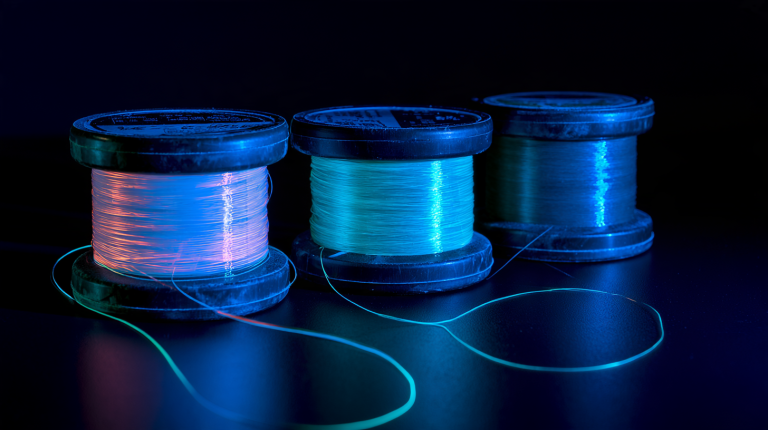
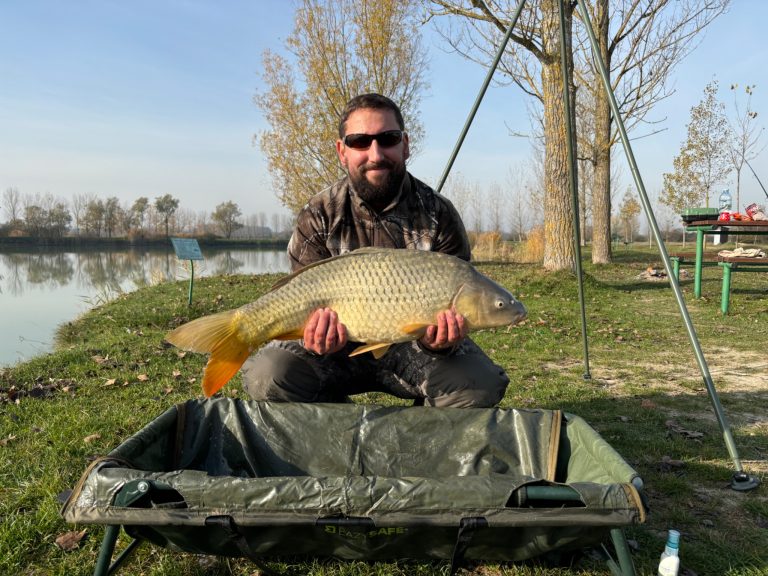
Choosing what lb line for carp fishing sounds as though it should depend on the size of the carp. In reality, the water you are fishing usually matters more.
A clean lake with plenty of open water places very different demands on your mainline than a swim containing weed, submerged branches, mussel beds or sharp gravel. Casting distance matters too, because heavier line normally comes with greater diameter, which takes up more spool space and can increase resistance during the cast.
For most general carp fishing, 12–15 lb monofilament is a sensible range, with 15 lb being an excellent all-round starting point. Move heavier when the water gives you a genuine reason to do so rather than simply because large carp are present.
What Lb Line for Carp Fishing?
If you want one number rather than a long list of possibilities, start with 15 lb mono.
It provides enough strength for a wide range of normal carp situations without becoming unnecessarily thick or difficult to cast. It is suitable for small and medium lakes, many larger waters, normal-distance fishing and plenty of situations where some weed or underwater structure is present.
That does not make 15 lb a universal rule.
A clean open-water venue may allow you to use 12 lb comfortably. A heavily weeded lake could make 18 lb a more sensible choice. Fishing close to submerged timber, rocks or other serious hazards may justify 20 lb or more.
The key is to select the lightest line that still gives you an appropriate safety margin for the conditions you are actually fishing.
Carp Line Strength Quick Reference
| Fishing situation | Sensible starting point | Main reason |
|---|---|---|
| Clean, open water | 10–12 lb | Lower diameter where abrasion risk is minimal |
| General carp fishing | 12–15 lb | Good balance of strength, diameter and casting |
| Moderate weed or rough bottom | 15–18 lb | Extra toughness and abrasion margin |
| Heavy weed | 18–20 lb | More reserve when pressure is required |
| Serious snags or abrasive features | 20 lb+ where appropriate | Greater strength and abrasion resistance |
| Long-range fishing | Usually 12–15 lb, depending on setup | Lower diameter can help casting and spool capacity |
These numbers are starting points, not rules. A tough 15 lb line can be a better choice than a poor-quality 18 lb line, and different manufacturers can produce noticeably different diameters for similar stated breaking strains.
Do You Need 30 Lb Line for a 30 Lb Carp?
No.
One of the easiest mistakes when choosing carp line is matching the breaking strain directly to the expected weight of the fish.
A 30 lb carp does not mean you need 30 lb mainline.
During a normal fight, the carp is not simply hanging vertically from the fishing line like a 30 lb weight from a crane. The rod bends, the reel drag releases line and the angler changes the pressure according to what the fish is doing.
That entire system helps absorb load.
The important question is therefore not:
How heavy are the carp?
It is:
What can happen to my line between the reel and the fish?
A carp moving through clean open water is a very different problem from the same fish reaching a submerged tree.
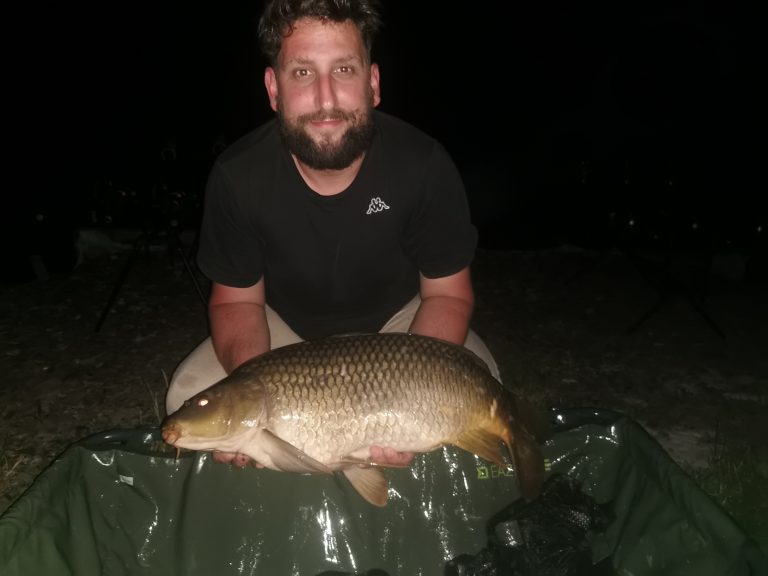
That is why relatively modest mainlines can land very large carp in suitable conditions, while much stronger line may still be justified for smaller fish when the swim is difficult.
Why 15 Lb Line Is Such a Useful Starting Point
Fifteen-pound monofilament sits in a very practical middle ground.
It is strong enough for most ordinary carp fishing while still being available in manageable diameters.
Current dedicated carp monofilaments illustrate the point. Major manufacturers commonly offer their general-purpose carp lines across roughly the 12–20 lb range rather than treating one breaking strain as suitable for every situation. Their published specifications also show the predictable relationship between breaking strain and diameter: moving to stronger line normally means moving to thicker line as well.
That matters because choosing heavier line always involves a trade-off.
A thicker line can provide more strength and abrasion resistance, but it also occupies more room on the spool and generally creates more resistance during casting.
Line Diameter Matters Almost as Much as Pound Test
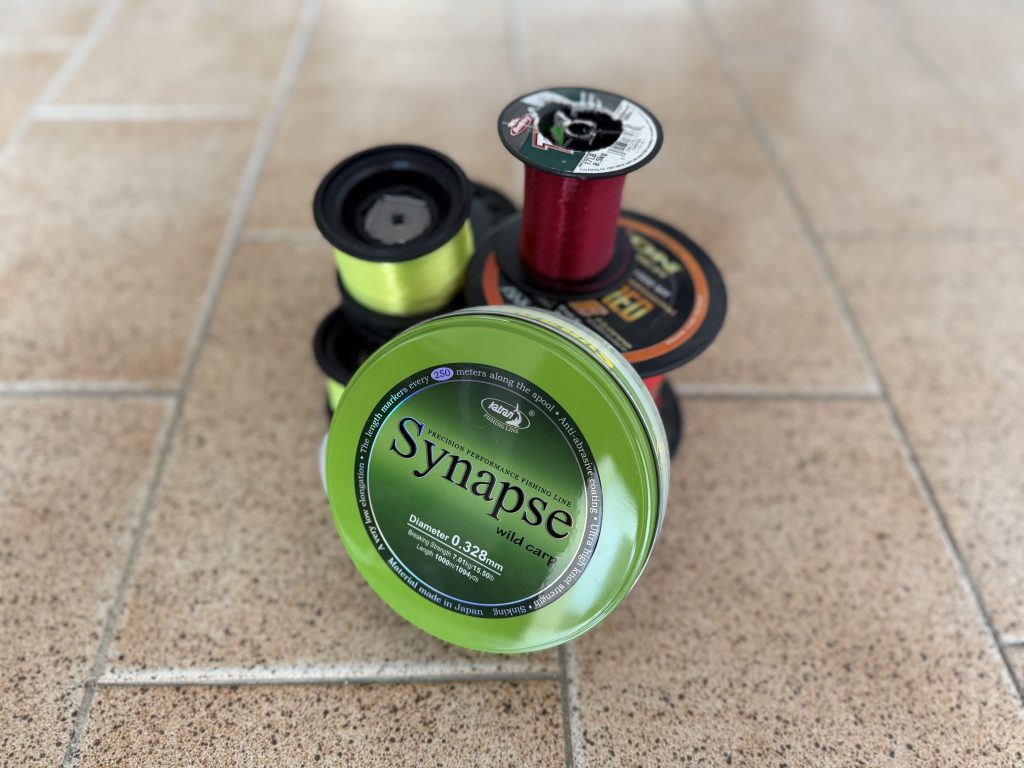
Two spools marked 15 lb do not necessarily have exactly the same diameter or handling characteristics.
That makes the diameter printed on the spool particularly useful.
A thinner mainline creates less bulk on the reel and can help when casting at range. A thicker mainline generally gives you more material to resist wear before damage becomes critical.
Neither characteristic automatically makes a line better.
If you regularly fish at moderate range on a clear lake, extremely heavy and thick line may offer little benefit.
If the lake contains weed beds, rough gravel, rocks or submerged obstacles, sacrificing a little casting performance for a tougher mainline can make much more sense.
This is also why reel capacity should be checked using the actual diameter of the line rather than only the breaking strain printed on the spool.
A reel may hold 300 metres of one 15 lb line but considerably less of another thicker mainline.
When 12 Lb Carp Line Makes Sense
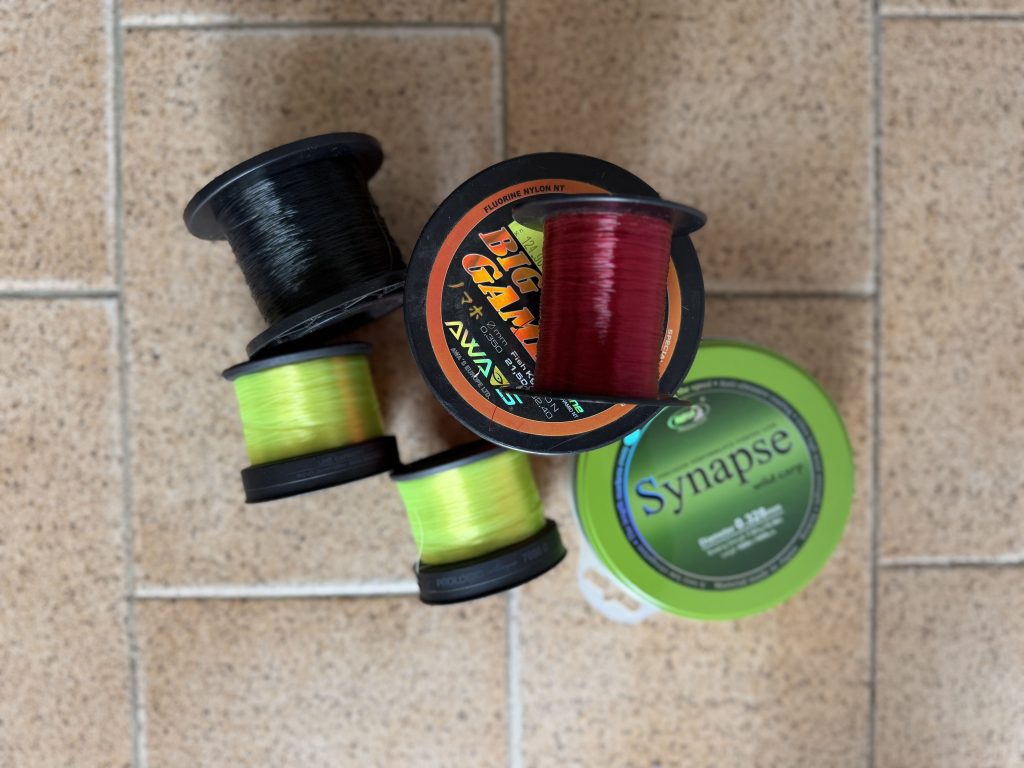
Twelve-pound line can be perfectly capable carp mainline when conditions allow it.
The best situation is clean open water with limited weed, no serious snags and no particularly abrasive bottom features.
Its lower diameter can also make it attractive when casting performance matters.
The mistake is using 12 lb simply because thinner line casts better while ignoring everything between you and the fish.
If carp can reach reeds, sunken branches, dense weed or sharp underwater features, a small casting advantage may not be worth the reduced margin for damage.
Is 12 Lb Line Strong Enough for Big Carp?
Potentially, yes.
Again, carp size alone does not determine the answer.
A large carp in open water can be a more manageable proposition than a much smaller carp hooked three metres from a fallen tree.
Look at the swim before looking at the expected fish weight.
When to Move Up to 18 or 20 Lb Line
Heavier mainline becomes worthwhile when you can identify the problem it is solving.
Dense weed is an obvious example.
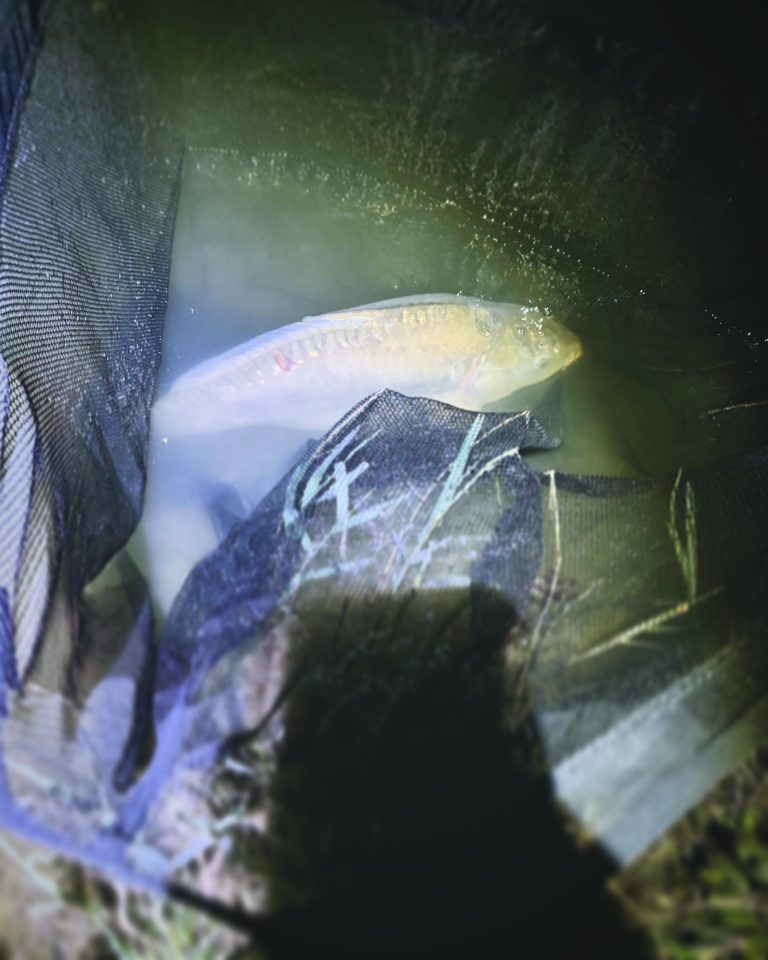
This becomes even more important during night carp fishing, when it is harder to see line angles, weed and potential obstacles once a fish is hooked.
A fish moving through weed places additional stress on the tackle and can bring the line into contact with stems, debris and other material.
Snags create an even stronger reason to consider heavier line.
The same applies to rough rocks, sharp gravel, mussel beds and other abrasive features.
In these situations, stronger and usually thicker mainline provides more margin than choosing a light line purely for extra casting distance.
But heavier line does not make snag fishing automatically safe.
If a carp reaches an obstacle where the line becomes locked or trapped, simply using stronger tackle does not solve the underlying problem. Fish the swim from a position and distance where you have a realistic chance of keeping hooked fish away from dangerous structure.
What About Carp Fishing at Long Range?
Distance fishing creates the opposite pressure.
Thinner line generally leaves the spool more easily and produces less drag through the guides and air. It also allows more line to fit onto the reel.
That makes relatively low-diameter mainline attractive for long-range casting.
Some anglers use a shock leader when casting heavy leads at serious distance, but leaders should only be used where venue rules allow them and where the entire rig is arranged safely.
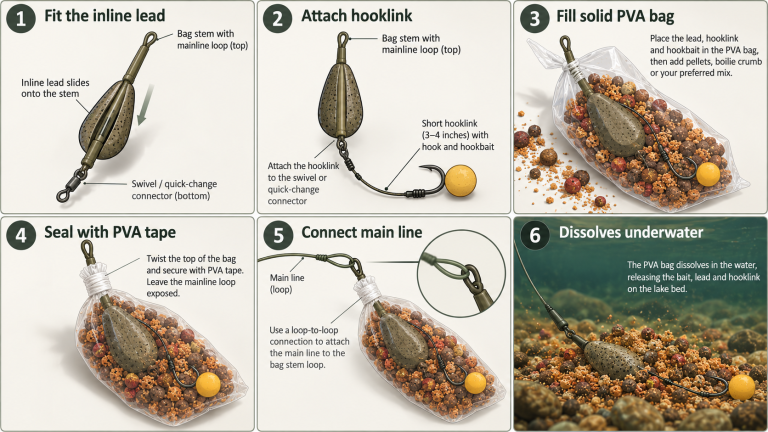
Solid PVA bags can place even more strain on your mainline because the total casting weight includes both the lead and the packed bait. If you’re using them, this guide on how to attach PVA bag rig to main line explains the connection methods and safety checks.
Do not automatically drop to extremely light mainline simply to gain a few extra metres.
Reliable casting is useful.
Landing the carp is more important.
If thicker line is required for the venue, increasing reel capacity or improving casting technique may be a better solution than using line that is too light for the water.
Mono, Braid or Fluorocarbon for Carp Mainline?
For an uncomplicated general carp setup, monofilament remains the easiest reference point for these pound-test recommendations.
Mono provides some stretch, is widely available in suitable diameters and breaking strains, and works with normal carp reels and rigs.
Braid behaves differently because it can provide very high breaking strength at a much smaller diameter and has very little stretch. That can be useful for particular techniques, but it also changes how pressure is transmitted through the setup. Some fisheries restrict braided mainlines entirely.
Fluorocarbon mainline is another option. It sinks well and can be less conspicuous in some conditions, but it is generally denser and can be stiffer than typical carp mono.
Do not assume that 15 lb mono, 15 lb braid and 15 lb fluorocarbon will behave identically simply because the number on the spool is the same.
For most anglers asking what lb line for carp fishing, 15 lb mono is still the simplest sensible starting point.
Check the Line, Not Just the Label
A strong line that has already been damaged is no longer strong line.
Run your fingers carefully along the final section of mainline after fishing around weed, gravel or other structure.
Look and feel for:
- rough sections;
- flattening;
- nicks;
- unusual whitening or discoloration;
- obvious abrasion;
- damage around knots.
Cut damaged line away rather than trusting it for another fish.
Also inspect the rod guides. A cracked or chipped guide insert can damage mainline repeatedly without the cause being immediately obvious.
Knot condition matters as well.
If a knot looks damaged, has slipped, or has been repeatedly loaded during a difficult fight, re-tie it.
A fresh 15 lb line with sound knots and clean rod guides is a much more dependable setup than nominally stronger tackle that has been neglected.
Frequently Asked Questions
Is 15 lb line enough for carp fishing?
Yes. Fifteen-pound monofilament is a very useful all-round carp mainline for many lakes and normal fishing situations. Move heavier where weed, snags or abrasive features create a genuine need for more strength.
Can you catch 30 lb carp on 12 lb line?
Yes, a carp weighing 30 lb does not automatically require 30 lb line. Rod action, drag and angler control absorb much of the load. Whether 12 lb is appropriate depends more on the water and obstacles than the carp’s body weight.
Is 20 lb line too heavy for carp?
Not if the conditions justify it. Twenty-pound line can make sense in heavy weed, around difficult snags or where abrasion is a serious concern. In clean open water it may simply add unnecessary diameter.
Is thicker fishing line stronger?
Within a comparable line range, increasing diameter normally accompanies increasing breaking strength. However, material, construction and manufacturer specifications also matter, so compare both diameter and stated strength.
What diameter line is good for carp fishing?
There is no single correct diameter, but roughly 0.30–0.35 mm mono covers many general carp situations, depending on the particular line. Heavier and more demanding fishing often moves toward approximately 0.38–0.40 mm or more.
Final Takeaway
So, what lb line for carp fishing?
For a simple all-round setup, start around 15 lb monofilament.
Drop toward 10–12 lb only when the water is clean enough to justify it, and move toward 18–20 lb or heavier when weed, snags and abrasion make additional strength genuinely useful.
Do not choose your mainline because the biggest carp weighs a certain number of pounds.
Choose it for the water that fish has to be landed through.