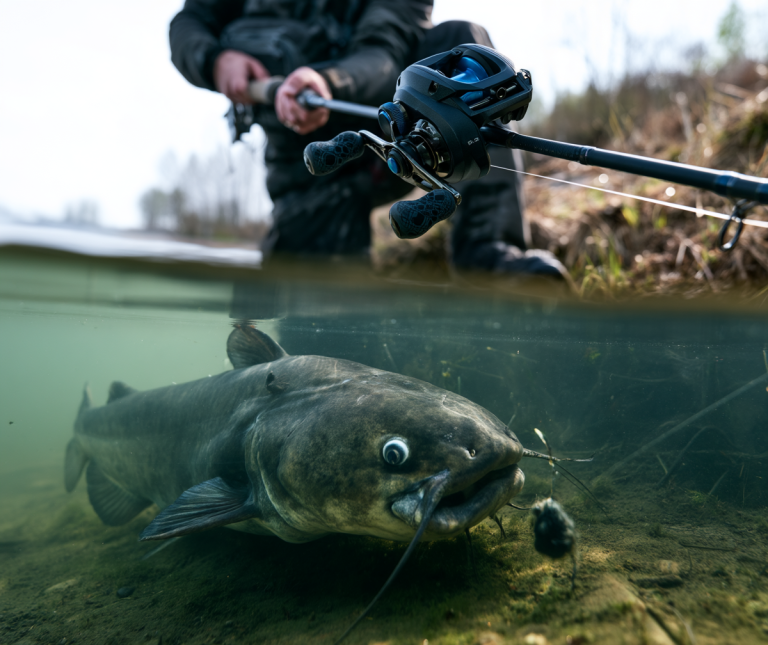
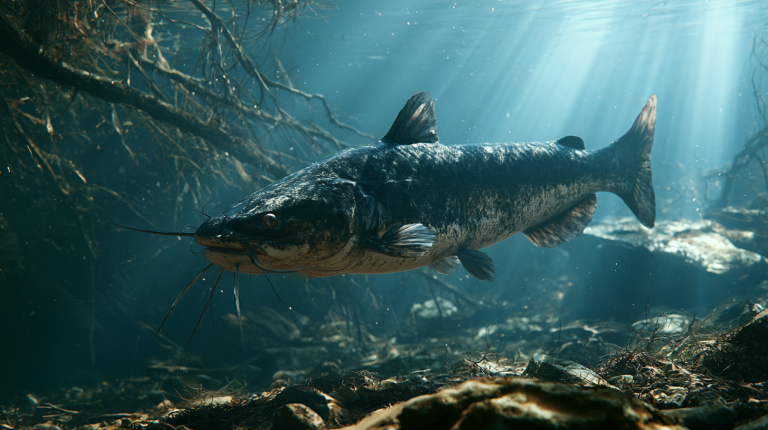
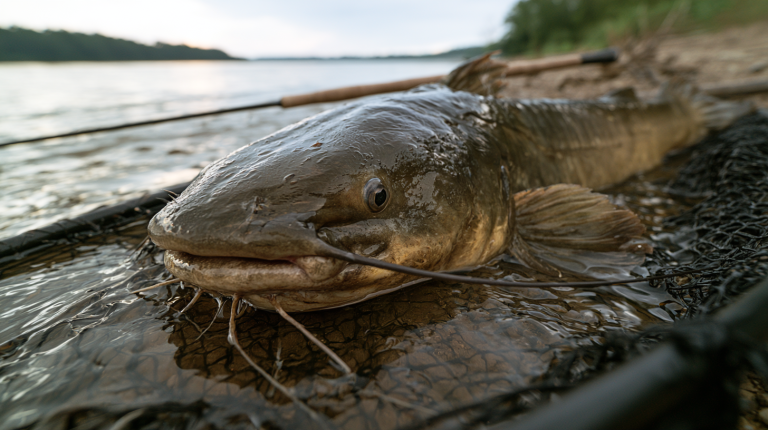
Catfishing with goldfish is a genuine live-bait tactic rather than just another strange bait experiment. In places where using them is legal, goldfish can be used for large blue catfish and flathead catfish, particularly when the goal is to present an active baitfish around deep holes, current breaks, or heavy cover.
There is one important catch: goldfish are not legal bait everywhere.
Rules can control which live fish may be used, where they can be purchased or collected, how they can be transported, and what must happen to unused bait afterward. Check the regulations for the exact water you are fishing before putting one on a hook.
Does Catfishing With Goldfish Actually Work?
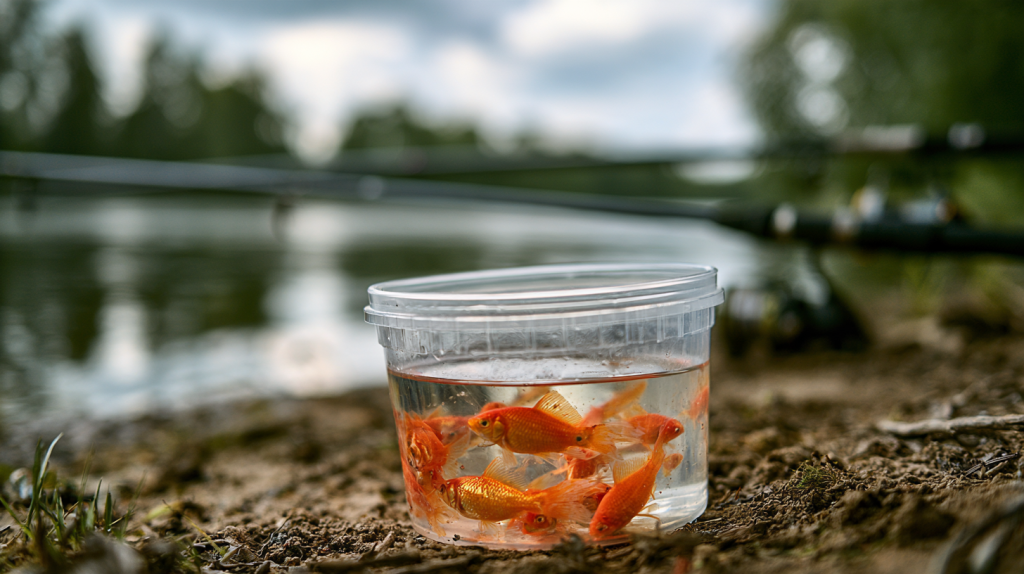
Yes. Goldfish can work as catfish bait.
They are real baitfish rather than an artificial substitute, and a live goldfish provides the same basic signals as other live fish: movement, vibration, scent, and the appearance of vulnerable prey.
That does not mean goldfish have some unique property that makes catfish unable to resist them.
Their usefulness is much simpler. Where legal, they can provide a hardy live bait that remains active in the water and is available in sizes suitable for larger predatory catfish.
Goldfish are especially associated with targeting blue and flathead catfish.
Missouri Department of Conservation guidance on big-river catfishing, for example, specifically notes the use of live sunfish or goldfish when fishing deep holes for large blue and flathead catfish.
That is considerably stronger evidence than the common claim that catfish bite goldfish simply because they are orange.
Color may contribute to visibility, but there is no reason to treat bright coloration as the main explanation. Bait movement, location, size, scent, and whether a catfish is actively feeding are much more useful things for an angler to think about.
Which Catfish Are Goldfish Best For?
Not every catfish should be approached with the same bait.
| Catfish | Goldfish as Bait | Starting Presentation | Main Consideration |
|---|---|---|---|
| Flathead catfish | Very suitable where legal | Live goldfish near cover | Flatheads strongly favor live prey |
| Blue catfish | Suitable | Live or legal cut/dead goldfish | Fish deep holes, channels, and current breaks |
| Channel catfish | Can work | Smaller live or cut bait | Often easier to target with worms, shrimp, cut bait, or prepared bait |
Flathead catfish
Flatheads are the most obvious target for live goldfish.
They are predatory fish commonly targeted with live bait, particularly around submerged timber, logjams, deep holes, rock, and other heavy structure.
The advantage of a live goldfish in this situation is movement.
Rather than casting repeatedly, place the bait where a flathead is likely to be holding and allow it to work in that area.
That does not mean throwing directly into the middle of an impossible snag. A bait positioned just outside the cover gives a flathead an opportunity to find it while still giving you some chance of moving the fish after the bite.
Blue catfish
Goldfish can also work well for blue catfish.
Blues frequently respond to fish-based baits, and both live and cut presentations can be useful depending on the water and local regulations.
For large-river fishing, look for deep holes, channel edges, current seams, outside bends, and areas where current concentrates food.
If you are still deciding where and how to target each species, the broader fishing tips for catfish guide covers that decision separately.
Channel catfish
Channel cats can certainly eat a goldfish, but using one is often unnecessary.
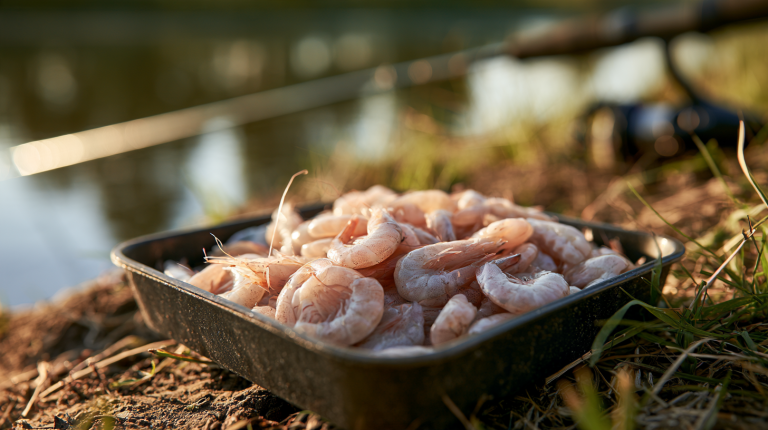
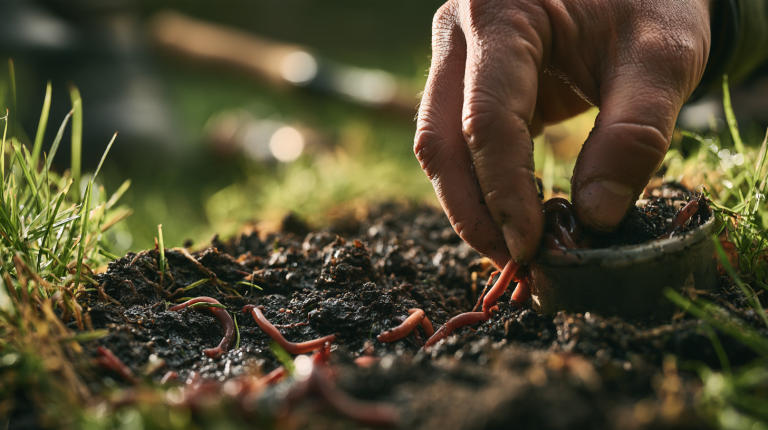
A nightcrawler, piece of cut bait, raw shrimp, or prepared bait is usually easier to obtain, rig, and cast when the goal is simply to catch channel catfish.
Save the more complicated live-bait approach for situations where it provides an actual advantage.
Check the Rules Before Using Goldfish as Bait
This is the most important part of catfishing with goldfish.
There is no universal rule covering every state, province, lake, or river.
One jurisdiction may permit goldfish as live bait. Another may allow possession but prohibit using them as bait. Another may restrict transport, require legally purchased bait, or prohibit particular fish species completely.
Missouri provides a useful example of why anglers should check rather than guess. Its current live-bait regulations specifically include goldfish within its bait rules.
That does not mean the same rule applies outside Missouri.
USGS documents restrictions involving goldfish in several jurisdictions and also records established non-native goldfish populations across North America.
For anglers, three rules are sensible regardless of location:
- Confirm that goldfish themselves are legal bait.
- Confirm that live bait is allowed on the particular water.
- Never release unused goldfish into the lake or river.
Buying a fish from a pet shop or bait dealer does not automatically make it legal fishing bait.
Rules may apply to the species, where it came from, transport between waters, receipts, possession, or how unused bait must be disposed of.
When regulations are unclear, choose a clearly legal local bait instead.
How to Rig Goldfish for Catfish
A complicated rig is not necessary.
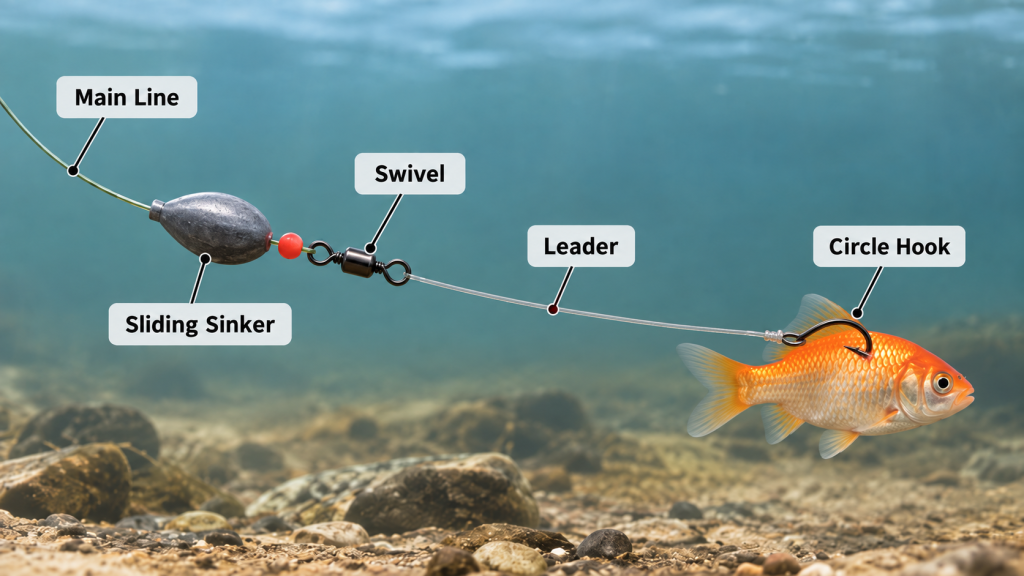
For ordinary rod-and-reel catfishing, a sliding-sinker setup is a practical starting point:
Main line → sliding sinker → optional bead → swivel → leader → circle hook
The sinker holds the presentation near the bottom while the leader gives the bait some freedom to move.
Use enough weight to control the rig rather than automatically using the heaviest sinker available.
In current, that may mean substantial weight.
In a calm lake or pond, a much lighter sinker may hold the bait perfectly.
Leader length should also match the situation. Around heavy timber or strong current, a shorter leader gives better control. In open water, a little more movement may be useful.
If you use a baitcasting setup for heavier live bait, the FishingChief guide to catfishing with a baitcaster covers reel adjustment and controlled casting in more detail.
How to hook a live goldfish
The goal is to secure the bait without unnecessarily preventing it from swimming.
Two common approaches are:
- a shallow hook through the skin of the upper back, keeping clear of the backbone;
- hooking through the lip or nostril area when the bait needs to face naturally into moving water.
Do not bury the entire hook in the bait.
The hook point and gap need room to work when the catfish takes the fish.
Check the goldfish after casting. If the hook has torn loose, the bait is badly injured, or it can no longer move naturally, replace or reposition it rather than leaving a poor presentation in the water.
Match hook size to the bait
Avoid choosing a hook solely because it has been marketed as a “monster catfish” hook.
The hook needs enough gap to clear the bait and still engage the catfish, but an unnecessarily large, heavy hook can restrict a small goldfish.
Match the hook to:
- the size of the bait;
- the expected size of the catfish;
- the strength of your line and leader;
- the amount of cover.
A circle hook is a sensible option for stationary bait fishing because the rig can load gradually as the fish moves away.
With a circle hook, avoid an aggressive traditional hook-set. Tighten the line and allow steady pressure to load the rod and turn the hook toward the corner of the mouth.
What Size Goldfish Should You Use?
Bigger is not automatically better.
The best size depends on the fish you are targeting.
For average catfish, a smaller legal baitfish is easier to cast, easier for a fish to take, and less demanding on the tackle.
Large goldfish make more sense when the goal is specifically a large flathead or blue catfish and the tackle is capable of handling a substantial live bait.
A large bait also changes the cast.
Trying to launch a live goldfish as though it were a lure can damage the bait, tear the hook loose, or cause a backlash.
Use a smooth lob rather than a violent overhead cast.
If the productive water is far beyond comfortable casting range, changing position is often better than repeatedly trying to throw the bait farther.
Where to Fish Goldfish for Catfish
A good live bait will not rescue a poor location.
Put the bait somewhere predatory catfish are likely to encounter it.
Deep holes
Deep river holes are a classic starting area for large blues and flatheads.
Pay particular attention to the upstream and downstream edges rather than assuming the deepest point itself will always hold feeding fish.
Current seams
Where fast and slow water meet, catfish can hold in the easier water while food moves past them.
Place the bait close enough to the seam that it remains controlled instead of allowing the sinker to roll continuously downstream.
Submerged timber
Wood cover is especially relevant for flathead catfish.
Fish the edge of fallen trees, root systems, submerged timber, or logjams rather than automatically casting into the thickest part.
The closer the bait is to heavy cover, the faster you may need to apply pressure after a bite.
Channel edges and drop-offs
Blue catfish often travel along depth changes and river channels.
A live or cut goldfish placed where shallow water drops into the main channel can intercept moving fish without requiring the bait to sit directly in the deepest water.
Live Goldfish vs Cut Goldfish
Live bait and cut bait create different presentations.
| Live goldfish | Cut/dead goldfish |
|---|---|
| Produces continuous movement | Produces a stronger scent trail |
| Particularly suited to flatheads | Often better suited to blues and channels |
| More difficult to cast | Easier to cast |
| Requires live-bait handling | Simpler presentation |
| Often subject to stricter regulations | Still requires confirmation that the species may leg |
Cutting a goldfish does not automatically make an otherwise prohibited bait species legal.
Some regulations restrict possession or use of the species itself rather than simply whether the fish is alive.
Always check first.
When dead bait is permitted, cutting the fish can expose flesh and release scent into the water. In current, that scent can move downstream and help fish locate the bait.
Live bait provides the opposite advantage: continuous movement.
Choose according to the target species, regulations, and fishing situation rather than assuming one method is universally superior.
Common Goldfish-Bait Mistakes
Assuming goldfish are legal everywhere
This is the biggest mistake.
Check current rules for the actual body of water, not just a forum post or advice from an angler who fishes somewhere else.
Releasing unused bait
Never dump unwanted goldfish into the water.
Goldfish can survive and establish populations outside aquariums, which is one reason fisheries agencies regulate their transport and use.
Dispose of unused bait according to local rules.
Using too large a bait
A giant bait may look impressive but can reduce bites, overwhelm lighter tackle, and make casting difficult.
Match the goldfish to the target fish.
Casting too aggressively
A hard cast can tear live bait from the hook or damage it.
Use a smooth, controlled lob.
Fishing the bait in empty water
Goldfish are not a magic attractant.
Depth, cover, current, seasonal movement, and the presence of catfish still matter more than the novelty of the bait.
Burying the hook point
Leave enough hook gap and point exposure for the hook to work.
A large bait wrapped around most of the hook can turn solid bites into missed fish.
Alternatives to Goldfish
If goldfish are prohibited, difficult to obtain legally, or simply inconvenient, there are plenty of alternatives.
Depending on the target species and local regulations, consider:
- locally legal live baitfish;
- fresh cut bait;
- nightcrawlers;
- raw shrimp;
- prepared catfish bait.
For channel catfish in particular, catfishing with shrimp provides a much simpler bait option without the need to keep a baitfish alive.
Prepared bait is another option when convenience matters. The FishingChief guide to catfishing with stink bait explains how dip, punch, and dough-style baits are used for channel cats.
Frequently Asked Questions
Are goldfish good bait for flathead catfish?
Yes, where legal. Flathead catfish are active predators and live fish are commonly used to target them. Goldfish can provide an active live-bait presentation around deep holes, timber, and other heavy cover.
Will blue catfish eat goldfish?
Yes. Goldfish can be used either live or, where regulations permit, as cut or dead bait for blue catfish.
Can channel catfish eat goldfish?
Yes, but goldfish are often unnecessary for channel cats. Worms, shrimp, prepared bait, and legal cut bait are usually simpler starting options.
Can you use pet-store goldfish for bait?
Do not assume so. Regulations may control which species can be used, where baitfish must come from, whether receipts are required, and how they may be transported. Check local fishing regulations before purchasing goldfish for bait.
Should goldfish be used live or dead?
Either can catch catfish where permitted. Live goldfish provide movement and are especially relevant to flathead fishing. Dead or cut bait produces more scent and may be easier to cast.
Can you release leftover goldfish?
No. Do not release unused goldfish into natural water. Dispose of bait according to local regulations.
Final Takeaway
Catfishing with goldfish can be effective, particularly when targeting blue and flathead catfish with a substantial fish-based bait.
The most important variable, however, is not hook size or goldfish color — it is whether the bait is legal where you are fishing.
Check the current live-bait rules first. If goldfish are permitted, match the bait size to the catfish, use a simple controlled rig, and place it around productive cover, current, or depth rather than relying on the bait alone to find the fish.