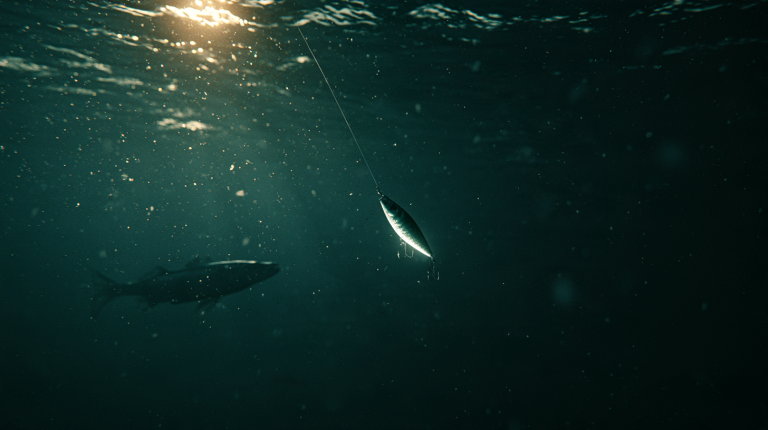
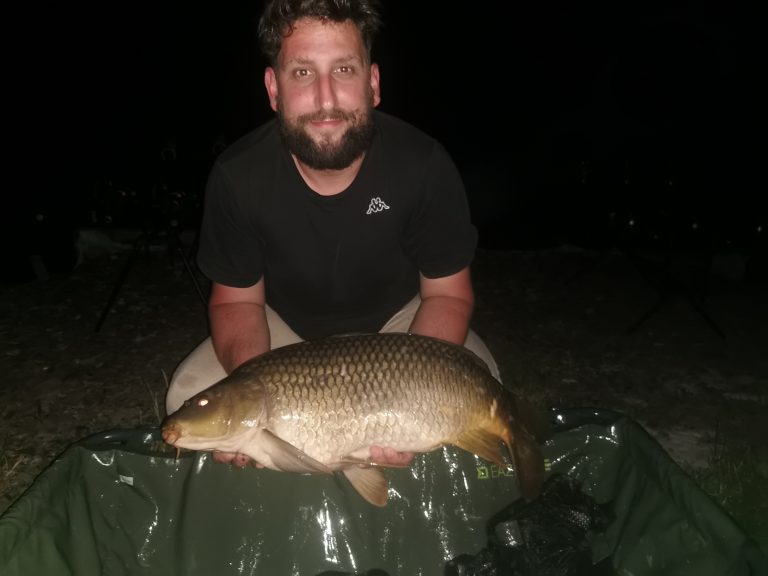
Do carp feed at night? Yes, and on many waters, darkness can be one of the most productive periods for carp feeding. However, there is an important difference between knowing that carp eat after sunset and assuming they always feed more at night than during the day.
Common carp are adaptable fish. Their feeding patterns change with water temperature, available food, habitat, fishing pressure, and even the behavior of individual fish.
Scientific research confirms that carp can remain active throughout the night, but it also shows that nighttime feeding is not equally important in every environment.
Understanding those differences is more useful than simply waiting for darkness and expecting the fish to become hungry.
Do Carp Feed at Night? What Scientific Research Shows
There is good scientific evidence that common carp remain active and can feed during darkness.
One particularly relevant study was published in Fisheries Research in 2021.
Researchers examined catch records from 14 large carp-angling competitions held across four European countries. The results showed that carp landings were most frequent during nighttime hours, with catches generally increasing between sunset and sunrise.
That supports the idea that carp frequently become vulnerable to angling after dark, potentially because they are actively searching for food.
However, an important distinction needs to be made.
A higher nighttime catch rate is not necessarily a direct measurement of how much food carp consume.
Carp might become easier to catch because they visit baited areas more frequently, change their movement patterns, or respond differently to disturbances.
Other research also shows that feeding behavior is not exclusively nocturnal.
A 2008 study observing common carp in simulated ponds found that they grazed during both daylight and darkness, without a distinct feeding peak.
Another study, published in the Journal of Fish Biology in 2009, found more frequent daytime grazing under its experimental conditions.
These findings are not necessarily contradictory.
They demonstrate that feeding behavior depends heavily on the environment being studied.
Wild carp in a large lake, fish living in a river, and carp maintained in an aquaculture pond may follow substantially different daily routines.
For anglers, the conclusion is straightforward: nighttime feeding is real, but the best feeding period should be established for the particular water rather than assumed.
How Can Carp Find Food in Complete Darkness?
Carp do not depend entirely on their eyesight to locate food.
Their sensory system is particularly well suited to searching for edible material along the bottom of lakes and rivers.
Barbels and Taste
Common carp have two pairs of barbels around their mouths.
These sensory structures help them investigate their surroundings and detect potential food items.
Carp also possess taste receptors that allow them to evaluate material they encounter.
This is particularly useful when searching through soft sediment, vegetation, and other bottom features where visibility may already be poor during daylight.
Chemical and Physical Cues
Carp can respond to chemical signals associated with food and use sensory information while investigating their environment.
That helps explain why they can locate natural food and conventional fishing bait even when little natural light reaches the bottom.
It does not mean that every strongly scented bait will attract fish from a considerable distance.
Water movement, the composition of the bait, and the location of the fish all influence how useful those signals are.
A carp still needs to encounter a food source or detect it within the effective range of its senses.
Vision Still Matters
Carp can use visual information when light is available, including during twilight and under suitable nighttime conditions.
But their ability to feed does not disappear when visibility declines.
This is why ordinary boilies, corn, and other non-illuminated baits can remain effective after sunset.
A glowing or brightly colored hookbait is not automatically necessary.
When Do Carp Feed at Night?
There is no universal hour when carp begin feeding.
Some waters produce consistent bites shortly after sunset. Others fish better around midnight, before sunrise, or during several shorter periods throughout the night.
Controlled research has identified feeding peaks at particular times, but those results should not be interpreted as a schedule that applies to every lake.
A useful way to approach nighttime carp feeding is to divide the night into observation periods.
Nighttime Carp Feeding Quick Reference
| Time Period | What May Happen | What to Look For |
|---|---|---|
| Dusk | Fish may move between resting and feeding areas | Rolling carp, bubbles, movement along features |
| Early night | Carp may begin visiting established feeding spots | Repeated activity in the same area |
| Middle of the night | Feeding may continue or occur in separate bursts | Bites or signs of fish without obvious surface activity |
| Before sunrise | Some waters show increased carp activity | Recurring early-morning bites |
| Dawn | Carp may continue feeding as visibility increases | Fish showing around margins or known feeding routes |
These are possibilities rather than guaranteed feeding windows.
The important question is not whether midnight is theoretically better than 10 p.m.
It is whether the carp in your particular water repeatedly use certain areas at certain times.
A record of actual bite times across several sessions is often more useful than following a general rule about the best hour for carp fishing.
Do Carp Feed More at Night Than During the Day?
Sometimes, but not always.
Carp do not have a fixed feeding schedule that automatically switches between daytime and nighttime activity.
In some environments, darkness coincides with increased feeding activity. In others, carp continue feeding throughout the day or show stronger activity during daylight.
Several factors may help explain the difference.
Disturbance and Fishing Pressure
On heavily used lakes, daytime activity can be substantial.
Anglers cast repeatedly, boats travel across the water, and people move around the banks.
When those disturbances decrease after dark, carp may become more willing to visit certain areas.
However, that does not prove darkness itself increases their appetite.
A fish might simply feel less disturbed in an area it already associates with food.
Availability of Natural Food
Carp feed on a wide variety of natural food, including aquatic invertebrates and other edible material found around the lakebed.
The distribution and availability of these resources can influence where fish spend their time.
If accessible food is concentrated in one part of a lake, carp may continue visiting that area regardless of the hour.
Established Feeding Patterns
Carp can repeatedly exploit familiar feeding locations.
An area that regularly receives bait may develop a recognizable pattern of visits.
That pattern can sometimes be more predictable than general assumptions about nighttime activity.
This also explains why two nearby lakes can behave differently despite experiencing almost identical weather and daylight conditions.
Where Do Carp Feed at Night?
One of the most useful things to understand about nighttime carp feeding is that fish may change their location as well as their activity.
Some carp move toward shallower areas after sunset.
Others remain near deeper features or follow established routes between different parts of a water.
Scientific research demonstrates how variable these movements can be.
A 2020 acoustic telemetry study in China’s Pearl River tracked common carp and found that the monitored fish were detected more frequently near shallower riverside habitats during nighttime periods.
However, research in a reservoir on Spain’s Ebro River recorded a different pattern, including carp occupying deeper positions during parts of the night.
The practical lesson is that carp should not automatically be expected to move into shallow water every night.
Margins and Shallow Shelves
Quiet margins can be valuable feeding locations, particularly when there is food, suitable cover, and limited disturbance.
An area that appears empty during a busy afternoon may receive more carp activity after the bank becomes quiet.
But there is little benefit in fishing shallow water simply because it is dark.
The area still needs a reason for fish to visit.
Weed Edges and Natural Food Areas
Vegetation can support aquatic invertebrates and provide useful habitat for carp.
The edges of weed beds, openings between vegetation, and nearby feeding areas may all deserve attention.
These locations are especially interesting when fish have already been observed feeding or moving through them.
Gravel, Silt, and Transition Areas
Changes in bottom composition can help concentrate food or define routes between different habitats.
A transition from firm gravel to softer sediment, for example, may be worth investigating.
However, bottom composition alone does not guarantee carp activity.
A carefully identified area with recent signs of fish is usually a better starting point than a theoretically perfect feature with no evidence that carp are using it.
Does Water Temperature Affect Nighttime Carp Feeding?
Yes. Water temperature is one of the major factors influencing carp metabolism, activity, and food consumption.
But the relationship is not as simple as saying carp stop feeding below one particular temperature.
Warm Water
During periods of suitable warm water, carp can remain active and consume substantial amounts of food.
Nighttime feeding may become particularly relevant when fish move between different habitats or when changes in temperature and light influence their activity.
However, extremely warm conditions can create additional problems.
Dissolved oxygen availability may become important, particularly in shallow, productive waters experiencing oxygen depletion.
A warm night should not automatically be treated as a good feeding opportunity if other environmental conditions are unfavorable.
Cooling Autumn Water
As water temperatures decline, carp metabolism and food requirements generally decrease.
That can affect how frequently fish feed and how much food they consume.
Carp may still feed effectively after sunset, but periods of activity can become less consistent.
Rather than relying on the feeding patterns observed during summer, anglers should pay attention to recent weather, actual water temperatures, and signs of fish activity.
Cold Winter Water
Carp can continue feeding in cold water.
However, lower temperatures generally reduce their feeding activity and food requirements.
A laboratory study investigating feeding rhythms across different water temperatures found that carp still consumed food at 6°C, although consumption was very low compared with more favorable temperatures.
That is an important distinction.
Cold water does not make feeding impossible, but it can substantially reduce the amount of food a carp is prepared to consume.
For anglers, presenting a smaller amount of bait accurately can make more sense than introducing a large feeding area without evidence of active fish.
The exact approach should still depend on the water and the carp’s behavior.
Does the Moon Affect Carp Feeding at Night?
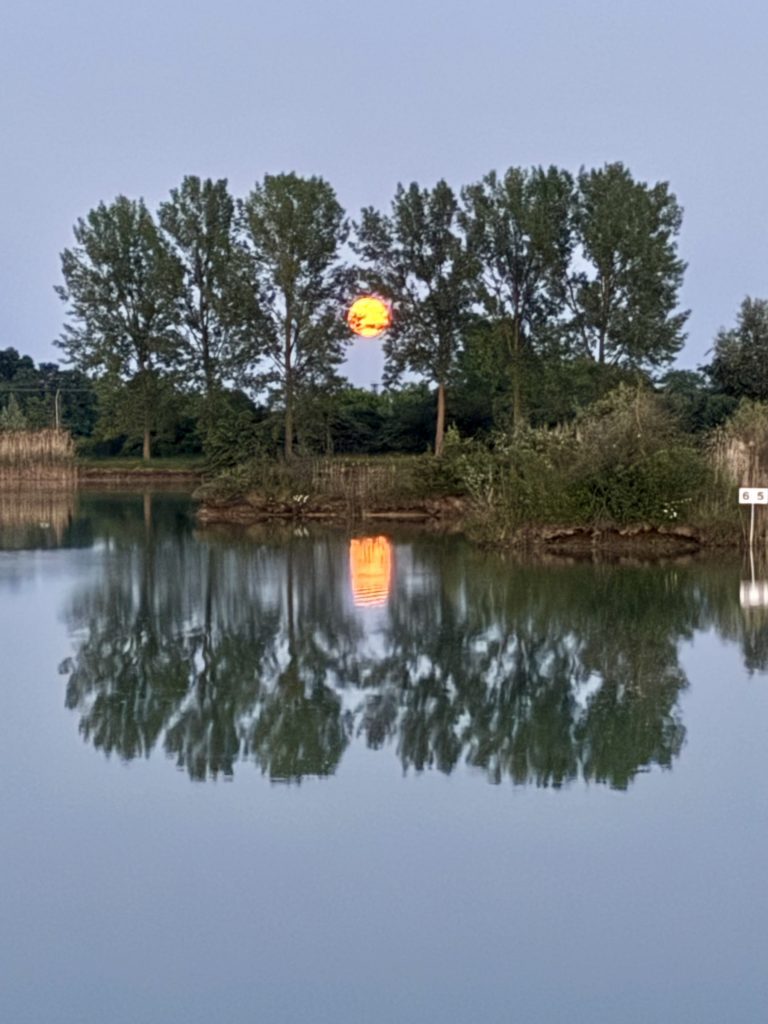
Moonlight changes nighttime illumination, but it should not be treated as an automatic feeding trigger.
A bright full moon can make the water and surrounding environment more visible.
On some waters, that might influence how fish use shallow areas or respond to their surroundings.
However, the available evidence does not justify claiming that carp universally feed more aggressively during a full moon.
Likewise, a dark, moonless night does not mean carp will stop feeding.
Other variables, including water temperature, food availability, location, and the behavior of the fish, may be more important.
The wider relationship between lunar phases and fish behavior is covered in is it good fishing on a full moon.
For carp anglers, the sensible approach is to record moon conditions alongside actual catches rather than assuming a particular moon phase guarantees a feeding spell.
What Bait Do Carp Feed on at Night?
Carp do not require a separate nighttime diet.
The same natural foods they consume during daylight can remain available after dark.
Likewise, conventional carp baits can continue catching fish without requiring unusual flavors, colors, or additional illumination.
Common examples include:
- Boilies
- Sweetcorn
- Properly prepared particles, where permitted
- Pellets
- Natural baits such as worms
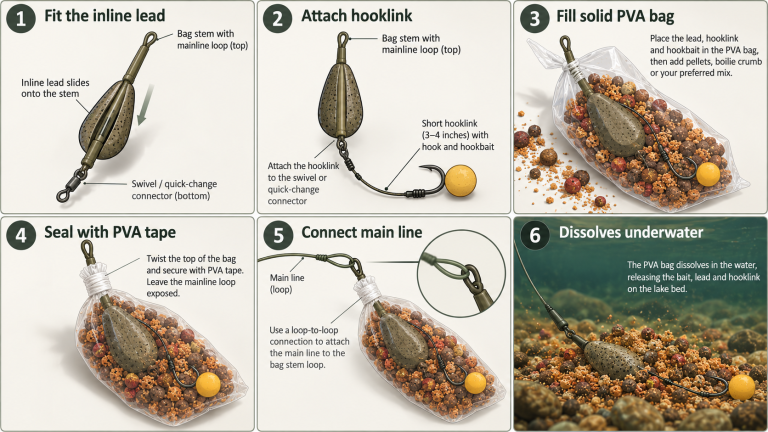
The important factor is whether the bait is appropriate for the water and is presented where carp are likely to encounter it.
A bait that works consistently during the day does not suddenly become unsuitable when the sun disappears.
Does Stronger-Smelling Bait Work Better at Night?
Not necessarily.
Chemical cues can help carp locate and investigate potential food, but stronger smells do not automatically translate into more bites.
The presence of feeding fish, bait familiarity, and how the bait is presented may be more important than the intensity of its flavor.
For the same reason, adding more bait after dark is not always beneficial.
If carp are feeding cautiously or consuming relatively little food, excessive baiting can be counterproductive.
How to Tell Whether Carp Are Feeding After Dark
Identifying actual feeding activity is more difficult at night because visual information becomes limited.
Even so, several clues can help an angler understand what may be happening.
Repeated Bubbles
Bubbles appearing repeatedly in a localized area can indicate fish disturbing bottom sediment.
Carp are capable of producing these signs while feeding.
However, bubbles can also come from natural sediment processes or other aquatic animals.
They should be treated as a possible clue rather than definite proof.
Movement Near a Known Feeding Area
Rolling fish, surface disturbances, or repeated splashes can reveal the presence of carp.
That information is useful, especially if it occurs close to a known feeding location.
But a carp showing at the surface is not necessarily feeding on the bottom.
Actual Bites and Repeated Catch Times
Consistent bites are stronger evidence that fish are willing to take a hookbait.
If multiple sessions produce bites around a similar time, that pattern deserves attention.
It might suggest that carp regularly visit a particular feature or feeding area during that part of the night.
Keep records of the location, time, water conditions, and bait used.
Over time, those observations can reveal patterns that would be easy to miss during an individual session.
How to Use Nighttime Feeding Behavior to Catch More Carp
Understanding nighttime feeding should change how a fishing location is chosen, not encourage constant changes to tackle.
A simple approach is usually sufficient.
- Observe the water before sunset. Look for fish movement and locations that could provide natural food.
- Choose a spot based on evidence. A quiet margin, weed edge, or established feeding area may be promising, but only when there is a reason to expect carp.
- Use bait that is already suitable for the water. There is no need to completely change presentations just because visibility decreases.
- Allow enough time to recognize a pattern. Constant recasting can introduce unnecessary disturbance, particularly when the original spot was selected carefully.
- Record what happens. Bite times, location, temperature, and conditions can help build a more accurate understanding of a particular venue.
For the practical side of organizing tackle, casting accurately, and safely landing fish after dark, see the FishingChief guide to night carp fishing.
Common Mistakes About Nighttime Carp Feeding
Assuming Every Carp Feeds Mainly at Night
Nighttime feeding is common, but it is not universal.
Some populations feed extensively during daylight, and individual fish may follow different routines.
Ignoring Water Temperature
A productive summer feeding pattern may become far less reliable during colder conditions.
The same time of night does not always produce the same level of feeding activity.
Assuming Carp Must Be in the Margins
Shallow-water feeding is possible, but habitat use differs between venues.
Fish may remain around deeper structures or other feeding areas after dark.
Confusing Movement With Feeding
Carp rolling, jumping, or swimming through an area are not necessarily eating.
Actual bites and repeated observations are more useful than treating every surface disturbance as a feeding signal.
Carp rolling, jumping, or swimming through an area are not necessarily eating.
Actual bites and repeated observations are more useful than treating every surface disturbance as a feeding signal.
Frequently Asked Questions
Do carp feed all night?
Carp can feed at different times throughout the night, but they do not necessarily feed continuously. Activity may occur in shorter periods separated by movement, resting, or other behavior.
What time do carp feed most at night?
There is no universal best time. Some waters produce regular bites shortly after sunset, others during the middle of the night, and some around dawn. Local catch records are the most useful guide.
Do carp feed at night in winter?
Yes, carp can feed during cold winter nights, although low water temperatures generally reduce their metabolism and food consumption. Finding active fish becomes particularly important.
Can carp find boilies in the dark?
Yes. Carp can use several senses to investigate and locate food in low-light conditions. Boilies do not need to glow to be detected.
Are carp more active at night?
They can be, but this varies by habitat and conditions. Scientific studies have documented nighttime activity and catches, while other research has found considerable daytime activity.
Final Takeaway
So, do carp feed at night? Absolutely.
Carp are capable of locating and consuming food throughout the night, and some waters produce particularly strong nighttime catches.
But darkness alone does not determine how much they eat.
Water temperature, food availability, habitat, and established feeding patterns are often more useful predictors.
The best approach is to identify where carp are feeding, observe when they visit those areas, and let the behavior of the fish determine your fishing strategy.