
Fish jumping but not biting can be more frustrating than fishing water that looks completely dead. You know fish are present, the surface keeps breaking, and yet every cast comes back untouched.
The important part is not simply seeing a fish jump. It is working out why the fish came to the surface and whether your lure, fly, or bait is actually passing through the zone where it is willing to feed.
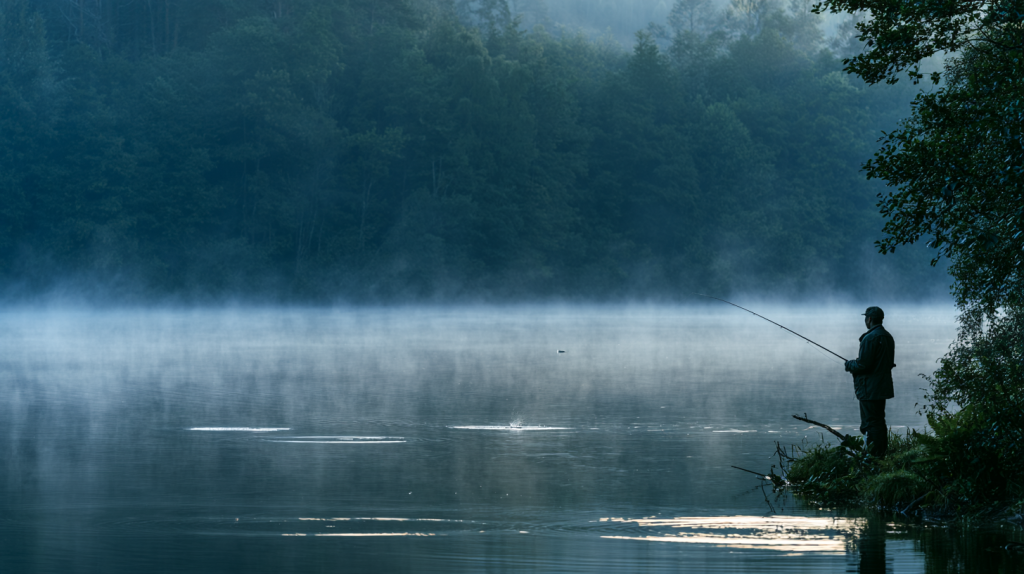
Why Are Fish Jumping but Not Biting?
The first mistake is assuming every splash means the same thing.
A fish breaking the surface could be feeding. It could also be escaping something, moving through shallow water, reacting to noise or another disturbance, or simply displaying behavior that has little relevance to an angler trying to trigger a strike.
That is why immediately tying on a topwater lure does not always solve the problem.
They Are Feeding — Just Not on What You Are Offering
When fish really are feeding near the surface, they can become surprisingly selective.
They may be eating insects only a few millimeters long, tiny baitfish, emerging aquatic insects immediately below the surface film, or a particular size of forage moving through the area.
A large lure passing through the same water can look completely out of place.
This is especially obvious with trout during an insect hatch, but selective feeding is not limited to trout. Predatory fish chasing very small baitfish can also ignore a lure that is dramatically larger or moving differently from the prey around it.
Before changing colors repeatedly, compare three things:
- the size of your presentation;
- the depth at which it travels;
- the speed and movement of the natural food.
Those usually matter more than finding a magical color.
The Fish May Not Be Feeding at All
A jump is evidence that a fish is there. It is not proof that the fish wants to eat.
Some species regularly break the surface for reasons unrelated to feeding. Disturbance can also trigger dramatic jumping. USGS, for example, documents silver carp jumping in response to sounds and disturbances such as passing boats.
That matters because anglers can waste a great deal of time casting at visible fish that are simply not behaving as predators.
You May Be Fishing the Wrong Depth
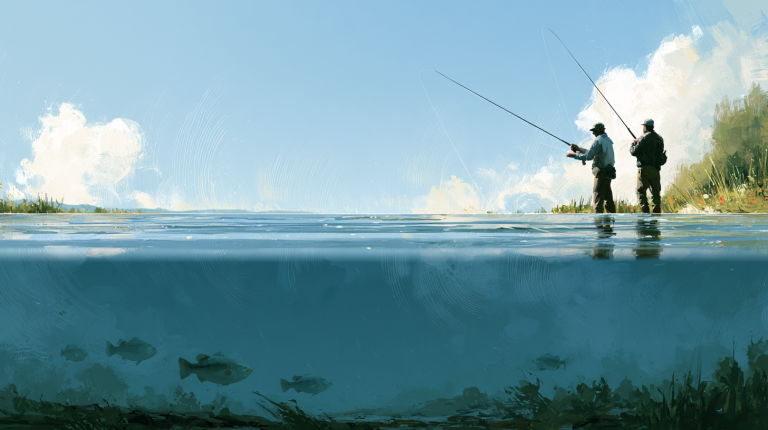
Visible activity can make anglers focus completely on the top few inches of water.
Sometimes that is correct. Sometimes the actual feeding happens underneath it.
A fish may chase prey upward and then immediately drop several feet. Trout may take emerging insects just below the surface rather than adults sitting on top. Predators attacking baitfish may move vertically through the water column rather than remaining at the location of the last splash.
If a surface lure gets ignored, do not immediately leave the fish.
Try the same area slightly deeper.
Your Cast May Be Spooking Them
Repeatedly dropping a lure directly onto a surface disturbance can work against you, particularly in shallow or clear water.
The fish that made the splash may already be moving. A heavy lure landing on the exact spot a second later adds another unnatural disturbance.
Instead, look for a pattern.
If surface activity repeatedly follows a weed edge, current seam, shoreline, drop-off, or school of bait, cast ahead of the movement or alongside the feature rather than chasing individual splashes.
How to Tell Whether Jumping Fish Are Actually Feeding
Spend a minute watching before making the next cast.
Different surface signs can suggest very different situations.
| What You See | What It May Mean | First Adjustment |
|---|---|---|
| Repeated small rises or dimples | Fish taking small food near the surface | Downsize and fish the surface or just below it |
| Baitfish scattering or spraying | Predator actively attacking the school | Match baitfish size and cast around the edge |
| Repeated swirls along weeds or structure | Fish using a feeding route or cover edge | Work the edge rather than the individual splash |
| Large isolated full-body jumps | May not be feeding behavior | Observe before committing to surface tactics |
| Surface activity with no reaction to topwater | Feeding may be occurring deeper | Run a lure, fly, or bait below the surface |
| Activity stops after several casts | Fish may have moved or become wary | Rest the area or change casting angle |
None of these signs is perfect on its own.
The most useful clue is repetition. One splash tells you very little. Several similar movements along the same piece of structure or through the same patch of water begin to reveal a pattern.
Fish Jumping but Not Biting: What to Change First
When fish are visible, avoid changing five things at once. If you swap lure size, color, depth, retrieve, and location simultaneously, you learn almost nothing from the result.
Work through the problem in order.
1. Identify What Is Actually Jumping
Try to determine the species before assuming you are seeing the fish you came to catch.
Carp, mullet, trout, bass, baitfish, invasive carp, and several other species can create obvious surface activity.
If you spend an hour throwing bass lures at fish that are not bass, lure selection is not the real problem.
Look at body shape, splash size, schooling behavior, location, and any fish you can clearly see beneath the surface.
2. Watch for Food
Look around the water instead of immediately looking into the tackle box.
Are insects sitting on or emerging through the surface?
Are tiny minnows flicking out of the water?
Do baitfish suddenly scatter before a larger boil appears?
Are birds feeding over the same area?
If you can identify what the fish are eating, imitate that, not merely the fact that the fish happened to jump.
3. Match the Size Before the Color
When visible feeding fish repeatedly reject a lure, downsizing is one of the simplest useful tests.
A predator focused on one-inch baitfish may ignore a much larger lure despite being aggressive. Trout feeding selectively on small insects can do the same thing with an oversized fly.
Get reasonably close in profile and size first.
Fine color adjustments can come later.
4. Change the Depth
If a topwater presentation gets no attention, work immediately beneath it.
Try a shallow-running lure, lightly weighted bait, suspended presentation, nymph, small swimbait, or another option appropriate for the species you are targeting.
The visible splash can be only the final part of a feeding movement that begins below the surface.
5. Slow Down — or Speed Up
Retrieve speed should reflect what the fish are actually doing.
Fish casually sipping insects call for a very different presentation from predators exploding through fleeing baitfish.
When unsure, make deliberate changes rather than random ones. Fish several casts at one useful speed, then make a meaningful adjustment.
6. Stop Casting Directly at Every Jump
This is particularly important when fish are moving.
By the time your lure reaches the splash, the fish may already be somewhere else.
Repeated surface activity often reveals a route, not a stationary target.
Cast ahead of that route, work parallel to the structure the fish are using, or intercept the direction in which the bait appears to be moving.
7. Make Your Presentation Less Obvious
Clear water, heavy fishing pressure, bright conditions, and shallow fish can make poor presentations easier to detect.
Depending on the technique, useful adjustments can include:
- a smaller lure or bait;
- a lighter or less conspicuous leader where appropriate;
- longer casts;
- quieter lure entry;
- fewer unnecessary casts;
- a more natural drift;
- fishing from a less obvious angle.
The goal is not automatically to use the lightest tackle possible. It is to remove unnecessary clues that something is wrong.
8. Know When to Leave the Surface Activity Alone
Visible fish are difficult to abandon because they make the spot feel promising.
But activity without any sign of feeding can become a trap.
If you have identified the likely species, tested the relevant depth, matched the available food reasonably well, and still receive no follows, taps, or strikes, move to another piece of water or target a different group of fish.
A jumping fish is not necessarily a catchable fish.
Common Fish-Jumping Scenarios
Trout Rising During an Insect Hatch
Trout are one of the clearest examples of why depth and food stage matter.
Fish may take adult insects from the surface, but they can also feed on nymphs or insects emerging immediately underneath it. Maryland’s Department of Natural Resources notes that trout splashing or slurping at the surface may be taking adults or emerging nymphs, while subsurface nymph feeding remains extremely important.
If dry flies are being ignored during obvious insect activity, look at what is on and beneath the surface before cycling through unrelated patterns.
Predators Chasing Baitfish
When small fish suddenly scatter and a larger boil or strike follows them, the surface activity is much stronger evidence of feeding.
Match the approximate size of the prey and avoid throwing a presentation that is dramatically larger unless the fish demonstrate that they will take it.
Casting along the outside of a bait school can also be more effective than repeatedly landing in the middle of it.
Large Fish Jumping Randomly
Large, spectacular jumps attract attention, but they are not necessarily the best fishing opportunity.
If the jumps are isolated, appear without fleeing prey or repeated feeding activity, and produce no follows or strikes, spend more time identifying the fish before changing tackle.
Sometimes the most useful information from a jump is simply: fish are present here.
Common Mistakes When Fish Are Jumping but Not Biting
The most common mistake is automatically switching to topwater. Surface activity tells you to investigate the upper water column; it does not prove the fish will eat something floating on it.
Another is chasing individual splashes. Look for the route, structure, current, baitfish, or insect activity connecting those splashes instead.
Avoid changing your entire setup after every cast. Make one useful adjustment and give it enough casts to tell you something.
And do not forget species identification. The fish making the most noise may not be the fish you are trying to catch.
Getting Bites but Still Not Hooking the Fish?
There is an important point where this problem becomes a different one.
If your adjustments start producing actual taps, strikes, bobber movement, or fish taking the bait but you still cannot hook them, the fish are no longer simply refusing your presentation.
At that stage, hook size, bait position, hookset timing, rigging, and how the fish is taking the bait become more important.
That is the situation covered in fish biting but not getting hooked.
FAQ
Why are fish jumping out of the water but not biting?
Fish do not jump exclusively to feed. Depending on the species and situation, jumping can be associated with feeding, escaping predators, disturbance, movement, or other behavior. First determine whether there is evidence of actual feeding before changing tackle.
Should you cast directly where a fish jumped?
Usually not repeatedly. If the fish is moving, it may already have left the exact spot. Look for a feeding lane, structure edge, bait school, or direction of travel and cast ahead or beside it.
What lure should you use when fish are jumping?
There is no single best lure. If the fish are feeding, match the size and approximate behavior of their natural food and fish at the same depth. Sometimes that means topwater; other times a small lure or bait immediately below the surface works better.
Are jumping fish always feeding?
No. Some jumps are unrelated to feeding, and certain species commonly break the surface for other reasons. Treat jumping as evidence of fish activity, not automatic proof of a feeding frenzy.
Why do trout rise but ignore my fly?
The trout may be feeding on a different insect, a different size, or a different stage of the insect’s life cycle. They may also be taking food just beneath the surface rather than eating adults on top.
Final Takeaway
Fish jumping but not biting is a clue, not a contradiction.
First determine whether the fish are actually feeding. If they are, the most important variable is usually presentation: put something of the right size at the right depth and speed without repeatedly disturbing the fish.
If they are not feeding, stop chasing every splash and use the activity to learn where the fish are instead.




One Comment