Fishing line with no memory sounds like the perfect solution to one of the most annoying problems in fishing: line that comes off the reel in tight coils, creates unnecessary loops, and causes tangles before a cast even reaches the water.
The good news is that some fishing lines have very little memory. The less convenient truth is that no conventional line is guaranteed to remain perfectly straight under every condition.
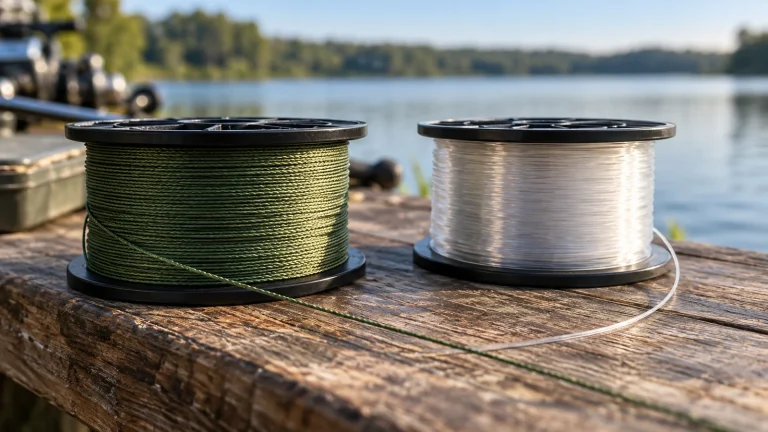
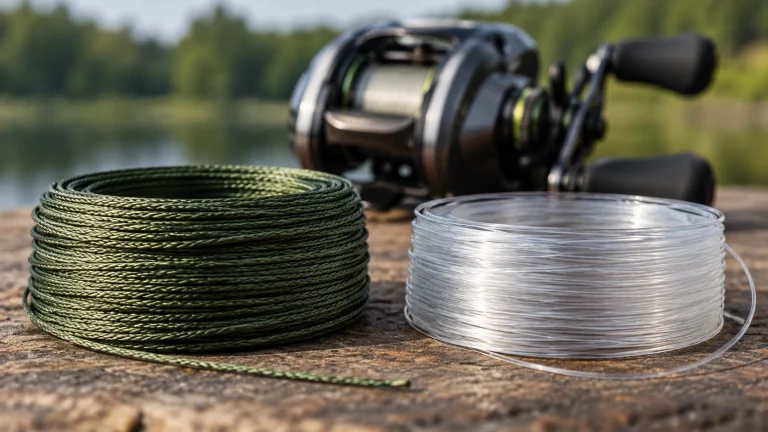
Braided fishing line comes closest to having no spool memory. Monofilament can also be surprisingly manageable when it is soft, supple, and matched to the reel. Fluorocarbon tends to be stiffer, although specially formulated low-memory versions are available.
The important part is understanding which line actually solves your problem rather than assuming that every tangle is caused by memory.
Is There Really Fishing Line With No Memory?
Not in the absolute sense.
Line memory describes the tendency of fishing line to retain the shape it has been held in, particularly after spending time wrapped around a reel spool.
Some materials resist this tendency much better than others.
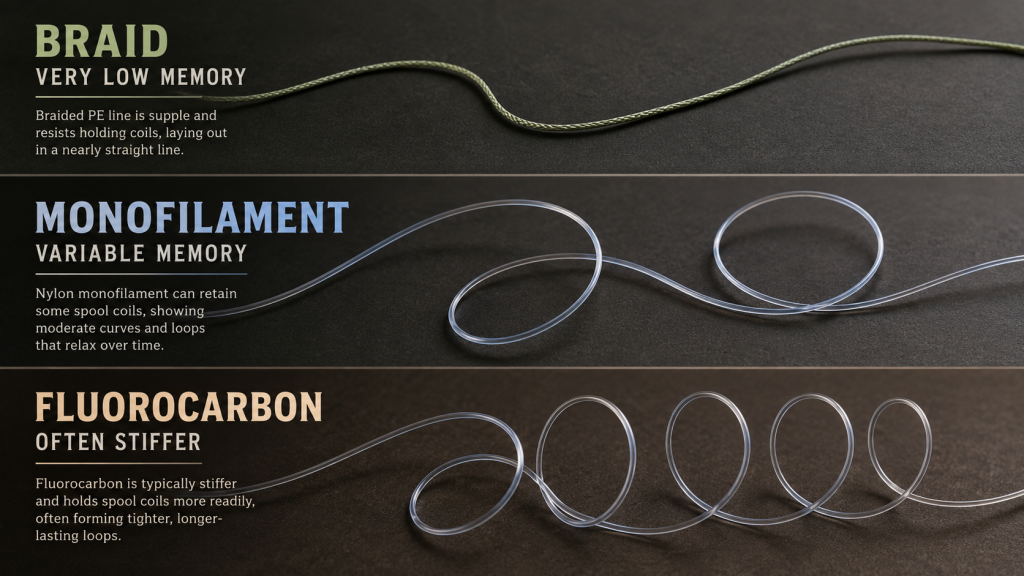
Braided line is the closest practical answer to fishing line with no memory because its construction allows it to remain relatively limp instead of behaving like a spring.
Monofilament and fluorocarbon are different. Both are single-strand materials that can retain curved shapes, although their stiffness and handling properties vary considerably between products.
The difference becomes obvious when you pull several feet of line from a reel.
A supple braid may hang almost straight under its own weight. A stiffer monofilament can retain broad circular loops, while some fluorocarbon lines produce tight, spring-like coils.
These are general tendencies rather than universal rankings.
Fishing Line Memory Comparison
| Fishing Line Type | Typical Memory | Main Advantage | Main Limitation |
|---|---|---|---|
| Braided PE line | Very low | Supple handling with little spool coiling | Can still develop wind knots, twist, or dig into the spool |
| Low-memory monofilament | Low to moderate | Good balance of handling, stretch, and affordability | Can develop coils over time |
| Standard monofilament | Moderate to high | Versatile, forgiving, and widely available | Thicker or stiffer versions can retain pronounced coils |
| Fluorocarbon mainline | Variable, often moderate to high | Dense, sinking material with useful underwater properties | Stiffer versions can spring off spinning reels |
The best choice depends on more than memory alone.
A line that comes off the spool beautifully but lacks the stretch, strength, or abrasion resistance required for the fishing situation is not automatically the better option.
Why Does Fishing Line Develop Memory?
Fishing line spends most of its life wrapped around something.
When monofilament or fluorocarbon remains wound on a spool, the material can gradually retain some of that curvature.
Instead of immediately straightening after leaving the reel, it continues following a circular shape.
Several factors influence how noticeable this becomes.
Line Diameter and Stiffness
Thicker line is generally harder to straighten because its resistance to bending increases with diameter.
This is one reason heavy monofilament often produces more noticeable coils than a thinner, more supple version of the same line.
However, diameter alone does not determine memory.
Two monofilaments with similar breaking strains and diameters can handle very differently because of their formulations and manufacturing processes.
That makes suppleness and intended reel use important buying considerations.
Reel Spool Diameter
A line stored around a small-diameter spool must follow a tighter curve than the same line wrapped around a larger spool.
That can make retained coils especially noticeable on smaller spinning reels.
Larger spools generally allow line to sit in broader curves, although this does not eliminate memory.
Spool shape, line lay, and the amount of line remaining also influence casting performance.
If you are comparing reel sizes for heavier fishing, the difference between 6000 and 8000 reels is worth understanding before choosing a reel purely for its number.
Storage Time and Conditions
Monofilament that has remained unused on a reel for months may show more pronounced coiling than the same line shortly after spooling.
Exposure to sunlight, excessive heat, and repeated temperature changes can also affect the condition and handling of fishing line.
Keeping reels protected indoors, away from extreme conditions, is sensible.
Does Braided Fishing Line Have Memory?
Braided fishing line has very little conventional spool memory.
Most modern fishing braids are made from multiple fine synthetic fibers woven together rather than a single solid strand of nylon or fluorocarbon.
This construction allows the line to remain relatively flexible.
When braid leaves a spool, it normally does not retain the same persistent circular coils associated with stiffer monofilament.
That makes braid particularly attractive for spinning applications where line needs to flow freely from the reel.
However, low memory does not mean braid is automatically free from problems.
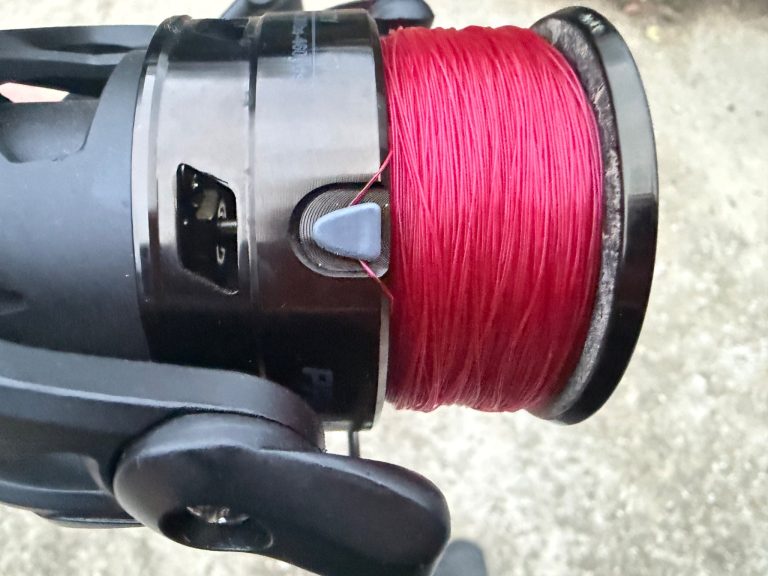
Braid can still develop loose loops, wind knots, and tangles. Because many braids are relatively thin and have little stretch, they can also dig into underlying wraps when tightly loaded.
Improper spooling, retrieving loose line, or allowing excess slack around the reel can cause trouble regardless of how little memory the material has.
Braid also changes the way a setup behaves.
Its low stretch provides direct contact with a lure or fish, but it offers less cushioning during sudden loads than monofilament.
That can be useful for lure fishing and detecting subtle bites, yet less desirable in some situations where extra shock absorption is helpful.
For anglers whose priority is reducing coils on a spinning reel, braid is often the simplest answer.
Is Monofilament Available With Low Memory?
Yes, and this is particularly important for anglers who do not want to switch to braid.
Low-memory monofilament is designed to remain more supple and manageable than stiffer alternatives.
Some manufacturers achieve this through polymer formulations, material blends, or production techniques intended to improve flexibility and handling.
Sufix Advance Monofilament is one example of a line specifically marketed for low memory.
However, such descriptions should not be interpreted as a guarantee that the line will never develop coils.
A soft monofilament can still retain some spool curvature, especially after prolonged storage.
What Makes a Good Low-Memory Mono?
Look for the handling characteristics rather than relying entirely on the words printed on the packaging.
A suitable monofilament should:
- Feel relatively supple for its diameter.
- Leave the spool without forming excessive tight loops.
- Match the reel’s intended line capacity and diameter range.
- Provide adequate breaking strength and abrasion resistance.
- Maintain reliable knot performance.
Monofilament also offers characteristics that braid does not.
Its stretch can cushion sudden movements during a fight, and its generally forgiving handling makes it useful across many fishing techniques.
For carp fishing, monofilament remains a sensible mainline choice, especially where braided mainlines are restricted.
If you are choosing between different strengths, the guide to what lb line for carp fishing explains why diameter, abrasion risk, and fishing distance matter alongside breaking strain.
Does Fluorocarbon Fishing Line Have Memory?
Fluorocarbon can have significant memory, although the amount varies considerably between products.
The material is often stiffer than ordinary nylon monofilament of comparable diameter.
This can become noticeable when using relatively thick fluorocarbon on smaller spinning reels.
Instead of flowing smoothly from the spool, the line may spring outward in loops.
That does not mean all fluorocarbon behaves badly.
Some fluorocarbon mainlines are specifically formulated to be softer and easier to cast. Seaguar InvizX, for example, is marketed as a low-memory fluorocarbon designed for manageable reel use.
The distinction between fluorocarbon mainline and fluorocarbon leader material also matters.
A stiff leader material may be perfectly suitable for a short connection near the hook or lure but inconvenient when used to fill an entire spinning reel.
If low memory is the main priority, braid is generally the more obvious starting point.
If sinking behavior, underwater visibility, or presentation requirements make fluorocarbon attractive, choosing a supple formulation becomes more important.
Fishing Line Memory vs Line Twist: What’s the Difference?
Line memory and line twist are often confused because both can create loops and tangles.
They are not the same problem.
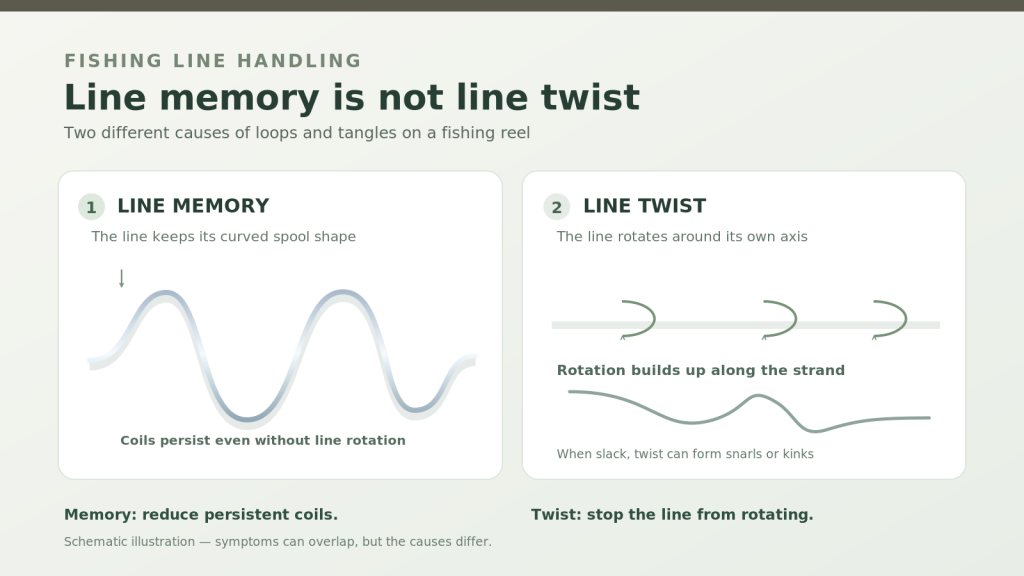
Line memory occurs when line retains a curved shape after being held around a spool.
Line twist occurs when the line rotates around its own length, building up torsion.
Line twist may come from several sources, including certain spinning lures, incorrect spooling, and retrieving line while the drag is slipping.
When twisted line becomes slack, it can form snarls or kinks.
A simple way to investigate is to pull a length of line from the reel and observe how it behaves without tension.
If it consistently retains broad, spring-like coils, memory may be an important factor.
If the line repeatedly twists around itself or forms small kinks, accumulated line twist may be involved.
Both conditions can exist at the same time, so this is a useful diagnostic clue rather than a perfect test.
The distinction matters because replacing line solely for memory may not solve a problem caused by the lure or reel setup.
How to Reduce Fishing Line Memory
You do not always need to replace an entire spool when line starts retaining coils.
Several adjustments can improve line management, particularly with monofilament.
1. Choose an Appropriate Line Diameter
Avoid using unnecessarily thick, stiff fishing line on a reel designed for much lighter diameters.
Heavier line can make coils more pronounced and reduce the amount of line that fits comfortably on the spool.
The goal is not to choose the thinnest possible line.
It is to choose a diameter that provides enough strength and durability without adding unnecessary handling problems.
2. Spool the Reel With Consistent Tension
Line should be wound onto the reel evenly and under appropriate tension.
Loose winding can create overlapping wraps that contribute to tangles during casting.
Follow the reel and line manufacturer’s spooling instructions, including how the supply spool should be positioned.
Stop during spooling if the line begins twisting or forming uncontrolled loops.
Correct the issue before filling the rest of the reel.
3. Avoid Incorrect Spool Filling
Both excessive and insufficient filling can create problems.
An overfilled spinning reel may release unwanted loops, especially with relatively stiff line.
An underfilled spool can reduce casting efficiency and leave the working line wrapped around a smaller effective diameter.
Follow the manufacturer’s recommended fill level rather than assuming that filling the spool completely to the lip is always best.
4. Relax Monofilament Carefully
Nylon monofilament can sometimes become more manageable after controlled stretching.
Apply smooth, modest tension to a suitable length of line without exceeding its safe loading.
Avoid sharp jerks or forcing the line against abrasive surfaces.
Another approach is to remove the spool from the reel and let suitable monofilament sit in lukewarm water, provided the line and reel manufacturer’s care guidance permits it.
Do not expose the complete reel mechanism to water unnecessarily or use excessive heat.
These approaches may help reduce existing coils, but they cannot restore line that has become damaged or seriously degraded.
5. Address Line Twist
If twist is the real problem, reducing spool memory alone will not fix it.
Check whether the lure rotates during retrieval and consider whether a suitable swivel would help.
Avoid repeatedly turning the reel handle while a fish is pulling line against a slipping drag.
Close the spinning reel bail manually after a cast, remove excessive slack, and begin retrieving with controlled tension.
If severe twist has already developed, use an appropriate untwisting method for the equipment and conditions before fishing again.
6. Replace Line That Is No Longer Reliable
There is a difference between line that retains some harmless coils and line that has become unsuitable for fishing.
Persistent kinks, damage, abrasion, unusual brittleness, or weakened knots are reasons to inspect the line carefully and replace it when necessary.
Do not attempt to rescue damaged fishing line simply to avoid buying another spool.
What Is the Best Low-Memory Fishing Line for Different Techniques?
The lowest-memory material is not automatically the best line for every technique.
Spinning
Braided line is an excellent option when supple handling, sensitivity, and casting performance are priorities.
Low-memory monofilament is also useful, particularly for lighter applications where some stretch is beneficial.
Carp Fishing
A supple monofilament mainline can be a strong all-round choice.
Braided line may provide very little memory, but it is not permitted on every carp water and behaves differently under load.
Check the fishery’s rules before choosing.
Baitcasting
Braid and suitable monofilaments can both work well.
Memory matters, but spool control, line diameter, lure weight, and casting technique are also important.
Fluorocarbon Applications
Choose a fluorocarbon specifically designed for mainline use when filling a reel.
For short leaders, memory is usually less important than ensuring that the material suits the presentation and can be connected reliably.
Common Mistakes When Choosing Low-Memory Fishing Line
The first mistake is assuming that a line labelled low memory cannot develop tangles.
Even very supple braid can create significant handling problems when wound loosely or allowed to collect excessive twist.
The second is selecting a line solely because it is soft.
Breaking strength, diameter, abrasion resistance, stretch, and knot performance remain important.
The third is trying to solve every coiling problem by replacing line.
Sometimes the material is unsuitable. Other times the problem comes from incorrect spooling, excessive twist, or how the reel is being used.
The fourth is overlooking fishery restrictions.
A line that performs beautifully in one situation may be prohibited or unsuitable somewhere else.
Frequently Asked Questions
What fishing line has the least memory?
Braided PE fishing line generally has the least conventional spool memory. Its flexible construction allows it to resist the persistent coiling commonly associated with stiffer monofilament and fluorocarbon.
Is there monofilament fishing line with no memory?
No conventional monofilament is guaranteed to have absolutely no memory. However, specially formulated low-memory mono can be noticeably more supple and manageable than stiffer alternatives.
Does fluorocarbon have more memory than monofilament?
Many fluorocarbon lines are stiffer and retain more pronounced coils than supple nylon monofilament. However, individual formulations vary, and some low-memory fluorocarbons are specifically designed for use as mainline.
Can braided fishing line develop tangles?
Yes. Braid has very little spool memory, but line twist, loose winding, wind knots, and other handling problems can still cause tangles.
Can you remove memory from fishing line permanently?
Not necessarily. Gentle stretching and suitable treatment may reduce coils in some nylon monofilaments, but memory can return while the line remains wound on a spool. Replacing unsuitable or damaged line may be the better solution.
Final Takeaway
If you want fishing line with no memory, braided line comes closest to delivering that result.
For anglers who prefer monofilament, a supple, low-memory formulation matched to the reel can offer very manageable performance.
The most important distinction is whether your problem comes from the line retaining coils or from accumulated line twist.
Choose a suitable line, spool it correctly, and fix the actual cause of the tangles rather than relying entirely on a low-memory label.