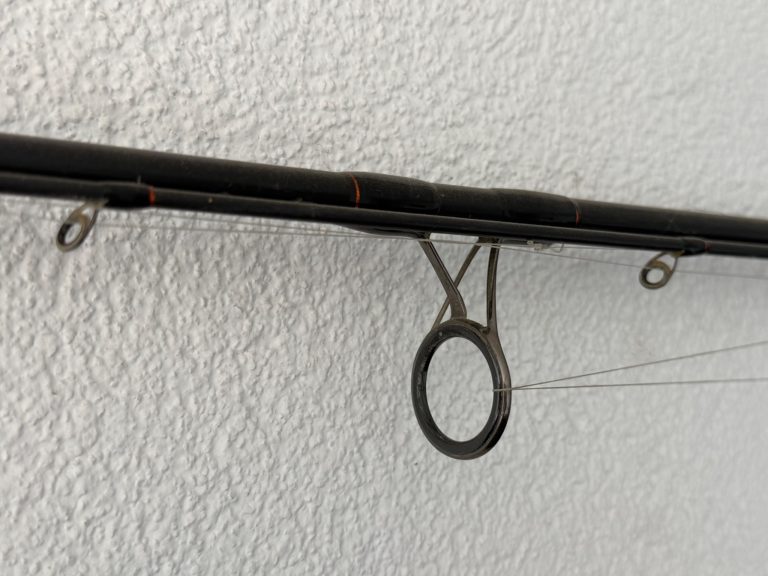
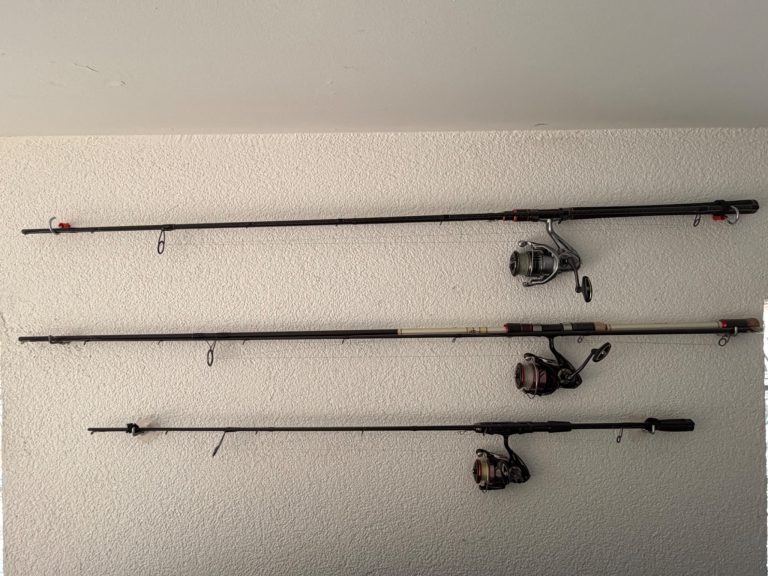
Are 2 piece rods good enough to choose instead of a one-piece rod? In most situations, yes. A well-made two-piece fishing rod can cast, detect bites, and fight fish extremely well while being much easier to transport and store. The main difference is the ferrule — the joint connecting the two sections — which introduces one additional point that needs to fit correctly and remain secure.
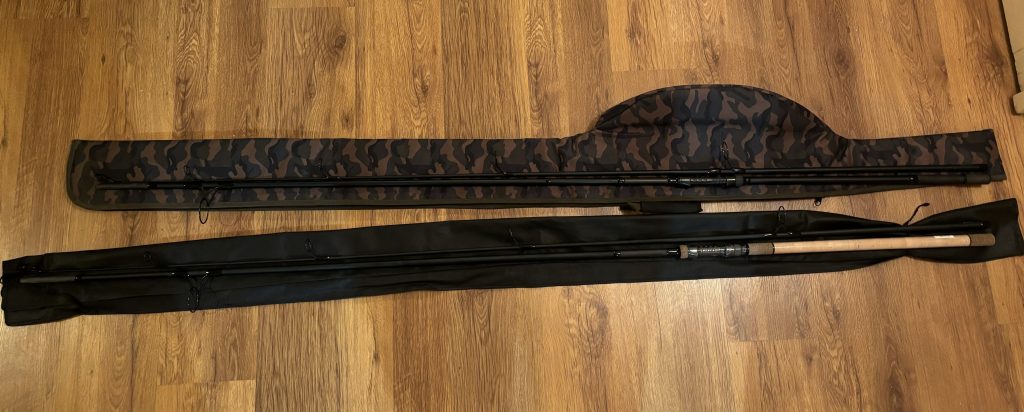
What Is a 2 Piece Rod?
A two-piece fishing rod is simply a rod whose blank separates into two sections for transport and storage. The point where the sections connect is called the ferrule.
Once assembled, the two sections are intended to work together as one rod. The guides should align, the connection should remain secure, and the blank should bend progressively under load.
That sounds simple, but ferrule design is one of the reasons older opinions about two-piece rods do not always apply to modern equipment.
Older or poorly made joints could be relatively heavy, stiff, or prone to loosening. Better modern designs use much more precise connections and reinforcement around the joint. That allows manufacturers to build multi-piece rods for everything from lightweight spinning to powerful surf, carp, and saltwater applications.
The existence of a ferrule does not automatically make a rod weak.
Are 2 Piece Rods Good for Serious Fishing?
Yes. There is nothing about a two-piece construction that limits it to casual fishing.
Two-piece rods are routinely made in powers capable of handling demanding casting and fighting situations. What matters is whether the rod was designed for the job.
A light two-piece spinning rod should not be expected to perform like a heavy carp rod, just as a light one-piece rod should not. Compare rods by their intended power, action, casting weight, line rating, components, and construction rather than assuming that the number of pieces determines strength.
Are 2 Piece Rods Strong?
A properly designed two-piece rod can be very strong.
The ferrule does require additional material and reinforcement because load needs to pass through the connection. When the sections are fully and correctly seated, that load is distributed through the joint as intended by the rod designer.
Problems are more likely when the ferrule becomes loose.
If only a small portion of the joint is carrying the load, stress becomes concentrated around the connection rather than being distributed through the intended overlap. That is why checking the joint occasionally is more important with a multi-piece rod than with a one-piece rod.
It is also why a rod breaking around the ferrule does not necessarily mean that all two-piece rods are inherently weak. Damage, poor fit, dirt in the joint, incorrect assembly, or fishing with a partially separated ferrule can all contribute.
Are 2 Piece Rods Less Sensitive?
This is where the answer becomes less absolute.
A one-piece blank has no joint interrupting its construction, so in theory it gives the designer the simplest possible route for producing a light and responsive rod. A ferrule adds material and can influence how the blank bends.
But that does not mean every one-piece rod is more sensitive than every two-piece rod.
Blank material, taper, resin, guides, reel seat, handle construction, overall weight, and manufacturing quality all affect how much feedback reaches your hand. A high-quality two-piece rod can easily feel more responsive than a poorly designed one-piece rod.
For techniques where anglers are trying to detect extremely faint changes in bottom contact or very subtle takes, the finest differences may matter.
For many other situations, they are unlikely to be the deciding factor.
Do 2 Piece Rods Cast Worse?
Not simply because they are two-piece.
Casting performance depends heavily on how the whole blank loads and recovers. Rod length, action, lure or lead weight, line, guides, and the angler’s casting technique all matter.
A poorly designed ferrule can create an unwanted stiff point in the blank. A well-designed connection minimizes that effect.
This is especially relevant with long rods. Carp and surf rods may be asked to cast substantial distances, yet multi-piece construction is common precisely because transporting a full-length version would be impractical.
The useful question is therefore not:
“Does it have a ferrule?”
It is:
“Does this particular rod have the action and casting characteristics I need?”
1 Piece vs 2 Piece Fishing Rod: What Actually Changes?
The biggest differences are more practical than many anglers expect.
| Feature | 1-Piece Rod | 2-Piece Rod |
|---|---|---|
| Transport | More difficult, especially with long rods | Much easier |
| Storage | Requires more space | Easier to store |
| Setup | Ready to use | Sections need assembling and aligning |
| Ferrule maintenance | None | Joint should be kept clean and checked |
| Sensitivity | Potential slight advantage in comparable designs | Very good on quality modern rods |
| Casting | Excellent | Excellent when the ferrule and blank are well designed |
| Best suited to | Anglers with easy transport and storage | Long rods, carp fishing, surf fishing, limited storage |
Why Long Rods Benefit Most From Two-Piece Construction
The longer the rod becomes, the more obvious the transport advantage becomes.
A short rod may fit easily inside a vehicle as one piece. A long carp, surf, or shore rod is a completely different proposition.
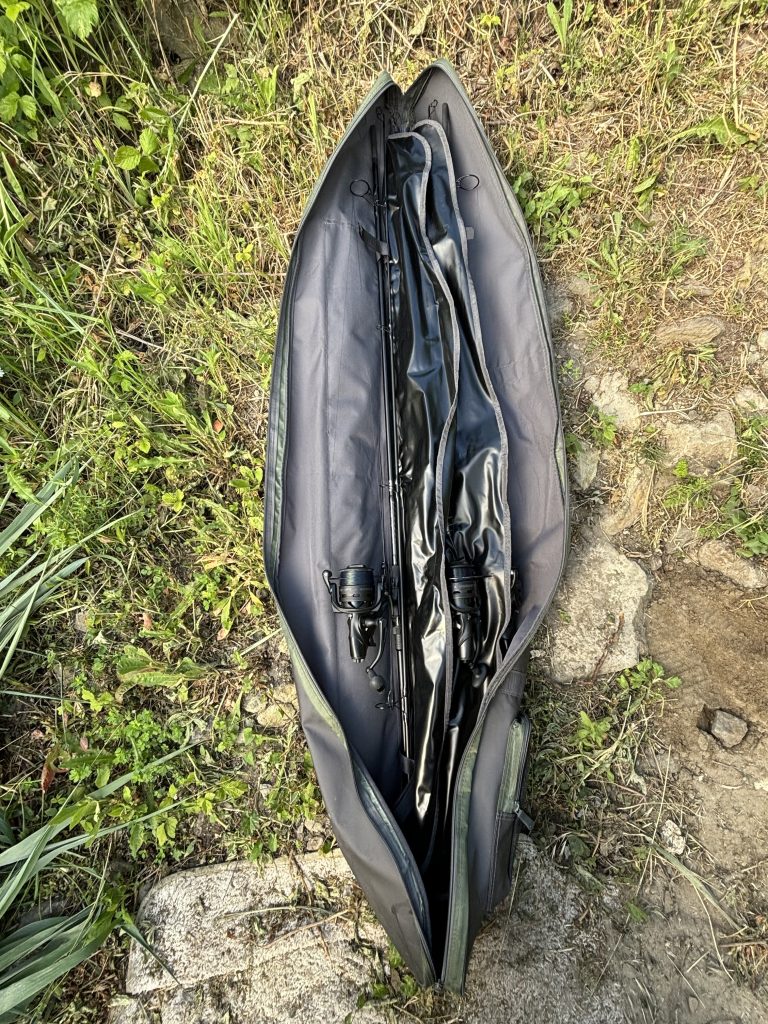
Breaking the blank into two sections makes it possible to put long rods into a protective sleeve or holdall rather than transporting the full length exposed. That can actually reduce the risk of accidental damage away from the water.
A rod tip trapped in a car door does not care whether the blank has a theoretically stronger one-piece construction.
This is one reason two-piece rods make particularly good sense when:
- you fish with long carp or surf rods;
- you have limited vehicle space;
- rods are regularly carried through vegetation;
- you store tackle in a small area;
- you frequently move between fishing spots;
- or simply keeping rods protected during transport matters more than eliminating a ferrule.
For many anglers, those advantages are useful on every single fishing trip.
The Ferrule Is the Part You Need to Look After
The ferrule deserves attention, but it does not require complicated maintenance.
Before assembling the rod, make sure both surfaces are clean. Sand, grit, or other debris inside the connection can interfere with the fit and potentially damage the blank.
Seat the sections firmly enough that there is no unwanted movement, then make sure the guides are correctly aligned.
Do not assume every joint must visually close completely. Ferrule designs differ, and some are intentionally designed to retain a visible gap. Follow the manufacturer’s instructions rather than forcing a section farther than it is designed to go.
During a long session — particularly one involving repeated casting — occasionally check that the sections have not started rotating or working loose.
A loose ferrule is much more concerning than the fact that the rod has a ferrule in the first place.
When a One-Piece Rod Still Makes More Sense
Two-piece rods are good, but that does not mean there is never a reason to buy a one-piece rod.
A one-piece rod makes sense when transport and storage are easy and you simply want the least complicated blank possible.
There is no connection to assemble, no ferrule to check, and no possibility of the sections rotating out of alignment.
Anglers who fish highly specialized techniques may also prefer the feel of a particular one-piece blank. If two versions of exactly the same rod are available, the one-piece model may have slightly different weight distribution or flex characteristics because it does not need reinforcement around a joint.
Those differences should be considered alongside convenience rather than treated as proof that one construction is universally superior.
If a seven-foot one-piece rod fits easily into your vehicle and storage space, there may be little reason to compromise on portability.
If a twelve-foot rod does not, the calculation changes quickly.
How to Tell Whether a 2 Piece Rod Is Good
Rather than judging it by the number of sections, inspect the things that actually affect its performance.
Check the Ferrule Fit
The sections should connect securely without noticeable wobble or movement.
Once assembled, gently flex the rod and listen for clicking around the joint. Movement or noise can indicate a poor fit.
Look at the Blank
Check for obvious cracks, impact marks, damaged finish, or other defects — especially around the ferrule where the blank experiences concentrated loads.
Check the Guides
The guides should align naturally once the sections are assembled.
Also inspect each guide ring. A chipped rod guide insert can damage fishing line surprisingly quickly and should be repaired rather than ignored.
Match the Rod to the Fishing
A rod can be extremely well made and still be wrong for your intended use.
Check its:
- power;
- action;
- casting or lure-weight rating;
- line rating;
- length;
- handle layout;
- and intended technique.
Those specifications are normally far more useful than asking whether it comes apart in the middle.
Should You Buy a 2 Piece Rod?
Choose a two-piece rod when transport, storage, or long rod length makes portability useful.
Choose a one-piece rod when transporting the full rod is easy and you prefer the simplicity of a continuous blank.
Do not choose between them purely because somebody says two-piece rods are weak or one-piece rods are always more sensitive. Those statements ignore enormous differences in rod quality and design.
For most anglers, the better-quality rod that suits the technique is the better purchase regardless of whether it has one section or two.
And if you are putting together a longer carp setup, other equipment choices can matter just as much. For example, our 6000 vs 8000 reel comparison covers how larger reel sizes affect line capacity, weight, and the overall setup.
Frequently Asked Questions
Do 2 piece fishing rods break easily?
A well-made two-piece rod should not break easily simply because it has a ferrule. Keep the joint clean, assemble it correctly, and check that it remains secure during use.
Can you catch big fish on a 2 piece rod?
Yes. The appropriate rod power, line rating, blank construction, and fishing technique matter more than the rod having two sections.
Do 2 piece rods lose sensitivity?
The ferrule can affect the construction and flex of the blank, but that does not automatically make a two-piece rod noticeably insensitive. Overall rod quality is usually more important.
Why do 2 piece rods come apart when casting?
The most common reason is a ferrule that was not seated securely or gradually loosened during repeated casting. Stop fishing and reseat the sections if you notice them rotating or separating.
Is a 1 piece or 2 piece rod better?
Neither is automatically better. One-piece rods offer simplicity, while two-piece rods offer much easier transport and storage. Choose based on the rod’s quality and how you actually fish.
Final Takeaway
So, are 2 piece rods good? Absolutely — provided the rod itself is good.
The ferrule is an extra connection that needs to fit properly, but modern two-piece rods can deliver the strength, casting performance, and sensitivity most anglers need. For long rods in particular, the improvement in transport and storage can easily outweigh the small inconvenience of assembling them.
Choose the rod for its quality, action, power, and intended fishing rather than judging it by the number of pieces.