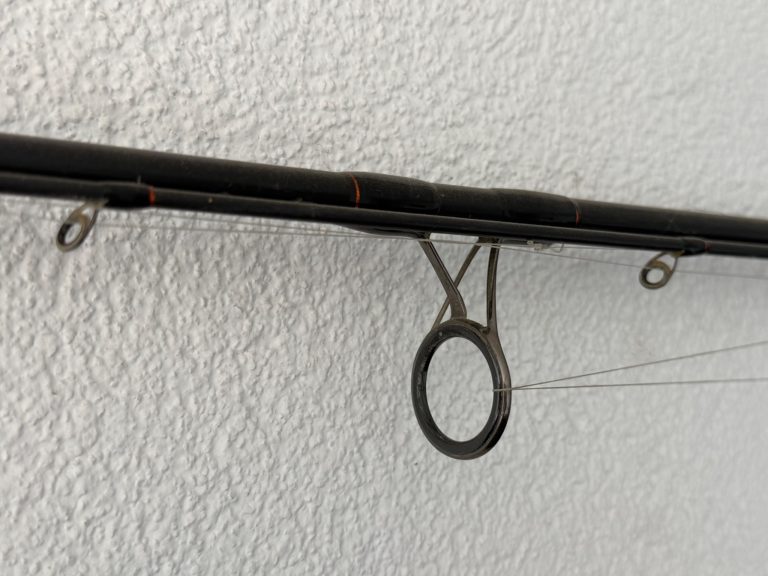
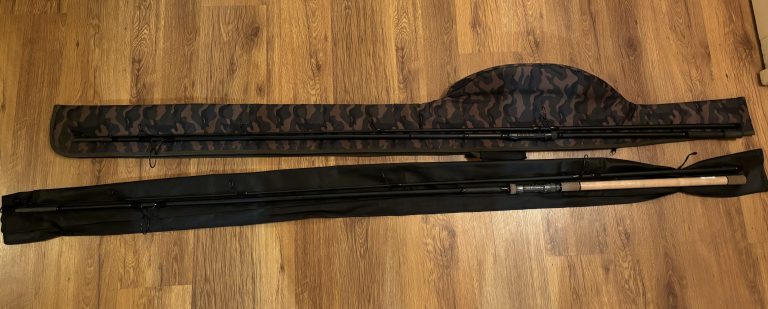
Knowing how to store fishing rods properly can save you from a broken tip, damaged guide, or reel that needs attention before your next trip. Rods are designed to bend under controlled fishing loads, but they are not designed to be crushed beneath tackle bags, knocked against garage walls, or left under constant pressure.
You do not need an expensive rod rack or a dedicated fishing room to protect them. A simple wall-mounted holder, a properly supported shelf, or a good rod bag can all work.
What matters is keeping each rod clean, dry, reasonably straight, and protected from impacts. The best arrangement depends on how many rods you own, their lengths, whether they break into sections, and where you have space to put them.
What Is the Best Way to Store Fishing Rods?
There is no single storage arrangement that works for every fishing rod.
A short spinning rod can fit into a small wall-mounted rack, while a twelve-foot carp rod may be much easier to store in two sections inside a padded holdall.
The important distinction is between the position of the rod and the pressure being applied to it.
A rod lying horizontally is not automatically being stored incorrectly. Neither is a vertically positioned rod automatically safe. Either can suffer damage if the tip is carrying weight, the blank is forced into a bend, or something heavy presses against the guides.
Here is a practical comparison of the main options.
| Storage Method | Best For | Main Precaution |
|---|---|---|
| Vertical rod rack | Assembled rods and limited floor space | Support securely; keep tips clear |
| Horizontal wall rack | Long assembled rods | Use sufficient padded support |
| Padded rod bag | Multi-piece rods and transport | Avoid crushing and trapped moisture |
| Hard rod tube | Valuable rods and vehicle transport | Dry contents before closing |
| Freestanding rack | Several rods used regularly | Place outside busy walkways |
| Shelf or tabletop | Rod sections in protective sleeves | Keep them straight and away from heavy objects |
For most anglers, the best choice is simply the one that keeps equipment protected while making it easy to retrieve a rod without disturbing everything around it.
Should Fishing Rods Be Stored Vertically or Horizontally?
Both orientations can work, but the way the rod is supported matters.
Vertical Fishing Rod Storage
A vertical rack is often the most convenient arrangement for assembled fishing rods.
The rod stands upright with its heavier handle at the bottom and the tip pointing toward the ceiling. A suitable holder prevents it from falling sideways.
Vertical storage is particularly useful for spinning rods, baitcasting rods, and other relatively short setups that can remain assembled between fishing trips.
It also has several practical advantages:
- Rods occupy relatively little floor space.
- Individual rods are easy to identify and retrieve.
- Guides are less likely to catch on neighboring equipment when properly spaced.
- Rods can remain ready for the next trip.
However, avoid simply leaning a rod into a corner and allowing its tip to press against the wall.
A secure rack is different from a rod that can slide sideways or fall whenever something brushes against it.
Horizontal Fishing Rod Storage
Horizontal storage is equally practical when the rod is supported correctly.
A wall rack, shelf, or padded holder can support longer rods without forcing them into an unnatural shape.
Ideally, distribute support along the stronger sections of the rod and add another support when needed to prevent sagging.
Avoid arrangements where the rod hangs from its delicate tip section or bends noticeably between widely spaced supports.
Horizontal storage is especially convenient for long carp rods, surf rods, and fishing equipment stored above a workbench.
The important rule is not vertical versus horizontal. It is whether the rod remains secure and free from unnecessary pressure.
Clean and Dry Every Rod Before Storage
A good storage rack will not protect equipment from moisture that was already trapped inside its bag.
Cleaning is therefore the first step, especially after fishing in saltwater, muddy conditions, or sandy areas.
1. Remove Dirt and Salt
Wipe the rod blank with a soft, damp cloth.
Pay attention to the guides, reel seat, handle, and ferrule connections on multi-piece rods.
Saltwater equipment deserves particular care because salt residue can contribute to corrosion around metal components.
Avoid unnecessarily aggressive cleaning products, especially around finishes, grips, and delicate hardware.
2. Inspect the Guides and Rod Blank
Check the rod for obvious damage while cleaning it.
Look for loose guide frames, cracked thread finishes, scratches, and unusual marks around the joints.
A damaged rod guide insert is worth identifying before storage because a rough or chipped ring can damage fishing line once the rod is used again.
It is much better to discover the problem at home than while fighting a fish.
3. Let Everything Dry
Allow rods to dry completely before closing them inside bags, sleeves, or tubes.
Pay special attention to damp cork handles, rod joints, and the inside of protective cases.
A soft rod bag can hold moisture against the equipment if it is packed away immediately after a wet fishing session.
For long-term storage, a dry rod in a dry bag is far more important than having an expensive case.
How to Store Fishing Rods in Bags Without Crushing Them
Rod bags and holdalls are a sensible storage option, particularly when rods break into several sections.
They help protect finishes and guides from scratches, keep matching sections together, and make equipment easier to transport.
However, a soft bag does not make the contents immune to pressure.
When several rod bags are piled on a table or shelf, the weight of the equipment above can press against reels, guides, or rod sections inside the lower bags.
Whether that is a problem depends on the construction of the bags and what they contain.
A padded holdall with separate compartments may distribute pressure reasonably well. A thin sleeve containing an exposed rod tip offers considerably less protection.
For safer storage:
- Make sure every rod and bag is completely dry.
- Keep the rod sections straight inside their compartments.
- Position bags on a flat, stable surface.
- Avoid placing heavy tackle boxes or other equipment on top.
- Keep reels and protruding guides away from pressure points.
- Use a shelf, divider, or additional support when several heavy holdalls must be stored together.
A small stack of properly packed rod bags is not automatically dangerous. The goal is to prevent the equipment inside from becoming the structure supporting everything above it.
If the bottom bag visibly compresses or a rod section bends under the weight, rearrange the storage.
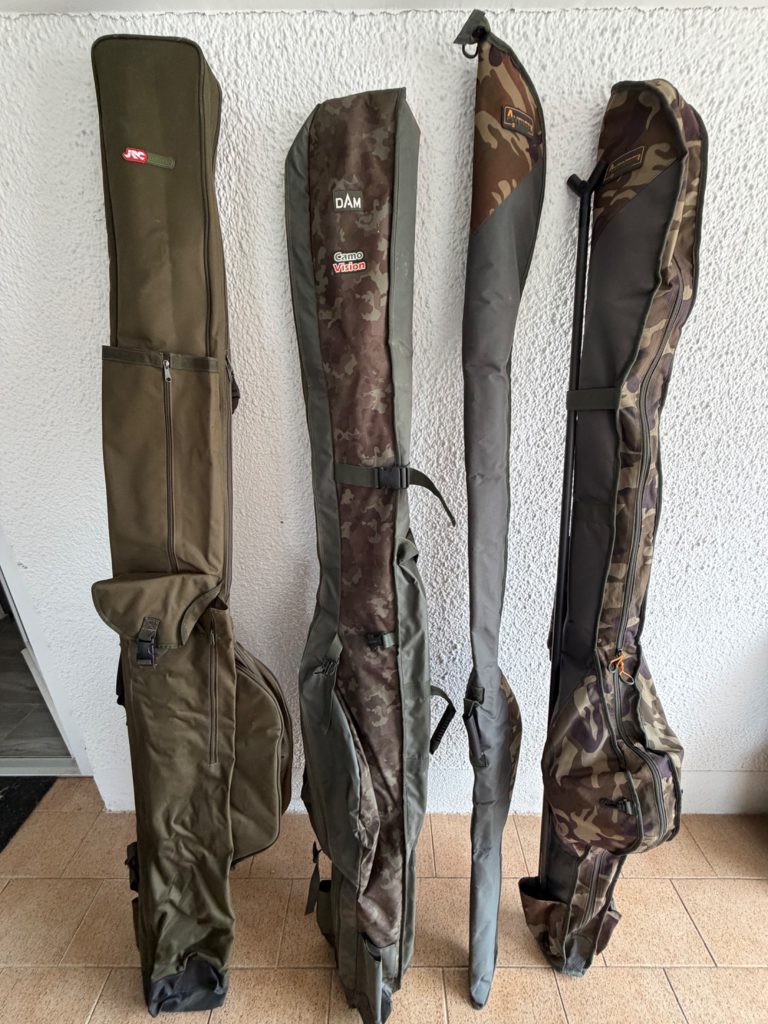
Rod bags can also be stored upright against a wall, provided they are stable and the rods inside are not resting on delicate tip sections. Keep the heavier handle ends toward the floor, make sure the bags cannot slide or fall, and avoid leaving them against damp surfaces. For longer-term storage, a dedicated holder or secure hanging arrangement can provide additional protection.
How to Store Fishing Rods in a Garage
Garages are convenient because they usually provide enough space for longer rods, but they also introduce risks that may not exist inside the house.
Cars, bicycles, tools, ladders, and stored household items can all damage fishing equipment.
Choose a Safe Location
A useful garage storage location is somewhere rods will not be struck by a car door, knocked by a bicycle, or caught when somebody carries equipment through the room.
Wall-mounted racks are often effective because they keep rods away from the floor.
Avoid positioning rods directly behind moving garage doors or close to frequently opened cabinets.
Think about how you will remove the longest rod, not merely whether it fits in the space.
Control Moisture and Heat
A dry, reasonably stable environment is preferable to a damp corner or an area receiving strong direct sunlight.
Keep rods away from standing water, leaking roofs, heaters, and surfaces that regularly collect condensation.
Garages can also become extremely hot during summer. Do not store rods under bending pressure in these conditions.
Keep Rods Separated
When several rods share a rack, give each one enough space that guides and reels do not continually strike one another.
This becomes particularly important when removing a rod from the middle of the collection.
You should be able to take one rod down without pulling three others with it.
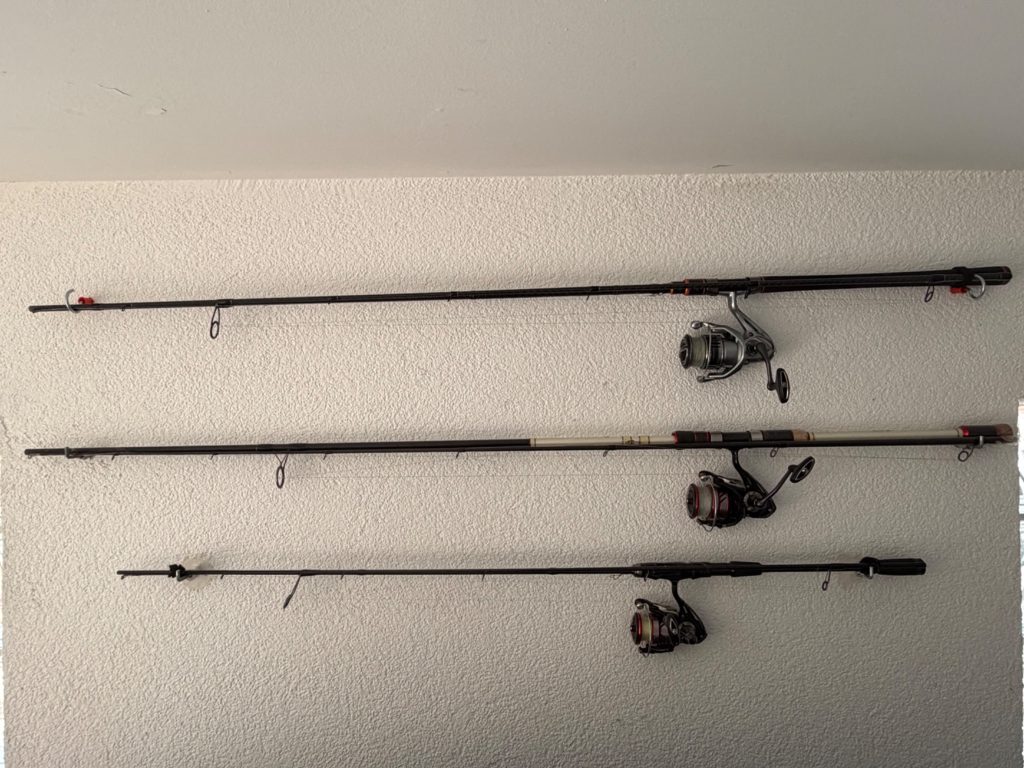
Simple DIY Wall Storage for Fishing Rods
You do not necessarily need a commercial storage system.
A simple wall-mounted arrangement can work when it supports the rods securely and does not place pressure on delicate components.
Two bare screws or improvised hooks may appear sufficient, but their shape, spacing, and contact points deserve attention.
A rod should not rest on an exposed sharp metal edge, hang from a fragile guide, or balance in a position where it can easily roll off.
If you build your own holder:
- Attach the supports securely to the wall using fasteners appropriate for its construction.
- Use smooth, padded contact surfaces.
- Support stronger parts of the rod rather than the tip.
- Provide enough separation for attached reels.
- Check that rods cannot slide or rotate out of position.
- Keep hooks, exposed lures, and fishing line from becoming tangled around the holder.
Foam-lined hooks, wooden supports with protective padding, or simple purpose-made rod clips can all be practical.
A DIY holder does not need to look elaborate. It needs to hold the equipment reliably.
How to Store Two-Piece and Telescopic Fishing Rods
Multi-piece rods are often easier to store because they require less length.
This is one of the practical benefits discussed in our guide to two-piece fishing rods.
However, the joints need some care.
Before separating a two-piece rod, make sure the sections are clean and free from grit.
Follow the manufacturer’s instructions when disconnecting the ferrule. Avoid twisting or forcing a stubborn connection in ways that could damage the blank.
Store matching sections together inside a suitable sleeve or compartment.
The thinner tip section should not be trapped underneath a heavier handle section where it could be bent or crushed.
Telescopic rods require slightly different treatment.
Before collapsing the rod, remove dirt and allow the sections to dry. Retract them carefully without forcing sections that feel stuck.
Pay particular attention to keeping the guides aligned and protecting the exposed tip.
For both styles, the objective is to reduce storage length without introducing avoidable pressure or damage.
Should You Remove Reels Before Storing Fishing Rods?
Not always.
For short-term storage, leaving a reel mounted on a rod is generally practical if the whole combination is supported securely.
This is particularly convenient for frequently used spinning rods.
For longer storage periods, removing reels can make cleaning, inspection, and packing easier.
A mounted reel also adds bulk and creates a point that may receive pressure when rods are stacked or transported.
If you leave a reel attached, make sure it is dry, positioned clear of hard surfaces, and not bearing the weight of other equipment.
Back off the reel drag for extended storage, following the reel manufacturer’s guidance.
Remove loose lures or secure hooks in a suitable keeper rather than leaving them exposed.
Also avoid leaving the rod bent by tightly pulling the line against the tip.
The rod should be resting in its normal unloaded position.
How to Store Fishing Rods in a Car
Transport introduces a different problem from storage at home.
A rod lying safely on a shelf may slide, bounce, or strike something when placed inside a moving vehicle.
The safest practical approach is to protect the rod and prevent it from moving.
Use Protective Sleeves or Tubes
A rod sleeve helps keep sections together and prevents guides from snagging other equipment.
For more demanding journeys, a rigid rod tube provides additional protection from impacts and luggage.
This is especially useful when several rods are transported together.
Secure the Rods
Do not leave assembled rods loose across seats where they can slide toward passengers or interfere with the driver.
Keep rods away from door openings, pedals, and vehicle controls.
A rod tip extending toward a closing door or tailgate is an obvious breakage risk.
Two-piece rods are particularly convenient because their shorter sections are easier to position safely inside the vehicle.
Avoid Long-Term Vehicle Storage
Cars can become extremely hot when parked in the sun.
A vehicle is therefore better treated as a means of transporting rods than as their permanent storage location.
Remove equipment after the trip, inspect it, and allow any damp bags to dry.
How to Store Fishing Rods in a Truck or Truck Bed
Truck storage requires more protection because the equipment may be exposed to movement, dust, moisture, and other cargo.
A rod placed loose in an open truck bed can bounce against hard surfaces or be crushed by items shifting during transport.
For most situations, a secured protective tube or a properly installed rod carrier is preferable to loose rods.
When using a truck bed:
- Protect delicate tips inside an appropriately sized case.
- Secure the case against movement.
- Avoid placing heavy equipment on top.
- Keep hooks and lures covered.
- Protect rods from rain and road debris.
- Make sure nothing extends beyond the vehicle unsafely or violates local transport requirements.
Dedicated truck-mounted rod carriers can be convenient for frequent fishing trips, but their mounting method, security, and suitability for the vehicle matter more than their appearance.
An exposed rod holder is not necessarily suitable for every road, journey, or weather condition.
For long journeys, a closed and securely restrained protective case is often the simpler solution.
Common Fishing Rod Storage Mistakes
Most storage problems are avoidable.
Leaning rods in crowded corners: Rods can slide, fall, and strike hard surfaces. Use a stable rack or protective case instead.
Putting rods away wet: Moisture trapped inside bags can contribute to corrosion and mold. Dry everything first.
Stacking heavy items on rod bags: Soft cases offer limited protection against crushing pressure.
Hanging rods by delicate sections: Support the handle or stronger parts of the blank without bending the tip.
Leaving rods exposed in vehicles: Unsecured rods can move during braking and be trapped under other cargo.
Ignoring damaged guides: Storage is an excellent opportunity to inspect equipment before the next trip.
Leaving assembled tackle under tension: Release unnecessary tension and allow the rod to rest unloaded.
Frequently Asked Questions
Is it better to store fishing rods vertically or horizontally?
Both are acceptable. Vertical storage is convenient for assembled rods and saves space. Horizontal storage is suitable when the blank is adequately supported. Avoid sustained bending pressure and accidental impacts.
Can fishing rods be stored in a garage during winter?
Yes, provided the garage remains suitably dry and the rods are protected from moisture, impacts, and unnecessary pressure. Check for condensation and make sure storage cases are dry before closing them.
Can you leave fishing rods in their bags all year?
Yes, if the rods and bags are completely dry, the contents are adequately protected, and nothing is pressing against delicate sections. Periodically inspect the equipment rather than leaving it unchecked indefinitely.
Is it safe to store fishing rods with reels attached?
Generally, yes, especially for frequently used setups. Ensure the reel is not being crushed or supporting other equipment, and loosen the drag for longer storage periods according to the manufacturer’s instructions.
Can you store fishing rods on a wall using hooks?
Yes. Securely installed, padded hooks or supports can make effective storage holders. Avoid bare sharp contact points, fragile tip sections, and arrangements that allow rods to fall.
Should fishing rods be stored with the line attached?
Line can remain on the reel, but avoid storing the rod under tension. Remove or safely secure terminal tackle, release unnecessary load, and inspect the line before using the setup again.
Final Takeaway
Learning how to store fishing rods does not require an expensive storage system.
The best approach is to keep rods clean, dry, straight, and protected from damage.
A vertical rack works well for assembled spinning rods, while padded bags and properly supported horizontal storage are practical for longer and multi-piece rods.
Whatever method you choose, pay particular attention to the tips, guides, moisture, and pressure from other equipment. Those simple precautions matter far more than how impressive the storage area looks.