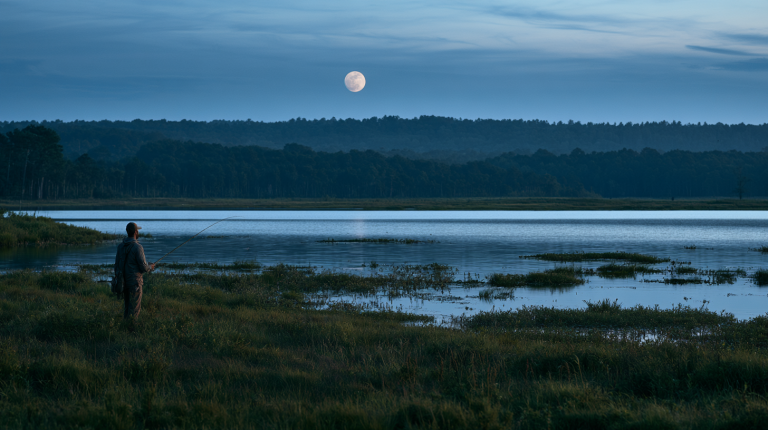
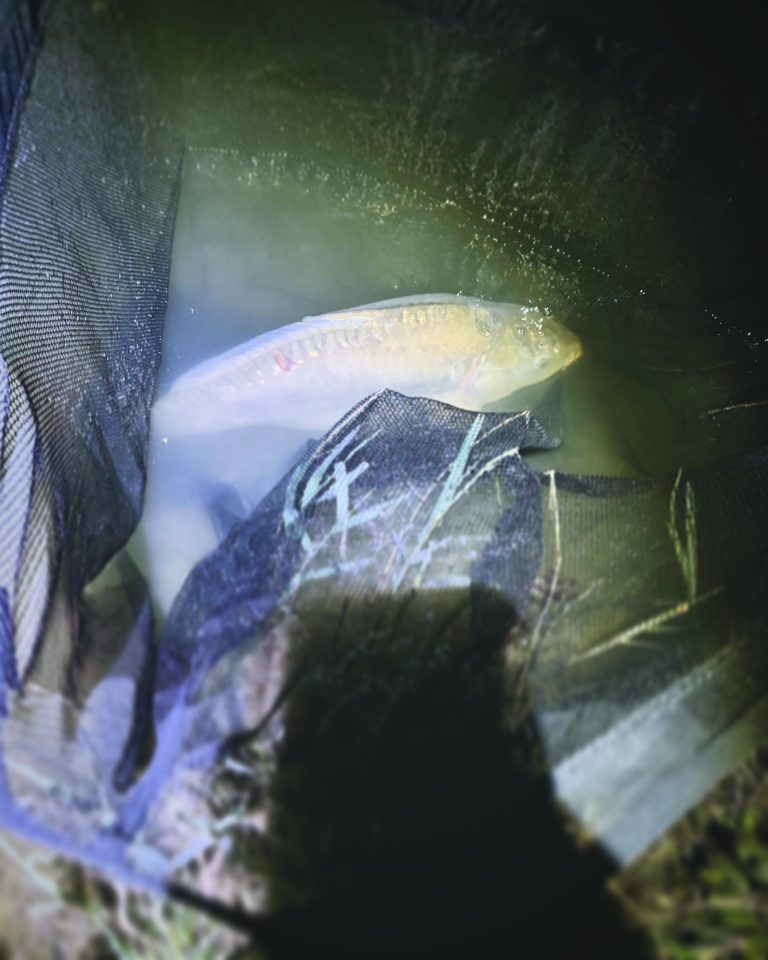
What fishing line glows under black light? The most reliable answer is fishing line specifically made with fluorescent or UV-reactive dyes. Fluorescent monofilament is particularly common, although some braided and coated lines are also manufactured to react strongly under ultraviolet light.
The important word is fluorescent.
A bright yellow, green or blue fishing line does not automatically glow under a black light simply because it looks highly visible during the day. Likewise, clear fishing line is not necessarily non-reactive. Some lines sold as clear fluorescent can become extremely noticeable once a UV light is pointed at them.
For night fishing, that distinction matters much more than the normal daylight color printed on the spool.
What Fishing Line Glows Under Black Light Best?
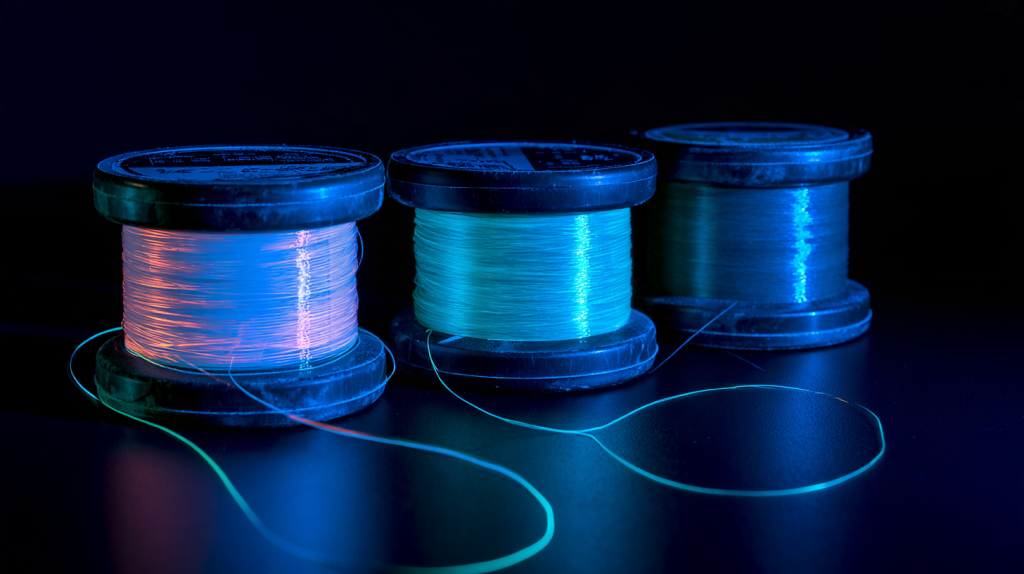
Fishing lines intentionally manufactured to fluoresce under ultraviolet light give the most predictable result.
In practical fishing terms, this most commonly means fluorescent monofilament or copolymer line.
Manufacturers can incorporate fluorescent pigments or dyes into line so that it becomes extremely bright when illuminated by a suitable UV source.
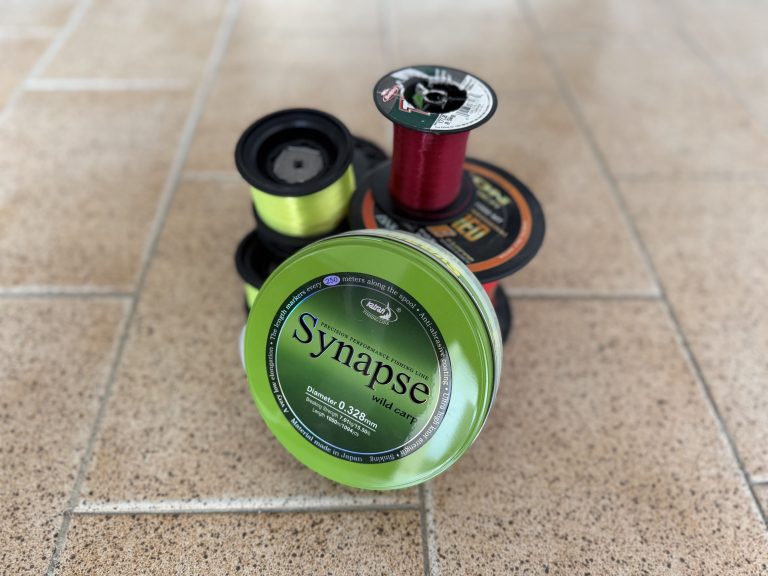
Some lines may look yellow, green, blue or almost clear in normal daylight and then appear dramatically brighter under a black light.
That is different from assuming that every brightly colored line will react the same way.
When choosing line specifically for black-light fishing, look for wording such as:
- fluorescent;
- UV fluorescent;
- UV reactive;
- black-light visible;
- clear fluorescent;
- night fishing line.
Those descriptions are much more useful than simply choosing the brightest spool on the tackle-shop shelf.
Why Does Fishing Line Glow Under Black Light?
The effect is called fluorescence.
A black light produces ultraviolet radiation. When UV reaches a fluorescent material, that material absorbs energy and emits part of it as visible light.
That visible emission is what makes a fluorescent fishing line appear to light up against a dark background.
That distinction is important because fluorescence is not the same thing as a material that continues glowing after the light source disappears.
A fluorescent line generally needs UV light shining on it to produce the dramatic effect anglers associate with black-light fishing.
The same distinction applies elsewhere in fishing: glow-in-the-dark and UV-reactive tackle are not the same thing.
Fluorescent Monofilament Is the Most Obvious Choice
If black-light visibility is your main requirement, fluorescent monofilament is a logical starting point.
It is widely available and can be manufactured in several fluorescent finishes.
Common descriptions include:
- clear fluorescent;
- fluorescent blue;
- fluorescent yellow;
- neon yellow;
- fluorescent green.
Do not place too much importance on the exact color name.
Two yellow lines can react very differently under the same UV light because fluorescence depends on the actual dyes and materials used, not simply on how yellow the line appears in daylight.
That is why the manufacturer’s description matters.
A spool specifically labelled UV fluorescent gives you far more useful information than one described only as high visibility yellow.
Fluorescent mono can be particularly useful when the angler needs to see exactly where the line is running during darkness.
That can help when watching for movement, keeping track of several rods, identifying changing line angles or controlling a fish close to weed and other obstacles.
Does Fluorocarbon Glow Under Black Light?
Do not assume that standard fluorocarbon will glow just because another clear fishing line does.
Ordinary fluorocarbon is generally selected for characteristics such as abrasion resistance, sinking behavior and low underwater visibility rather than for black-light fluorescence.
There are, however, important exceptions.
Some fishing lines described casually as “fluorocarbon” are actually nylon or copolymer lines with a fluorocarbon coating.
Those products can still be manufactured with fluorescent pigments.
Asso Knight is one real example: the manufacturer describes it as fluorocarbon-coated nylon while also specifically identifying it as fluorescent under UV light.
So the useful question is not:
Is fluorocarbon fluorescent?
It is:
Does this particular line say that it is fluorescent or UV reactive?
Check the actual construction and product specification rather than relying only on the word fluorocarbon.
Does Braided Fishing Line Glow Under Black Light?
Some does.
Some does not.
Braid is available in extremely bright yellow, green, orange and multicolor finishes, but normal visibility and UV fluorescence are separate properties.
A fluorescent coating or fluorescent fibers can make a braid react strongly to UV.
Without that feature, a bright braid may look impressive during the day while producing relatively little additional effect under your black light.
If you specifically want black-light-visible braid, look for the same terminology used with mono:
- fluorescent;
- UV reactive;
- UV visible;
- black-light visible.
Do not buy a braid purely because the package says hi-vis and assume it will fluoresce.
| Fishing Line Type | Black-Light Reaction | What to Look For |
|---|---|---|
| Fluorescent monofilament | Usually strong | “Fluorescent,” “UV fluorescent,” or “black-light visible” |
| Standard monofilament | Varies | Do not assume it fluoresces unless stated |
| Fluorocarbon-coated mono | Can be strong | Check whether the product specifically mentions UV fluorescence |
| Standard fluorocarbon | Usually not chosen for fluorescence | UV reaction depends on the exact product |
| Fluorescent braid | Can be strong | Look for “UV reactive” or “fluorescent” |
| Standard high-vis braid | Varies | Bright daylight color does not guarantee UV fluorescence |
High-Vis and Fluorescent Fishing Line Are Not the Same Thing
This is probably the easiest mistake to make.
High-vis simply means the manufacturer intends the line to be easy for the angler to see.
That visibility can come from a bright pigment that works well in daylight.
Fluorescent describes a material that reacts to suitable incoming radiation and emits visible light.
A fluorescent fishing line can therefore be high-vis, but a high-vis fishing line does not necessarily have to be fluorescent.
If black-light performance is important, the safest approach is to ignore vague descriptions such as:
- bright;
- visible;
- neon;
- hi-vis.
Instead, look for an explicit reference to UV or fluorescence.
If the manufacturer makes no such claim, treat black-light visibility as unknown until you test it.
What Color Fishing Line Glows Brightest Under Black Light?
There is no universally brightest color.
Fluorescent yellow, green, blue and clear-blue lines are all produced for night visibility.
What matters is the fluorescent formulation rather than the visible color alone.
A dull-looking clear fluorescent line can react much more strongly under your UV lamp than an extremely bright yellow line that contains no strongly fluorescent dye.
The black light itself also matters.
Different UV lamps use different wavelengths and outputs, while different fluorescent materials respond more strongly to some wavelengths than others.
That makes product-to-product testing more useful than trying to declare one universal best color.
If you already own several lines, testing them costs nothing.
How to Test Fishing Line With a Black Light
Testing line before a night session takes only a minute.
Take a short section from each line you want to compare and place them beside one another in a dark room.
Then illuminate them with the same black light from the same distance.
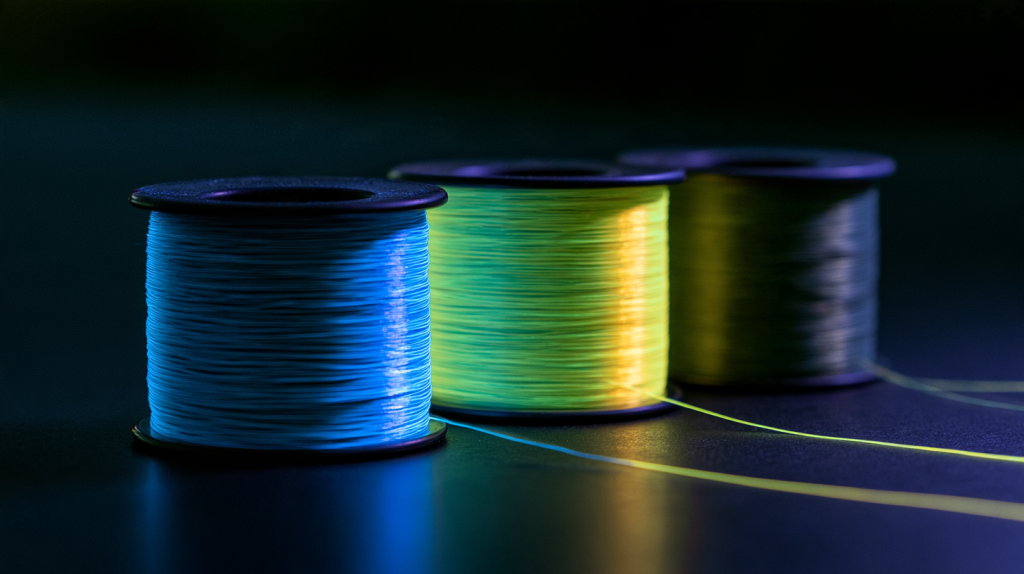
A strongly fluorescent line should become immediately obvious.
Compare:
- how bright each line appears;
- how easy it is to follow against a dark background;
- whether the entire line fluoresces evenly;
- whether the effect remains useful several feet from the UV source.
You can also test the line while it is still on the spool.
This is useful when buying or sorting existing tackle because you can quickly determine whether a supposedly bright line actually reacts to your particular UV lamp.
Follow the safety instructions supplied with the UV light and avoid staring directly into high-output UV sources.
Why Use Fluorescent Fishing Line at Night?
The main advantage is not that the line attracts fish.
It is that you can see your own line.
That becomes useful for several reasons.
A visible line can help you monitor changing angles after a cast, see whether a fish is moving sideways, follow the direction of a hooked fish and understand where multiple lines are positioned.
It can also make fishing around weed, snags or neighbouring rods easier to manage.
For anglers already doing a lot of night carp fishing, being able to see the direction of a main line can be particularly useful once the bank and water become difficult to read.
The benefit is therefore mostly about control and awareness.
It does not mean fluorescent line automatically produces more bites.
Can Fish See Fluorescent Fishing Line?
Do not assume that a line becomes invisible to fish simply because the black light is primarily being used to help the angler.
Fish vision varies between species, and line visibility underwater depends on considerably more than whether an angler can see it under a UV lamp.
Water clarity, depth, available light, line diameter, background and distance from the fish can all change how noticeable a line becomes.
A fluorescent main line should therefore be chosen because it solves a practical visibility problem for you — not because somebody claims fish cannot see it.
If presentation near the hook needs to be less conspicuous, using an appropriate leader can separate your main-line visibility requirements from the final section of the presentation.
Do that because it suits the fishing situation, not because fluorescent line automatically scares fish.
When Black-Light Fishing Line Is Most Useful
Fluorescent line makes the most sense when darkness genuinely makes line management difficult.
Night Fishing From the Bank
A black light can make the line between your rod and the water far easier to follow.
That is useful when several rods are out or when line angles need to remain clear of vegetation and obstacles.
Fishing Around Snags or Weed
Knowing which direction a fish is moving can become especially valuable when you cannot clearly see the water.
Visible line does not remove the risk of snags, but it can give you another piece of information during the fight.
Watching for Line Movement
Some bites produce visible line movement before anything dramatic happens at the rod.
A fluorescent line gives the angler another visual indicator to watch.
Managing Several Lines
Whether fishing from the bank or a boat, several nearly invisible lines can become difficult to track in darkness.
Making them visible under UV can reduce confusion.
The important point is to use fluorescence because it solves an actual nighttime problem.
There is little reason to choose a fluorescent line purely because the glowing effect looks impressive.
What to Look for When Buying Black-Light Fishing Line
Black-light visibility should never be the only reason to choose a fishing line.
The line still needs to suit the job.
Check:
- breaking strain;
- diameter;
- abrasion resistance;
- stretch;
- memory;
- casting behavior;
- reel capacity;
- the structure and species being targeted.
Only after those basics make sense should UV visibility become a deciding factor.
A line that glows brilliantly but performs poorly on your reel is still the wrong line.
The best option is therefore a line that you would be comfortable fishing anyway, with useful fluorescence added on top.
Frequently Asked Questions
Does all monofilament fishing line glow under black light?
No. Some mono may react slightly, but strong black-light visibility should not be assumed unless the line is specifically described as fluorescent or UV reactive.
Does clear fishing line glow under black light?
Some clear lines do. Clear fluorescent monofilament can appear relatively ordinary in normal light and become very bright under UV. Standard clear line may react weakly or not enough to be useful.
Does braided fishing line glow under black light?
Some fluorescent or UV-reactive braids do. Ordinary braid does not automatically fluoresce simply because it is yellow, green or another bright color.
Is fluorescent fishing line the same as glow-in-the-dark line?
No. Fluorescent line normally appears bright while suitable UV light is shining on it. Glow-in-the-dark, or phosphorescent, material can continue emitting visible light for a period after the charging light is removed.
Can you use a UV flashlight instead of a fixed black light?
Yes, provided the flashlight emits suitable UV and the fishing line itself is fluorescent. Brightness will depend on both the lamp and the fluorescent material in the line.
Final Takeaway
So, what fishing line glows under black light?
Choose line that is specifically labelled fluorescent, UV fluorescent, UV reactive or black-light visible. Fluorescent monofilament is one of the most common options, while some braids and fluorocarbon-coated lines can also work extremely well.
Do not choose by color alone.
If black-light visibility matters for your night fishing, check the manufacturer’s specification and then test the actual line with the UV light you intend to use.
That tells you far more than the color printed on the spool.