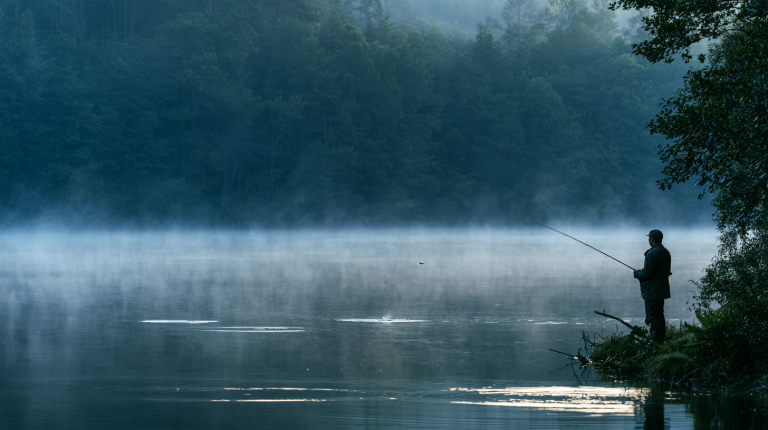
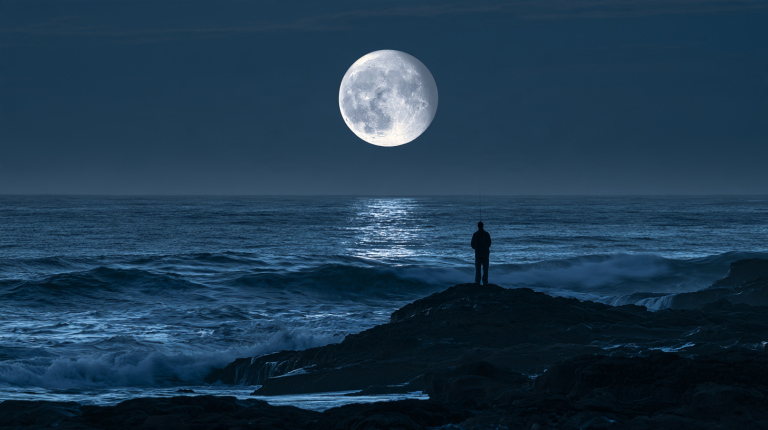
Is it good fishing on a full moon? It certainly can be, but a full moon is not a reliable promise that fish will suddenly become easier to catch.
In freshwater, the moon is better treated as one environmental variable rather than a bite switch. Some species show measurable changes in catch rates, movement, or depth during different parts of the lunar cycle. Other research has found much weaker or inconsistent patterns.
That means there is no good reason to cancel a fishing trip because the moon phase looks wrong—or assume a full moon guarantees a great session.
Weather, water temperature, season, water clarity, forage, fishing pressure, and simply being where the fish are can all matter more.
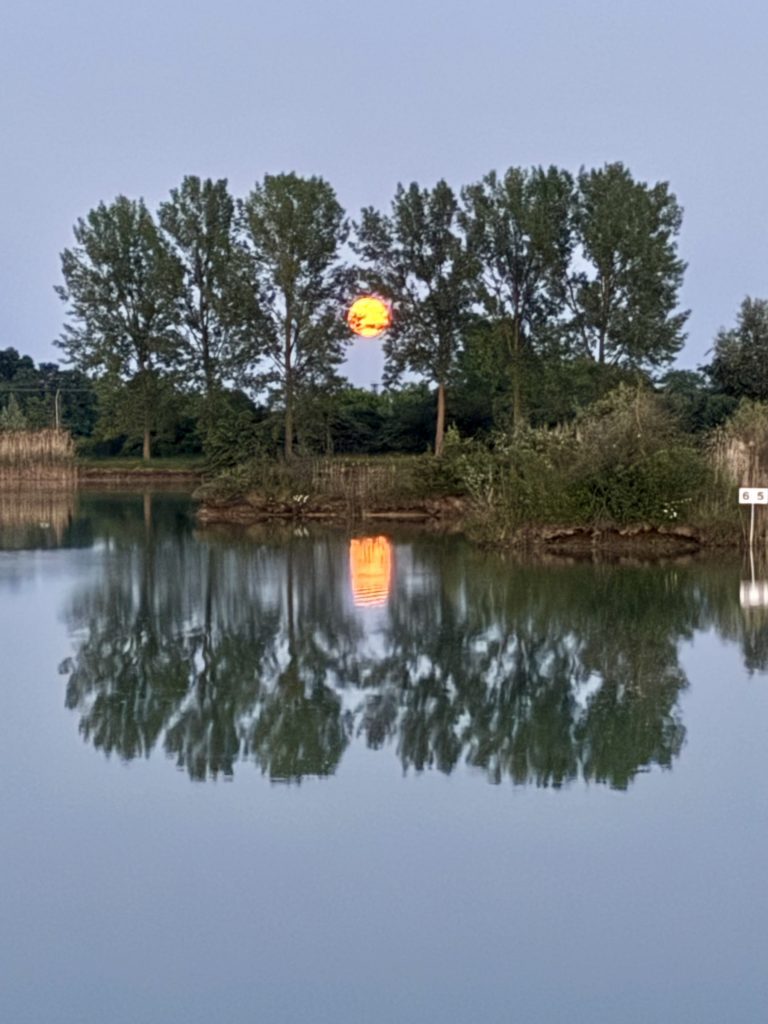
Is It Good Fishing on a Full Moon?
A full moon is neither automatically good nor automatically bad for freshwater fishing.
That distinction matters because moon-phase advice is often presented as if every fish in every lake responds in the same way.
They do not.
Some species appear to show measurable lunar patterns. Even then, the effect may be relatively modest. Other fish may alter their movement or depth without becoming noticeably easier to catch.
A bright full moon also changes something very simple: visibility.
On a clear night, more natural light reaches the water than during a new moon. How important that becomes depends on cloud cover, water clarity, depth, vegetation, the species being targeted, and the behavior of its prey.
In stained water under heavy clouds, the difference between a full moon and a darker lunar phase may be far less obvious than it is on a clear, calm lake.
So rather than asking whether a full moon is universally good, a better question is what the extra nighttime light might change on the particular water you are fishing.
What a Full Moon Changes in Freshwater
Most inland lakes and rivers do not have the tide-driven fishing patterns that make lunar phases especially important in coastal environments.
Saltwater is different because a full or new moon also changes tidal range, so fishing on a full moon in saltwater deserves a different approach.
For freshwater anglers, illumination is the more practical consideration.
A clear full-moon night can provide substantially more natural light than a moonless one. Predators may be able to detect prey differently, prey may change how or where it moves, and fish that are active after dark may use habitat differently.
But more visibility does not automatically equal more feeding.
A predator gaining better visibility may sound like an obvious advantage, but its prey also experiences the same brighter environment.
The result depends on the species and ecosystem rather than one universal rule.
Clouds complicate the picture further. A full moon hidden behind dense cloud cover may provide little additional useful light at the water’s surface.
Water clarity does the same thing. Moonlight penetrating a clear lake is very different from moonlight reaching muddy water after heavy rain.
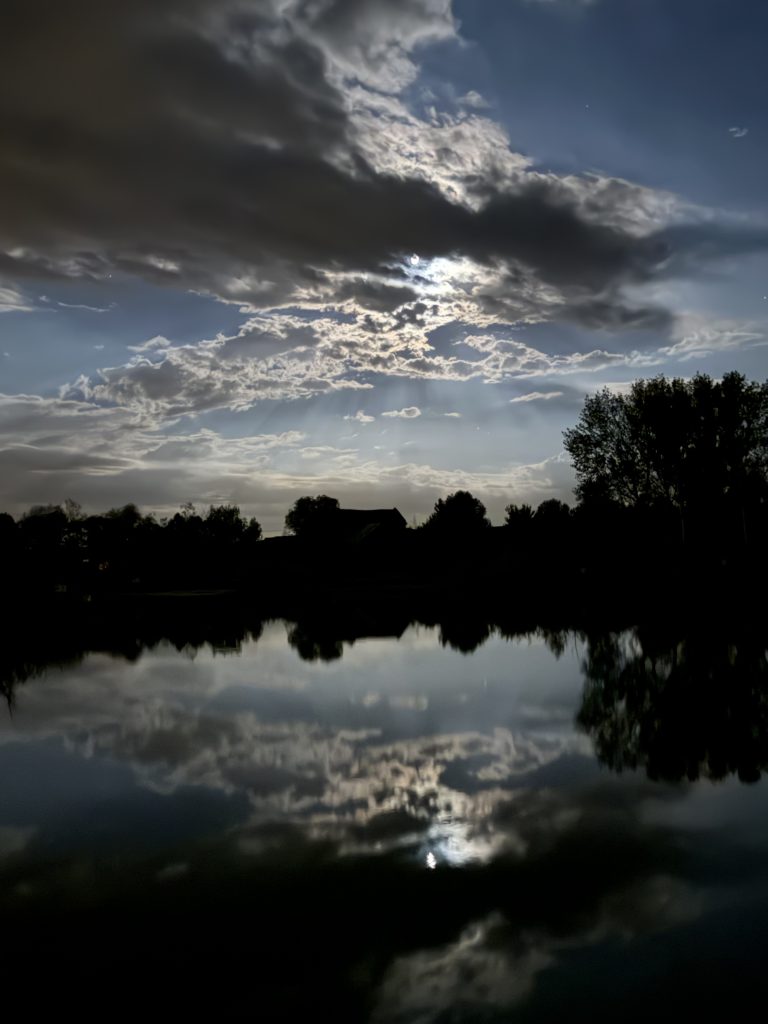
Does the Full Moon Actually Make Fish Bite More?
There is evidence that moon phase can influence freshwater fishing, but it does not support the idea of a universal full-moon feeding frenzy.
One of the largest angling datasets examined the relationship between the lunar cycle and muskellunge catches across North America.
That is probably the most useful way to think about moon phases generally.
The moon may influence fish.
That does not mean it overrides everything else happening in the water.
Full Moon Fishing Can Be Especially Interesting at Night
The most obvious difference created by a full moon occurs after sunset.
A bright moon can turn an otherwise dark shoreline into a surprisingly visible environment, particularly when the sky is clear and the water is calm.
That can make night fishing easier for the angler as well. Banks, rod tips, shoreline features, and casting references may be more visible than they would be during a new moon.
Fish behavior is more complicated.
Some species already feed actively after dark regardless of moon phase. A full moon may alter when they move, where prey concentrates, or how confidently both predator and prey use open water.
Instead of assuming that fish will become more aggressive, watch what actually happens.
If fish are showing, baitfish are active, or repeated bites occur in a particular area, continue working that pattern.
If the water appears lifeless, the moon itself is not enough reason to stay on an unproductive spot.
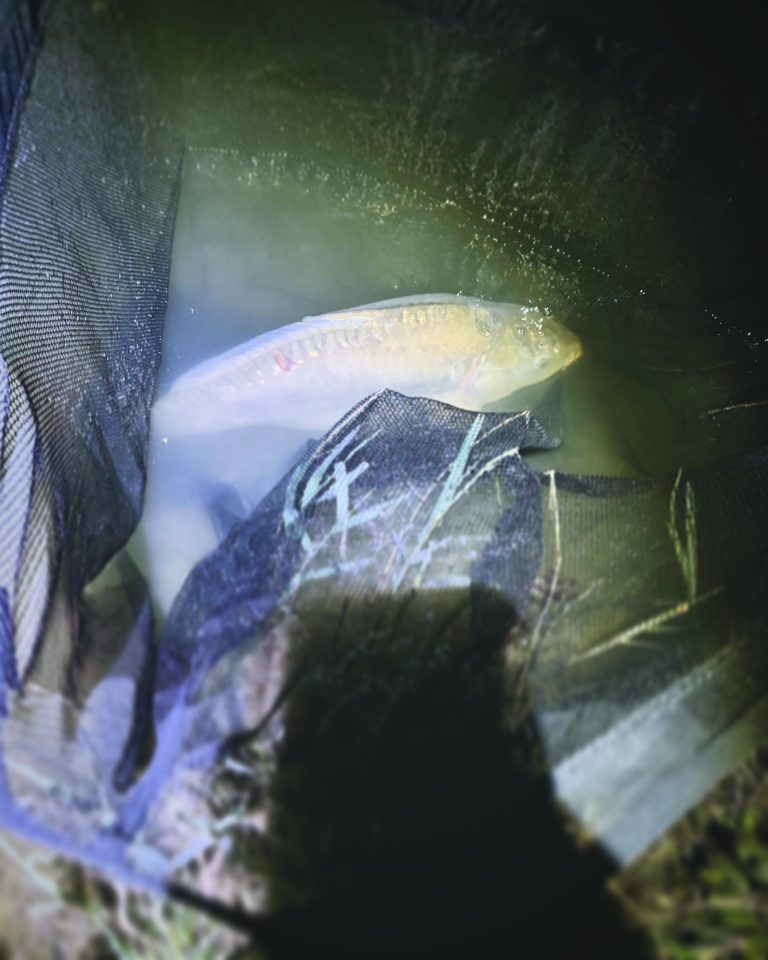
For anglers who regularly fish after sunset, many of the same preparation principles used for night carp fishing still apply: find productive areas before darkness, organize equipment beforehand, and avoid unnecessary disturbance once visibility drops.
Don’t Assume Fish Feed All Night and Stop in the Morning
One of the most common full-moon theories says fish feed heavily all night because they can see better, become full, and therefore stop feeding the following morning.
That explanation is too simple to treat as a rule.
Different fish have different feeding strategies. Their activity can change with season, temperature, prey availability, weather, light, and numerous other factors.
Even within the same species, fish in two different lakes can behave differently.
If dawn after a full moon produces poor fishing, it is tempting to blame the moon.
But that does not tell you whether the fish fed during the night, moved deeper, shifted to cover, followed forage somewhere else, or simply were not located correctly in the first place.
Fish what you observe rather than trying to explain every slow period with the lunar calendar.
How to Fish a Full Moon in Freshwater
The best approach is not to rebuild your tackle box around the moon phase.
Start with the same productive areas, baits, and presentations that normally suit the species and season.
Then adjust according to the additional light.
On a very clear, bright night, pay attention to shade lines, vegetation edges, docks, overhanging trees, deeper structure, and transitions between illuminated and darker water.
These areas can create useful changes in visibility.
In stained or muddy water, the additional moonlight may have much less practical effect. Vibration, scent, lure displacement, and simply putting the bait close to the fish can remain more important than visual presentation.
Do not automatically change to a bright lure because the moon is full either.
Choose lure color according to the actual visibility underwater—not the picture of the moon on a calendar.
Fish the Conditions Before the Moon Phase
This is where moon-phase fishing often becomes overcomplicated.
An angler sees a perfect full moon but ignores the cold front that arrived six hours earlier, the strong wind pushing forage onto one bank, a rapid water-temperature change, or the fact that the fish have moved.
Those variables can be much more useful.
Weather trends deserve particular attention. If you already monitor barometric pressure for fishing, the most useful information is normally what the changing pressure tells you about the weather arriving with it—not a supposedly perfect number.
The same principle applies to the moon.
Use it as another piece of information.
Do not use it as the entire forecast.
What About Bass, Muskie, Carp and Catfish?
Different species are exactly why broad claims about full-moon fishing become unreliable.
Muskie
Muskellunge provide some of the stronger freshwater evidence for a lunar effect.
Large-scale catch records showed slightly higher catches around both full and new moons, with a stronger full-moon pattern at night.
That is worth knowing, but even the overall estimated effect was relatively small.
Bass
Largemouth bass research has found changes associated with lunar illumination, but not a simple repeating pattern anglers can use to predict the best fishing day every month.
For bass, season, habitat, water temperature, prey location, and daily conditions remain more practical starting points.
For a more targeted approach, our guide to bass fishing on a full moon explains where to find bass after dark, which lures to use, and how moonlight can influence your fishing strategy.
Carp
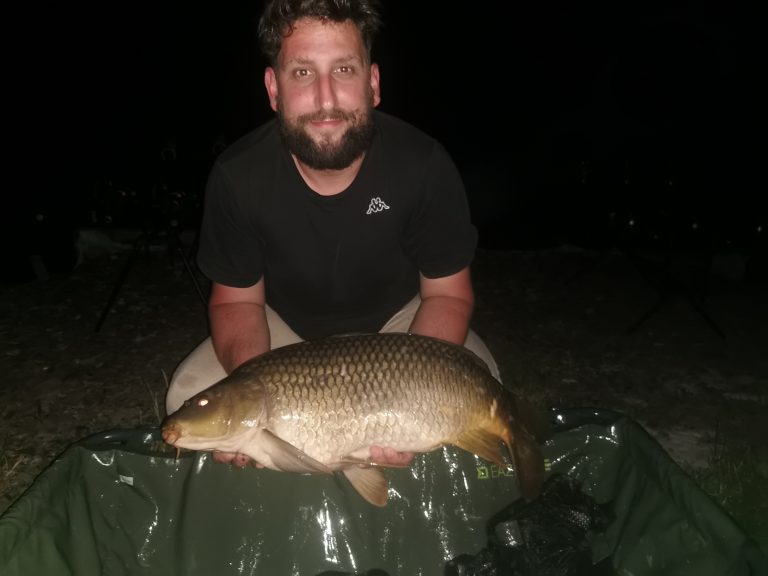
Carp are perfectly capable of feeding throughout the night.
That does not establish the full moon as a special carp feeding trigger.
If a lake reliably produces carp after dark, concentrate on where those fish travel and feed rather than waiting for a particular lunar phase.
Catfish
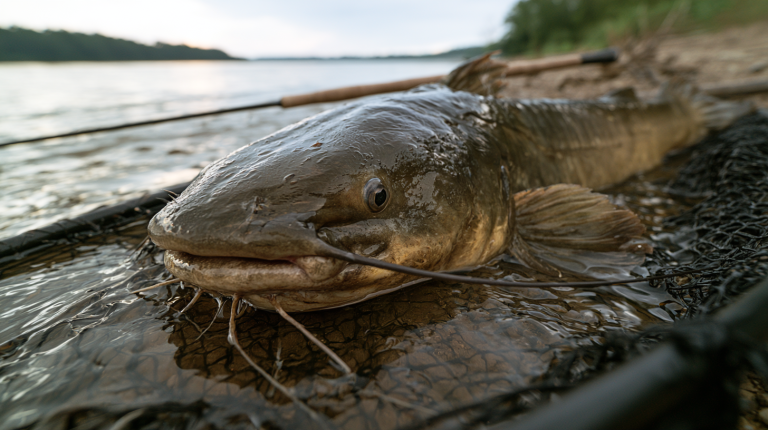
Many catfish are active in low-light conditions, but that should not be turned into another universal moon rule.
Water temperature, current, scent distribution, prey, species, and location may all matter.
A full moon is simply part of the nighttime environment.
Should You Use Solunar Fishing Tables?
Solunar calendars usually predict major and minor feeding periods using the position of the sun and moon.
They can be interesting to compare against your own catches, but they should not dictate when you fish.
The problem is that a precise-looking timetable can create more confidence than the underlying biology supports.
If an app predicts an excellent period at 3:20 p.m. but fish are visibly feeding at 1:00 p.m., fish the activity in front of you.
Likewise, do not leave productive water because an advertised lunar window has ended.
One useful approach is to keep a fishing log.
Record moon phase alongside water temperature, weather, wind, water level, clarity, time, location, bait or lure, and catches.
After enough sessions, you may discover that a particular water does produce a repeatable moon-related pattern.
That local information is far more useful than assuming every fishery follows the same calendar.
Common Full Moon Fishing Mistakes
The biggest mistake is treating the full moon as a guarantee.
A second is blaming it whenever fishing is poor.
Both approaches give the moon too much importance.
Another mistake is ignoring actual light conditions. A cloudy full-moon night can be much darker than expected, while artificial lighting around docks, marinas, bridges, or developed shorelines can influence visibility regardless of lunar phase.
Finally, do not allow better nighttime visibility to create a false sense of safety.
Banks, snags, drop-offs, currents, boats, and changing weather are still harder to judge after dark. Prepare the fishing area during daylight whenever possible and carry dependable lighting even when the moon appears bright.
Frequently Asked Questions
Is a full moon better for fishing than a new moon?
There is no universal winner. Some species show stronger catches around full moons, others around new moons, and some show little useful lunar pattern at all. Fish the conditions and species rather than assuming one phase is always superior.
Is full moon fishing good for bass?
It can be, but research on largemouth bass has not produced a simple repeating pattern showing that the full moon reliably creates the best fishing. Seasonal location and current conditions are more useful starting points.
Is it better to fish a full moon at night?
Night is when the increased illumination of a full moon becomes most relevant. Some species may show different activity under brighter nights, but that does not guarantee more bites.
Does cloud cover cancel the effect of a full moon?
Clouds can greatly reduce the amount of moonlight reaching the water. If the practical influence you are considering is illumination, a heavily overcast full-moon night can be very different from a clear one.
Should I cancel a fishing trip because the moon phase is poor?
No. If weather and water conditions are safe, moon phase alone is a weak reason to stay home. Location, season, temperature, weather, forage, and fish activity can all outweigh it.
Final Takeaway
So, is it good fishing on a full moon?
It can be.
Research shows that lunar phase can influence some freshwater fish and fisheries, but the effect is species-specific and often much smaller than anglers assume.
The most useful way to fish a full moon is therefore simple: recognize that brighter nights can change the environment, then let actual fish activity, weather, water temperature, clarity, and location determine what you do next.
Use the moon as a clue—not a guarantee.