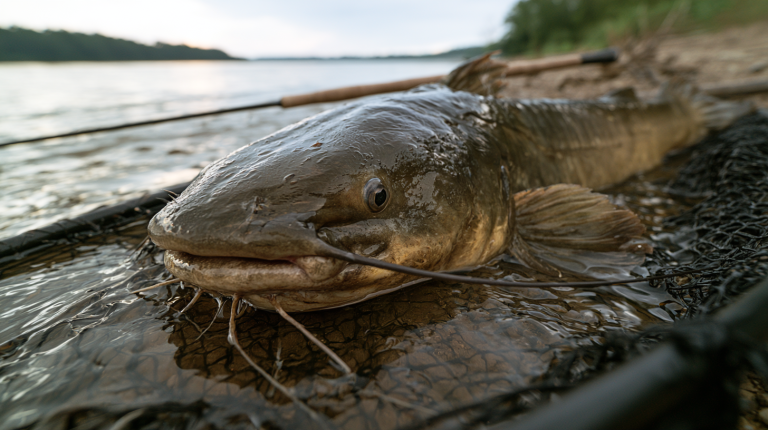
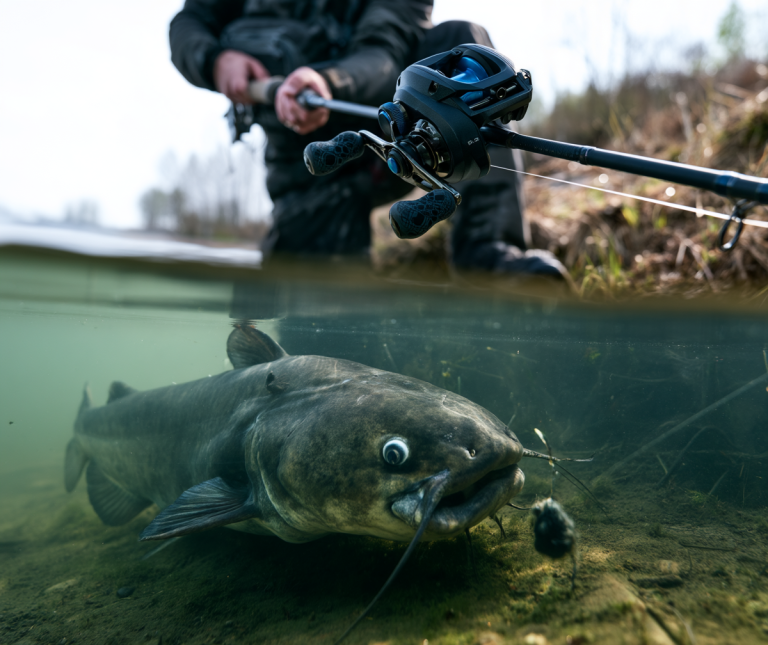
Catfishing with shrimp is a simple way to turn an ordinary grocery-store bait into a legitimate catfish offering. Raw shrimp can be fished whole or cut into smaller pieces, works well on basic bottom rigs, and is especially useful when channel catfish are the target.
You do not need live shrimp, an elaborate marinade, or shrimp that has been deliberately left to spoil. Plain raw shrimp — including frozen shrimp that has been thawed — is enough to start.
The bigger differences usually come from how well the bait stays on the hook, where it is presented, and whether the catfish in that water are interested in it.
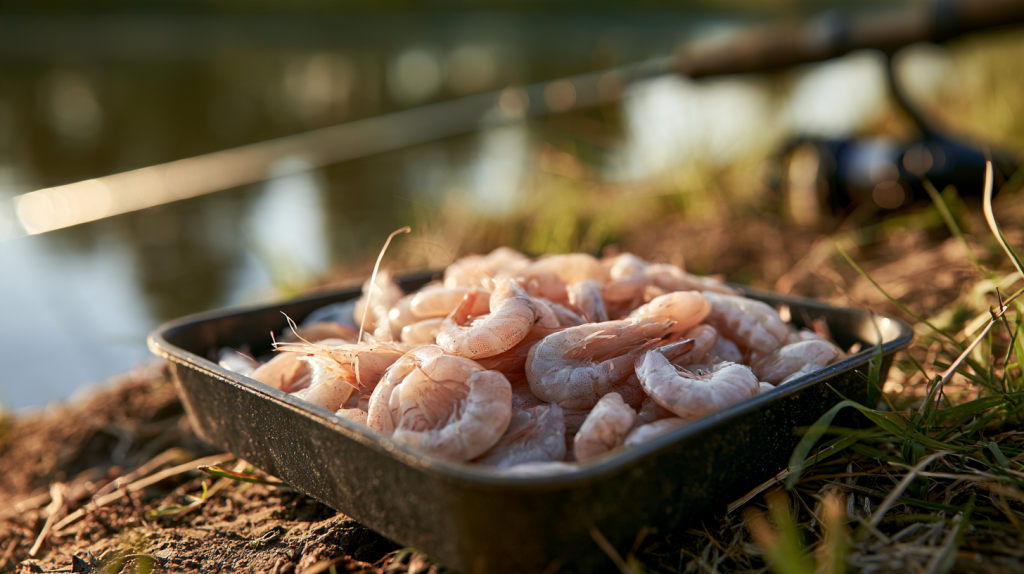
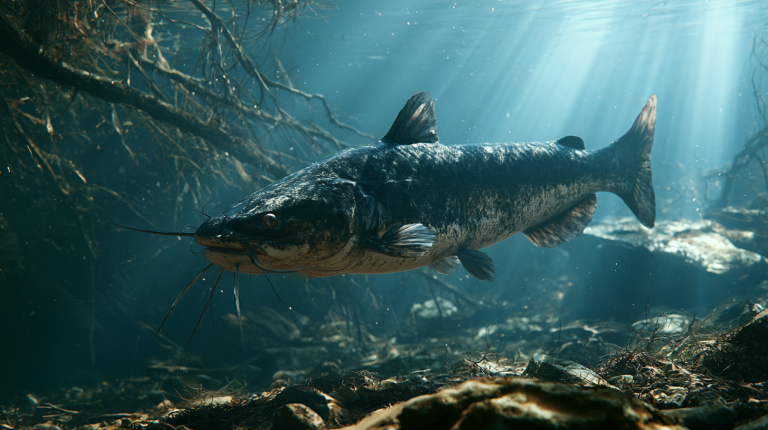
Does Shrimp Work for Catfish?
Yes. Shrimp is a genuine catfish bait rather than just one of those strange substances anglers occasionally experiment with.
It is particularly well suited to channel catfish, which accept a wide range of natural and prepared baits.
The Michigan Department of Natural Resources specifically lists shrimp alongside cheese, liver, spawn, live bait, cut bait, blood bait, and scent bait as offerings anglers use for channel cats.
That does not mean shrimp is automatically the best bait for every catfish.
Channel cats are the most obvious target. Blue catfish can also take shrimp, but anglers specifically targeting large blues will often have good reasons to start with fresh natural forage such as cut fish.
Flatheads are another matter. Where legal, live or very fresh natural bait is normally a more logical starting point for deliberately targeting them.
If you are still deciding which species, location, and bait style make sense, the broader fishing tips for catfish guide covers those decisions first.
Raw vs Frozen Shrimp for Catfishing
Both can work.
For most anglers, raw frozen shrimp from a grocery store is probably the most practical option because it is easy to obtain, easy to portion, and can be kept in the freezer until needed.
The important distinction is not really fresh versus frozen. It is the condition and texture of the bait when it reaches the hook.
| Shrimp Type | Main Advantage | Main Drawback | Best Use |
|---|---|---|---|
| Fresh raw shrimp | Usually firm and easy to hook | Can cost more and spoils quickly | Excellent general option |
| Frozen raw shrimp | Convenient and easy to store | Can soften after thawing | Best everyday option |
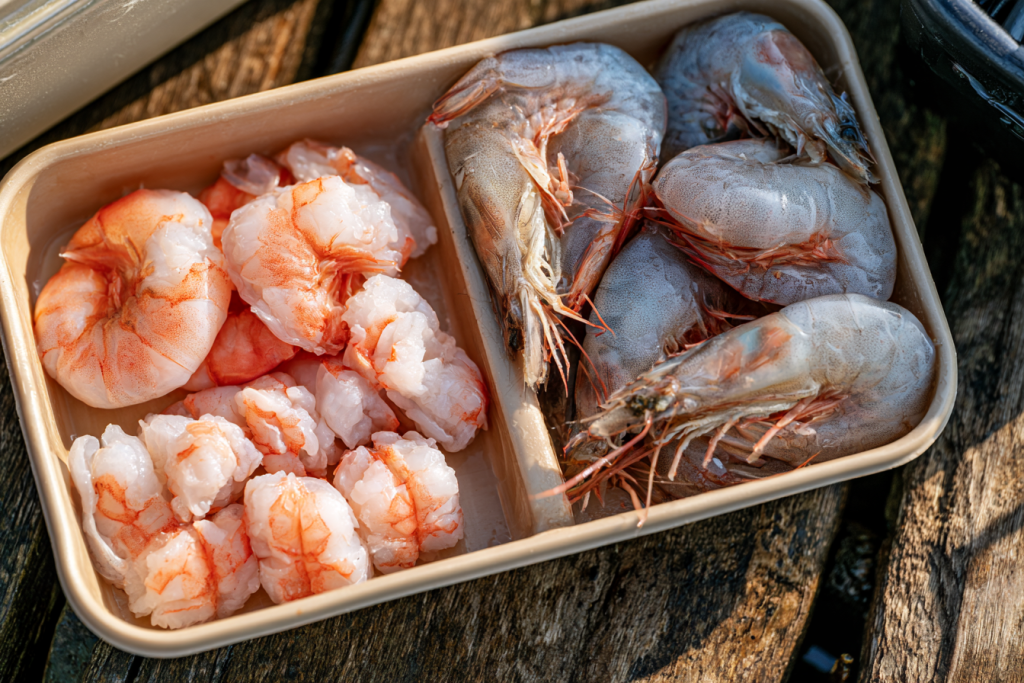
| Shell-on shrimp | Holds together well | Slightly bulkier presentation | Casting and stronger current |
| Peeled shrimp | Easy to cut into small pieces | Can tear off the hook more easily | Smaller channel cats |
| Cooked shrimp | Can still be used | Unnecessary expense and preparation | Use only if already available |
Catfishing With Frozen Shrimp
There is nothing wrong with catfishing with frozen shrimp as long as you thaw it enough to put it securely on the hook.
You do not need to completely warm the bait before fishing.
In fact, slightly firm shrimp can be easier to handle than shrimp that has been sitting in the sun and has become very soft.
Take out only what you expect to use and keep the remainder cool.
Repeated warming, handling, and refreezing is also unnecessary. Portioning the shrimp into smaller bags before freezing makes it easy to take one fishing without defrosting the entire supply.
Catfishing With Raw Shrimp
Plain raw shrimp is the best starting point.
There is no requirement to cover it in garlic, gelatin powder, flavoring, blood, or any other additive before it becomes useful catfish bait.
Those variations may be worth experimenting with later, but they make it harder to know whether the shrimp itself works in your water.
Start plain.
If catfish eat it, you already have a simple bait that requires almost no preparation.
If they do not, changing location or presentation is usually more useful than immediately trying to invent a stronger-smelling recipe.
Should You Use Shrimp With the Shell On?
If possible, try shell-on shrimp first when bait retention is important.
The shell gives the bait additional structure, which can help it survive the cast and remain attached while sitting in current.
Peeled shrimp still works as bait, but soft shrimp can tear surprisingly easily.
That becomes especially noticeable when making longer casts.
A bait does no good if it leaves the hook halfway through the cast.
For smaller channel cats, cutting a shrimp into several pieces can make more sense than using one oversized bait. For larger fish, whole shrimp or larger sections give you a more substantial presentation.
Match the bait to the hook and the fish rather than assuming more shrimp automatically means more bites.
How to Prepare Shrimp for Catfishing
Shrimp requires very little preparation.
For a straightforward session:
- Thaw raw frozen shrimp enough to separate the pieces.
- Decide whether you want a whole shrimp or a smaller chunk.
- Leave the shell on when extra bait retention is useful.
- Pass the hook through a firm section of the shrimp.
- Make sure the hook point remains completely exposed.
- Keep unused shrimp cool until needed.
A simple bait-size guide is enough:
| Target / Situation | Shrimp Presentation |
|---|---|
| Smaller channel cats | Small chunk or half shrimp |
| Average channel cats | Half to whole medium shrimp |
| Larger catfish | Whole shrimp or larger piece |
| Strong cast/current | Shell-on piece for better retention |
| Frequent bait stealing | Smaller, firmer shell-on piece |
Do not wrap a huge amount of shrimp around the hook.
With a circle hook in particular, covering the point or crowding the hook gap can interfere with how the hook is supposed to work.
The objective is a secure piece of bait with plenty of exposed hook — not the largest possible ball of shrimp.
How to Rig Shrimp for Catfish
A special shrimp rig is not necessary.
A basic slip-sinker or Carolina-style catfish rig works well:
main line → sliding sinker → swivel → leader → hook
For ordinary channel-cat fishing, a leader somewhere around 12–24 inches is a reasonable starting point, but it does not need to be treated as a fixed measurement.
Shorten it in strong current, around snags, or whenever a more controlled presentation is useful.
Use only enough sinker weight to keep the bait where you want it.
Choosing a Hook
A circle hook is a practical option when rods are sitting in holders and catfish are expected to take the bait and move away.
Something around 2/0 to 5/0 can cover many ordinary channel-cat shrimp presentations, but hook size should ultimately match:
- the size of the shrimp;
- the size of the fish;
- the thickness of the hook wire;
- the rig being used.
Large catfish and large baits may require considerably heavier tackle.
The key point is simpler than the hook-size debate: do not bury the hook point inside the shrimp.
Hooking the Shrimp
Push the hook through a firm section of the shrimp so the bait cannot simply slide off.
With a small piece, one solid pass through the bait may be enough.
With a larger shrimp, a second pass through a firm section can provide extra security, but avoid threading the entire shrimp tightly along the hook until the hook gap disappears.
After baiting, look at the rig.
The point should be clear, the gap should remain usable, and the shrimp should survive a controlled cast.
Where to Fish Shrimp for Catfish
Shrimp does not compensate for fishing empty water.
Put it where catfish are likely to travel or feed.
Rivers
Useful starting areas include:
- current seams;
- deeper holes;
- outside bends;
- edges of faster current;
- submerged timber;
- rock structure;
- eddies;
- areas where shallow water drops into a deeper channel.
Instead of dropping the bait directly into the worst snag, position it where scent and water movement can reach fish using that cover.
A rig sitting five feet away from a logjam is often more useful than one buried so deeply inside it that the first fish immediately breaks you off.
Lakes and Ponds
Look for:
- creek or river inflows;
- points;
- drop-offs;
- deeper edges;
- riprap;
- submerged timber;
- weed edges;
- routes between deep daytime water and shallower feeding areas.
Channel cats can move considerably shallower after dark.
Michigan DNR notes that adult channel cats often use deeper pools and cover during the day before moving into shallower water at night.
That means the deepest water in the lake is not automatically where a shrimp bait belongs.
How to Fish Shrimp Step by Step
1. Start with plain shrimp
Do not make the bait complicated before you know whether it works.
Raw shrimp straight from the package is enough.
2. Use a sensible-sized piece
Match the shrimp to the expected catfish.
A smaller channel cat does not need a giant jumbo shrimp wrapped around a large hook.
3. Cast smoothly
Shrimp is reasonably durable, particularly with the shell intact, but it is still soft bait.
A controlled cast is much less likely to tear the shrimp away than violently accelerating the rig.
4. Let the bait sit
Give catfish time to find it.
Constantly dragging the rig across the bottom can pull it into snags and does not necessarily improve the presentation.
5. Check the bait
Reel in occasionally.
Small fish, turtles, crayfish, current, and repeated casting can remove shrimp without producing the kind of obvious bite you expected.
If the hook is bare, rebait it.
6. Move when necessary
If the shrimp repeatedly returns untouched and there is no sign of catfish, changing location can be more productive than changing bait.
Try a different depth, piece of cover, current seam, or section of shoreline.
Shrimp vs Stink Bait for Channel Catfish
Both are convenient channel-cat baits, but they behave very differently.
| Shrimp | Stink Bait |
|---|---|
| Natural food bait | Prepared bait |
| Easy to buy frozen | Usually sold ready to fish |
| Can go directly on a hook | May require a dip worm or bait holder |
| Relatively clean to handle | Often messy and strongly scented |
| Good bait retention when shell-on | Retention depends heavily on formulation |
| Easy to portion | Easy to reload repeatedly |
Neither is automatically better.
Shrimp is an excellent option when you want a natural bait that goes directly on a conventional hook.
Prepared bait makes sense when you specifically want a bait designed to release a strong scent trail and catch numbers of channel cats.
The FishingChief guide to catfishing with stink bait covers that method separately.
Do You Need to Make Shrimp Stinkier?
No.
One of the most repeated shrimp-bait ideas online is that raw shrimp should be left outside until it becomes extremely smelly.
There is no need to do this before shrimp becomes viable catfish bait.
Official fisheries guidance already recognizes ordinary shrimp as a channel-catfish bait. Deliberately spoiling it adds unpleasant handling and storage without being a prerequisite for catching fish.
If you eventually want to experiment with garlic, flavorings, salt, or other additives, change one thing at a time.
Otherwise, a successful trip tells you very little about what actually mattered.
More importantly, do not let the hunt for stronger scent distract from location.
A plain shrimp placed beside feeding channel cats is more promising than an elaborate bait recipe sitting where no fish are feeding.
Common Mistakes When Catfishing With Shrimp
Using shrimp that is too soft: Very soft peeled shrimp can disappear during the cast. Use firmer pieces or leave the shell on.
Covering the hook: Keep the point and enough of the gap exposed.
Using too much bait: Bigger is not automatically better. Match the piece to the fish.
Casting too aggressively: Smooth casts preserve soft bait.
Assuming every catfish species prefers the same bait: Shrimp is particularly useful for channel cats. Other species may justify different bait choices.
Leaving a bare hook out: Check the bait occasionally, especially when small fish or crayfish are active.
Trying complicated marinades immediately: Establish whether plain shrimp works first.
Staying in one unproductive spot: Location normally deserves attention before another bait recipe.
Frequently Asked Questions
Can You Catch Catfish With Grocery Store Shrimp?
Yes. Plain raw shrimp from a grocery store can be used as catfish bait. Frozen raw shrimp is particularly convenient because unused portions can remain frozen until another trip.
Is Frozen Shrimp Good for Catfish?
Yes. Catfishing with frozen shrimp works well once the shrimp is thawed enough to place on the hook. Keep it as firm as practical so it survives casting.
Should Shrimp Be Raw or Cooked for Catfish?
Raw shrimp is the better starting point. Cooked shrimp may still catch fish, but cooking it provides no obvious practical advantage for catfishing and usually costs more.
Do You Peel Shrimp for Catfish Bait?
You can, but you do not have to. Shell-on shrimp generally has better structural strength and can stay on the hook more securely. Peeled shrimp is easy to portion into smaller pieces.
Should You Put Garlic on Shrimp for Catfish?
It is optional, not necessary. Try plain shrimp first. If you later test garlic or another additive, compare it against untreated shrimp rather than assuming the stronger smell is automatically better.
What Catfish Is Shrimp Best For?
Channel catfish are the clearest target. They accept a wide variety of natural and prepared baits, and official fisheries guidance specifically includes shrimp among channel-catfish baits.
Final Takeaway
Catfishing with shrimp does not require a secret recipe.
Raw shrimp — fresh or frozen — is a practical channel-catfish bait that can go straight onto a simple bottom rig. Leave the shell on when you need better bait retention, keep the hook exposed, and put the bait where catfish are actually feeding.
Finding the fish and keeping the shrimp securely on the hook matter far more than making it smell as unpleasant as possible.