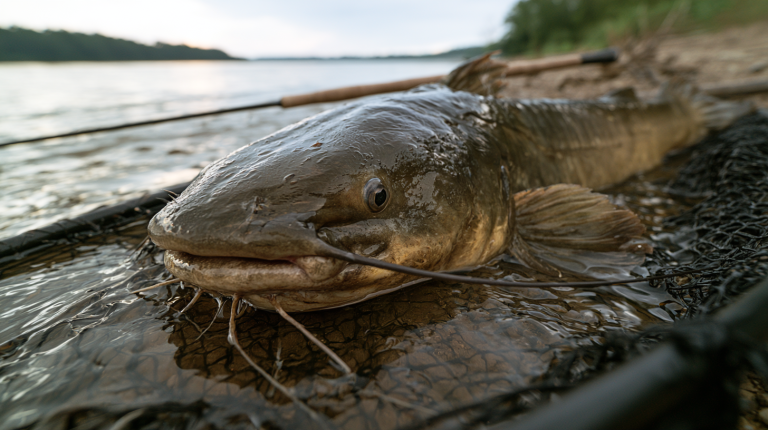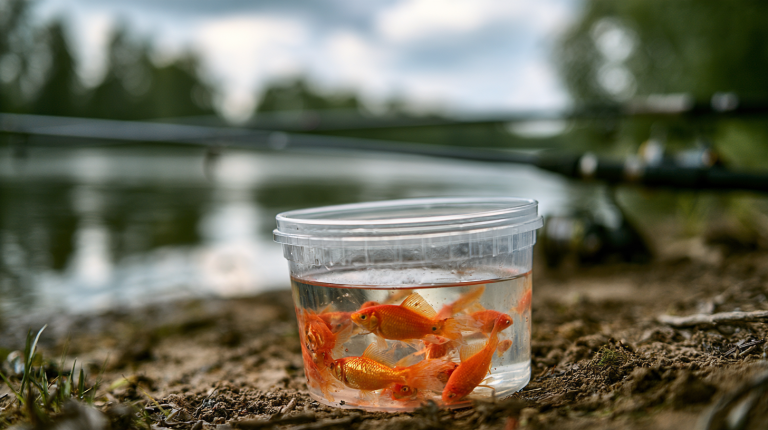
Catfishing with a baitcaster makes a lot of sense once the reel is matched to the job. Catfish rigs can involve substantial sinkers, large pieces of bait, strong line and fish capable of putting serious pressure on tackle. A good baitcasting reel handles all of those things well while giving you excellent control over both the cast and the fish.
That does not mean a baitcaster is automatically better than a spinning reel. It has a steeper learning curve, and a poorly adjusted reel can turn a heavy cast into a spectacular backlash.
The good news is that catfishing is actually a forgiving way to learn one. You are normally casting heavier rigs rather than tiny lures, and accuracy is often more important than making the longest possible cast.
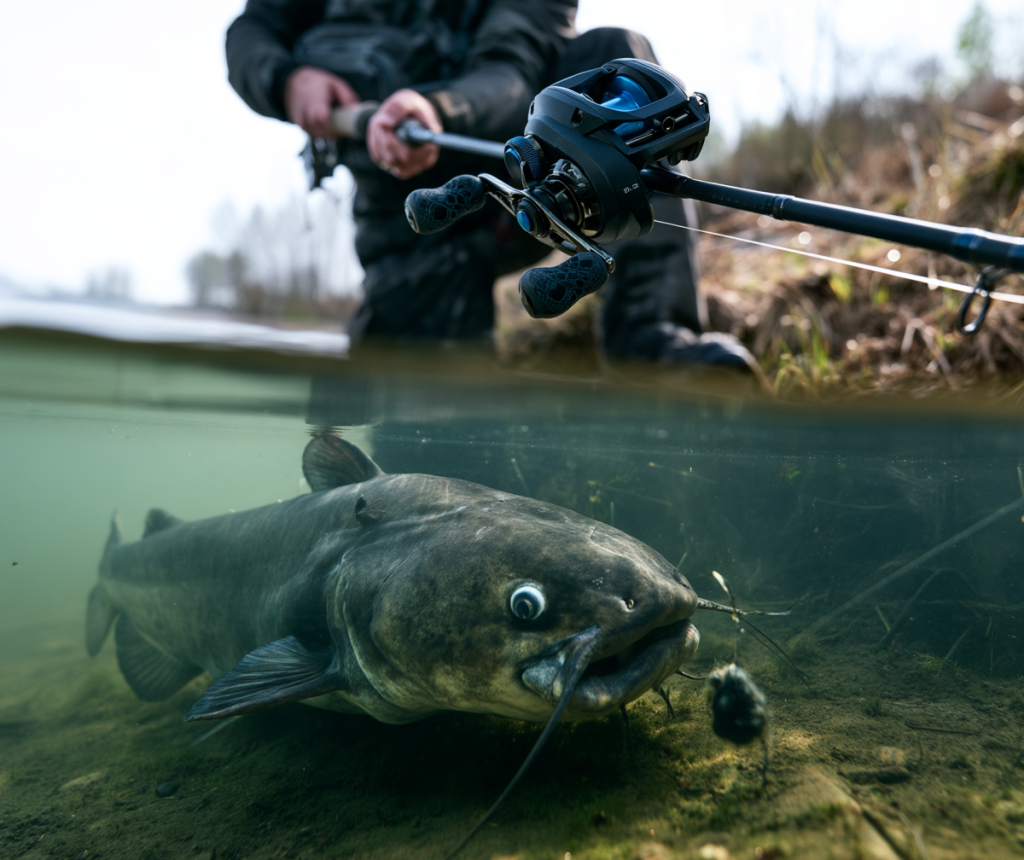
Can You Use a Baitcaster for Catfishing?
Absolutely.
A baitcasting reel can be used for channel catfish, blue catfish and flathead catfish, provided the reel, rod and line are appropriate for the size of fish and the water being fished.
In fact, several characteristics of baitcasters suit bait fishing particularly well.
They can hold substantial amounts of reasonably heavy line, offer direct control over the spool, handle heavy sinkers comfortably when properly matched to the rod, and generally provide good cranking power when a strong fish needs to be moved away from cover.
Some larger round baitcasting reels also include a bait clicker or line alarm. That can be useful when the rod is sitting in a holder because line moving from the spool produces an audible warning.
None of this means you need specialized equipment before you can catch catfish. A spinning reel can do the same job very effectively.
If you are still working out where to fish, what species to target or which bait to use, the FishingChief guide to fishing tips for catfish covers those basics separately. This article concentrates specifically on making the baitcaster work.
Why Catfishing With a Baitcaster Works So Well
The biggest advantage is not casting distance.
It is control.
A baitcaster puts your thumb directly over the spool. During a cast you can slow the spool, shorten a cast, feather a rig toward a precise piece of structure or stop it before the bait lands somewhere you did not intend.
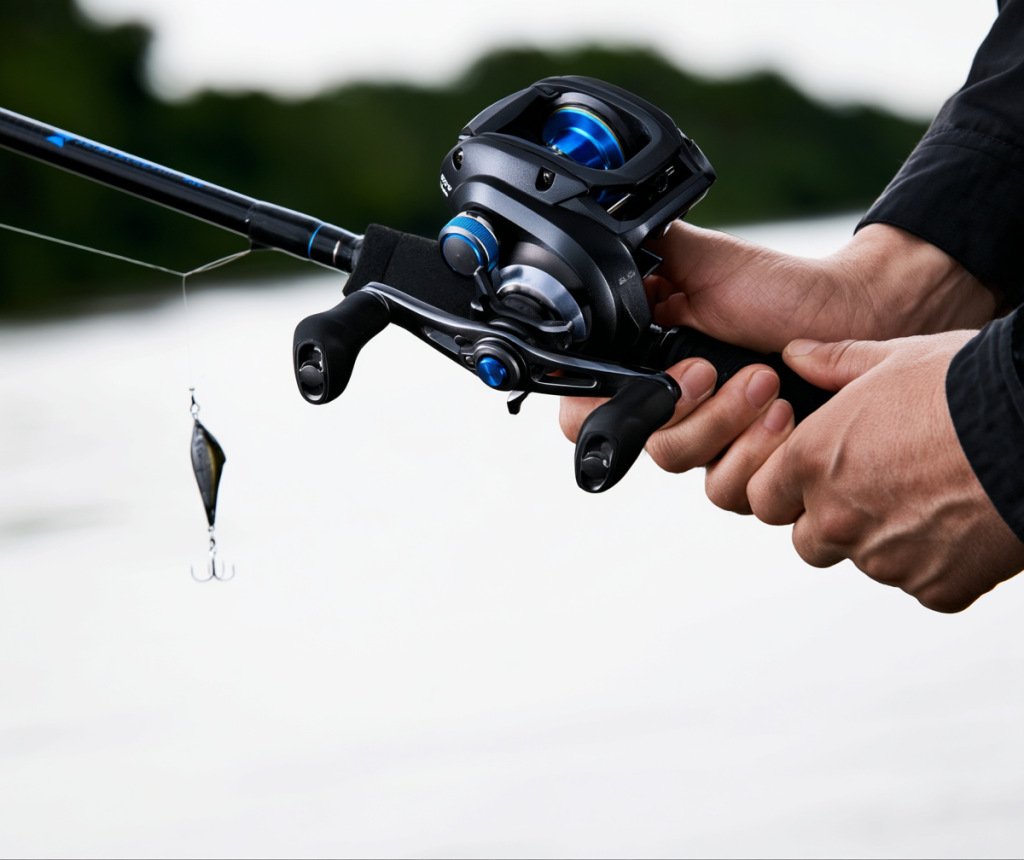
That becomes useful when fishing beside submerged timber, current seams, bridge structure, drop-offs or small openings between snags.
The reel also suits the heavier end of catfishing tackle.
A rig might include a substantial sinker, swivel, leader, hook and a large piece of cut bait. Add all of that together and the actual casting weight can be much greater than the sinker weight printed on the packet.
That is one reason smoothness matters so much.
A heavy baited rig does not need to be violently accelerated. Let the rod load and allow the weight of the rig to produce the cast.
| Feature | Baitcaster | Spinning Reel |
|---|---|---|
| Learning curve | Higher | Lower |
| Control during cast | Excellent once learned | Very good |
| Heavy rigs | Excellent with suitable tackle | Excellent with suitable tackle |
| Backlash risk | Yes | No spool backlash |
| Line capacity | Depends on reel; many large baitcasters hold plenty | Depends on spool size |
| Bait clicker | Available on some models | Less common |
| Best choice for beginners | Requires practice | Usually easier |
| Fighting large fish | Excellent with appropriate reel | Equally capable with appropriate reel |
The important point is that reel type alone does not determine whether the setup is strong enough.
A small baitcaster filled with light line is still light tackle.
What Size Baitcaster Do You Need for Catfish?
Do not choose a catfish baitcaster entirely by the number printed on the reel.
Reel sizing is not completely standardized between manufacturers. A reel described as a 300, 400, 5000 or 6000 size by different companies may not have directly comparable dimensions or capacity.
Look at what the reel actually provides.
For general catfishing, concentrate on:
- enough capacity for the diameter of main line you intend to use;
- a smooth and dependable drag;
- a strong frame and handle;
- comfortable cranking power;
- compatibility with the casting rod you intend to use.
Smaller baitcasters can be perfectly adequate for modest channel catfish in ponds, canals and relatively open water.
Move toward a larger-capacity reel when targeting big blue or flathead catfish, fishing powerful rivers, using heavier line or working close to cover where you cannot simply allow a hooked fish to run wherever it wants.
You generally do not need an extremely high retrieve speed either. Catfishing is rarely a technique where repeatedly burning a lure back to the rod is the priority.
Reliable drag, usable line capacity and adequate strength are usually more important.
The Best Baitcaster Setup for Catfish
There is no universal catfish setup because a smaller channel cat in open water creates a completely different tackle requirement from a large flathead living beside submerged timber.
A useful general starting point looks like this:
| Component | General Starting Point | When to Go Heavier |
|---|---|---|
| Rod | 7–9 ft medium-heavy casting rod | Strong current, heavy sinkers, large fish or snaggy water |
| Reel | Medium/high-capacity baitcaster | Large blues or flatheads, heavy line, demanding water |
| Main line | Mono or braid appropriate to expected fish | Heavy cover, current or genuinely large fish |
| Leader | Abrasion-resistant mono or similar leader material | Rocks, timber, mussels or large fish |
| Hook | Strong J-hook or circle hook matched to bait | Increase size and strength with larger baits/fish |
| Sinker | Just enough to control the presentation | Increase with current, depth or larger bait |
One important number is missing from that table: an exact line strength.
That is deliberate.
There is no sensible single pound-test recommendation for every type of catfishing.
Smaller channel cats in an open lake do not require the same main line as large river flatheads beside submerged trees. Line should be chosen around the fish, snags, casting weight and amount of pressure you realistically expect to apply.
Mono or Braid on a Catfish Baitcaster?
Both work.
For a closer comparison of casting performance, backlash management, and recommended line strengths, check out our guide on braid or mono for baitcaster.
Monofilament is inexpensive, has useful stretch and is relatively forgiving when learning to cast a baitcaster. Its larger diameter also means a reel fills quickly without requiring enormous amounts of line.
Braid provides far more strength for its diameter and has very little stretch. That can be particularly useful when fishing at distance or when immediate pressure is required to keep a fish away from cover.
The lack of stretch also means mistakes are transmitted through the system more directly.
A hard cast, sudden stop or badly tied knot receives less cushioning than it would with mono.
For anglers new to baitcasters, mono can therefore be a perfectly sensible starting choice.
If using braid, make sure it is loaded onto the spool properly and under sufficient tension. Loose braid can dig into lower wraps under heavy pressure and make the next cast unnecessarily troublesome.
How to Set Up a Baitcaster for Catfish
The easiest mistake is adjusting the reel with an empty hook and then attaching a heavy sinker and large bait.
Tune the reel for the rig you are actually going to cast.
1. Assemble the Complete Rig
Attach the sinker, leader, hook and bait.
Remember that the rod is casting the combined weight of everything on the line, not merely the sinker.
That total weight also needs to remain within what the rod can safely handle.
2. Start With More Braking
If the reel has adjustable centrifugal or magnetic brakes, begin conservatively.
More braking may shorten the cast slightly, but a slightly shorter cast is considerably more useful than twenty metres of tangled line.
Once casts become consistent, braking can gradually be reduced.
3. Adjust the Spool
Follow the reel manufacturer’s instructions because modern baitcasters do not all use identical adjustment systems.
On traditional designs, spool tension can be used to control how freely the loaded rig drops when the spool is released.
The objective is controlled spool movement rather than squeezing the adjustment down so tightly that the reel barely casts.
4. Check the Drag
Do not lock the drag simply because catfish can be large.
Set it firmly enough to control the fish but allow line to leave the reel during a powerful surge.
The rod, line, knots, reel and drag should work as one system.
5. Make a Short Test Cast
Your first cast does not need to reach the horizon.
Make a controlled cast into open water and see how the spool behaves.
It is much easier to make a small adjustment after a short cast than to untangle a severe backlash after trying for maximum distance immediately.
How to Cast a Heavy Catfish Rig Without Backlash
Heavy catfish rigs reward smooth casting.
They punish sudden acceleration.
Start with the rod behind or beside you and allow the sinker and bait to settle rather than swinging uncontrollably. Accelerate progressively and let the rod bend under the weight.
Release the spool as the rod moves through the cast.
Your thumb should remain close enough to the spool to control it if the line begins to overrun.
As the rig approaches the water, apply increasing thumb pressure and stop the spool just before or as the rig lands.
That last part is particularly important.
The spool may still be rotating quickly when the bait suddenly stops travelling. Unless the spool is slowed as well, line continues leaving it and forms the familiar baitcaster bird’s nest.
Trying to cast harder usually makes the problem worse.
For long casts from the bank, a smooth progressive swing almost always makes more sense than snapping the rod forward as hard as possible.
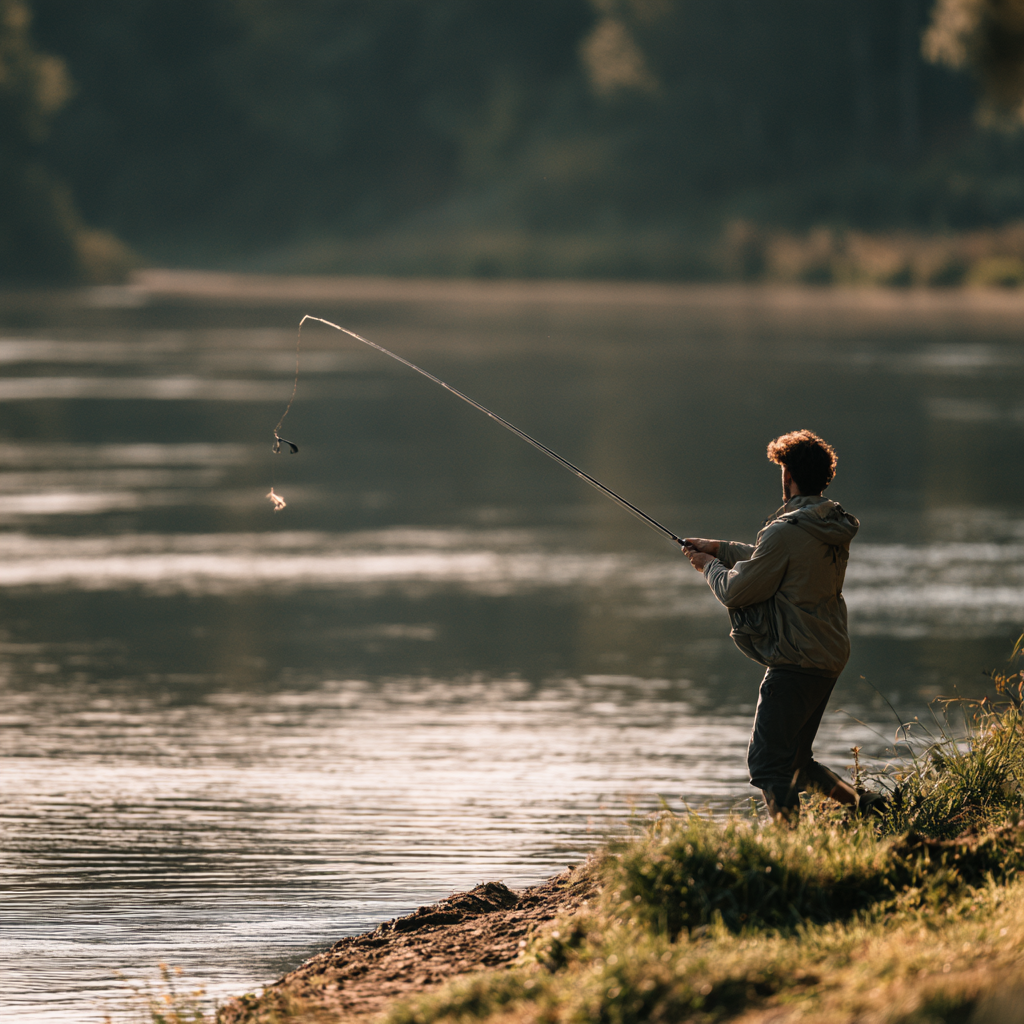
A Simple Baitcaster Rig for Catfish
A sliding-sinker rig is one of the simplest places to start.
The basic order is:
Main line → sliding sinker → optional bead → swivel → leader → hook
The sinker gets the bait into position while the swivel separates the main line from the leader.
Leader length can then be adjusted according to conditions.
In strong current or close to heavy cover, a shorter leader can give better control. In calmer water, additional separation between the sinker and bait may be useful.
Sinker size should also be chosen according to conditions rather than because one weight has been labelled a “catfish sinker.”
Use enough weight to keep the bait where you want it.
If the bait continually rolls away from the intended area in current, increase weight or use a sinker shape that holds bottom more effectively.
If a much lighter sinker controls the rig perfectly, there is no prize for adding unnecessary weight.
Using Circle Hooks With a Baitcaster
Circle hooks work particularly well with a stationary bait presentation, but they require a different reaction to a bite.
Do not immediately respond to every movement by striking as hard as possible.
Allow the fish to move with the bait, take up the slack and let increasing pressure load the rod. The shape of the circle hook is intended to move toward the jaw as pressure develops.
A violent traditional strike can pull the bait and hook away before that process happens.
This is also where a relatively forgiving catfish rod helps. A rod with enough tip movement to load progressively can work more naturally with a circle hook than an extremely stiff setup.
If you regularly see bites but cannot convert them into hooked fish, the FishingChief article on fish biting but not getting hooked goes deeper into hook exposure, bait size, bite timing and hook choice.
Can You Use a Baitcaster With Live Bait?
Yes.
The reel does not care whether the hook carries cut bait, a worm, prepared bait or a live baitfish.
The bigger issue is how the bait behaves during the cast.
A large live bait creates considerable aerodynamic resistance and can move violently when accelerated. Rather than trying to launch it with a sharp overhead cast, use a smoother lob that keeps the rig under control.
The same applies to large pieces of cut bait.
A cast that is slightly shorter but leaves the bait securely attached is better than watching half your bait fly in one direction while the hook and sinker travel in another.
Always check local regulations before using live fish as bait because permitted species and methods vary between jurisdictions.
Using Stink Bait With a Baitcaster
Prepared bait is another option, particularly for channel catfish.
The problem is not whether a baitcaster can cast it.
The problem is keeping soft bait attached while the rig accelerates.
If you want to use prepared bait, make sure the bait consistency and holder are appropriate for casting. Some soft dip baits are designed for worms, tubes or other holders rather than being moulded directly around a conventional hook.
For the bait side of the setup, the FishingChief guide to catfishing with stink bait explains how to keep prepared bait on the rig and fish it effectively.
What About a Bait Clicker?
Some round baitcasting reels designed for bait fishing include a clicker.
When activated, the mechanism produces an audible sound as a fish pulls line from the spool.
That can be useful when several rods are positioned in holders, especially at night.
But not every baitcaster has one, and you do not need a clicker to catch catfish.
A rod tip, electronic bite alarm where appropriate, bell or simply holding and watching the rod can perform the bite-detection job.
If your reel does have a clicker, learn exactly how that particular mechanism is intended to be used rather than assuming every reel operates the same way.
Match the Baitcaster to the Catfish
Channel Catfish
Channel cats are the easiest place to start.
For ordinary fish in relatively open water, huge reels and extremely heavy line are unnecessary. A medium-heavy casting setup capable of comfortably handling the sinker and expected fish will cover a great deal of channel-cat fishing.
Blue Catfish
Blue catfish can become considerably larger.
Where genuinely large fish are possible, line capacity, drag quality, rod power and strong terminal tackle become more important.
Large rivers also introduce current, which may require heavier sinkers even when the fish themselves are not enormous.
Flathead Catfish
Flatheads often make the location more demanding than the fish’s weight alone suggests.
A large flathead beside submerged timber gives the angler very little time to gain control.
This is where stronger tackle and the direct cranking ability of a substantial baitcaster become particularly useful.
You want enough power to influence where the fish goes rather than simply hanging on while it reaches the nearest snag.
Common Baitcaster Mistakes When Catfishing
Casting too hard: Heavy sinkers and bait already load the rod. Smooth acceleration normally produces a better cast than trying to overpower it.
Adjusting the reel without the bait attached: A reel tuned for a bare sinker may behave very differently once a substantial piece of bait is added.
Ignoring the total casting weight: The sinker is only part of the load. Bait, hook, swivel and leader all contribute.
Using a reel that is too small simply because it feels comfortable: Small low-profile reels are excellent tools, but line capacity and strength still need to match the fishing.
Locking the drag: Heavy tackle does not make drag unnecessary. A powerful fish can still overload line, knots or terminal tackle.
Using more line strength than the rest of the system requires: Heavy line has disadvantages too. Match it to the fish and environment instead of selecting the largest number available.
Trying to learn with minimum braking: Start conservatively. Distance will improve naturally as spool control improves.
Forgetting to stop the spool when the rig lands: This is one of the fastest ways to create a backlash.
Striking violently with a circle hook: Let the rod load and increase pressure rather than treating it like a traditional J-hook.
Frequently Asked Questions
Can You Catfish With a Baitcaster?
Yes. Baitcasters are particularly well suited to heavier catfish rigs because they offer good spool control, substantial line capacity in larger models and excellent fighting power.
What Size Baitcaster Is Best for Catfish?
There is no universal reel size because manufacturer sizing varies. A medium-capacity baitcaster can handle ordinary channel catfish, while large blues, flatheads, heavy current and strong line generally justify a larger reel.
In low-profile reels, 300- or 400-class models are commonly considered larger-capacity options, while traditional round baitcasters often use completely different numbering systems.
Compare actual line capacity and drag specifications rather than relying on the model number alone.
Is a Baitcaster Better Than a Spinning Reel for Catfish?
Not automatically.
A baitcaster provides excellent spool control and works particularly well with heavy rigs, but a spinning reel is easier to learn and can catch exactly the same catfish when appropriately sized.
Choose the reel you can use confidently.
Can You Use a Baitcaster for Live Bait?
Yes. Use a smooth cast rather than aggressively accelerating a large live bait. Also check local regulations before using baitfish.
Should I Use Braid or Mono on a Catfish Baitcaster?
Either can work.
Mono is forgiving and inexpensive, while braid provides high strength for its diameter and very little stretch. Choose according to the fish, cover, current and the amount of pressure the tackle needs to withstand.
Why Does My Baitcaster Keep Backlashing With Catfish Rigs?
The most common causes are insufficient braking, poor spool control, tuning the reel for a lighter rig than you are actually casting or trying to accelerate a heavy baited rig too violently.
Increase braking, make a smoother cast and use your thumb to slow the spool before the rig reaches the water.
Final Takeaway
Catfishing with a baitcaster is not complicated once the reel is properly matched and adjusted.
Choose enough reel for the line and fish you expect to encounter, pair it with a casting rod capable of handling the complete baited rig and begin with conservative brake settings.
Then concentrate on smooth casts rather than maximum distance.
The biggest advantage of the baitcaster is control. You can control the spool during the cast, place heavy rigs accurately and apply substantial pressure when a large catfish tries to reach cover.
Learn that control first.
The distance will come later.