
Fish biting but not getting hooked is one of the more frustrating problems in fishing because it means fish are interested, but something is going wrong between the bite and the hook taking hold.
Feeling repeated taps, seeing a float disappear, or watching a lure get hit without actually hooking a fish usually means the hardest part has already happened: fish are interested enough to strike.
The problem is somewhere between the bite and the hook taking hold. Sometimes the hook is wrong for the bait or fish. Sometimes the fish is only grabbing part of the bait. In other cases, the angler is reacting too quickly, too slowly, or using the wrong hook-setting technique altogether.

Fish Biting but Not Getting Hooked: What Your Missed Bites Mean
Not every twitch of a rod tip or float is a fish with the hook inside its mouth.
The pattern of the bite is useful information.
| What you see or feel | Likely cause | First thing to try |
|---|---|---|
| Rapid taps or tiny twitches | Small fish pecking at bait | Reduce exposed bait or identify the fish |
| Bait repeatedly disappears | Bait thieves or bait too soft/large | Secure or shorten the bait |
| Strong pull followed by nothing | Timing, dull/masked hook, or poor hook contact | Inspect hook, then adjust hook set |
| Float dips briefly and immediately rises | Fish tasting or moving bait | Wait for a more committed indication |
| Lure gets bumped but rod never loads | Short strike | Change lure size, speed, or pause |
| Circle-hook bite disappears after a hard strike | Hook may be getting pulled away | Reel steadily instead of striking |
| Fish is clearly hooked and then comes off | Hook retention or line-tension problem | Maintain pressure and inspect tackle |
This distinction matters because a rig that needs adjustment for tiny bait-stealing fish may be perfectly good when the intended species takes the bait properly.
Check the Hook Before Changing Anything Else
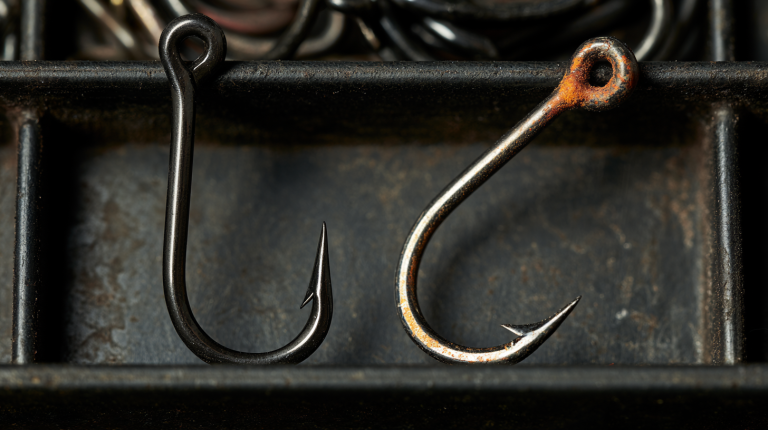
A hook cannot do its job if the point is damaged, dulled, covered with debris, or buried so deeply in the bait that it cannot make contact.
Inspect the hook after snagging rocks, wood, weed, shells, or other hard structure. Hooks can also become damaged simply through repeated use.
Pay particular attention to the hook point after retrieving through vegetation. A small piece of weed covering the point can produce repeated strikes with very poor hooking.
Bait placement matters too. With many conventional bait presentations, enough of the hook point must remain clear for it to penetrate when the fish takes the bait. Packing a large piece of bait tightly around the entire hook can make a perfectly sharp hook behave like a blunt one.
Match Hook Size to Both the Bait and the Fish
Hook size should not be selected in isolation.
A hook has to work with:
- the size and shape of the bait,
- the mouth size of the fish,
- the fishing technique,
- and the hook design.
If a long piece of worm, strip bait, soft plastic, or other offering hangs well beyond the hook, fish can repeatedly grab the loose end without ever reaching the hook.
The opposite problem also occurs. A hook that is excessively large for the fish taking the bait may enter the mouth poorly.
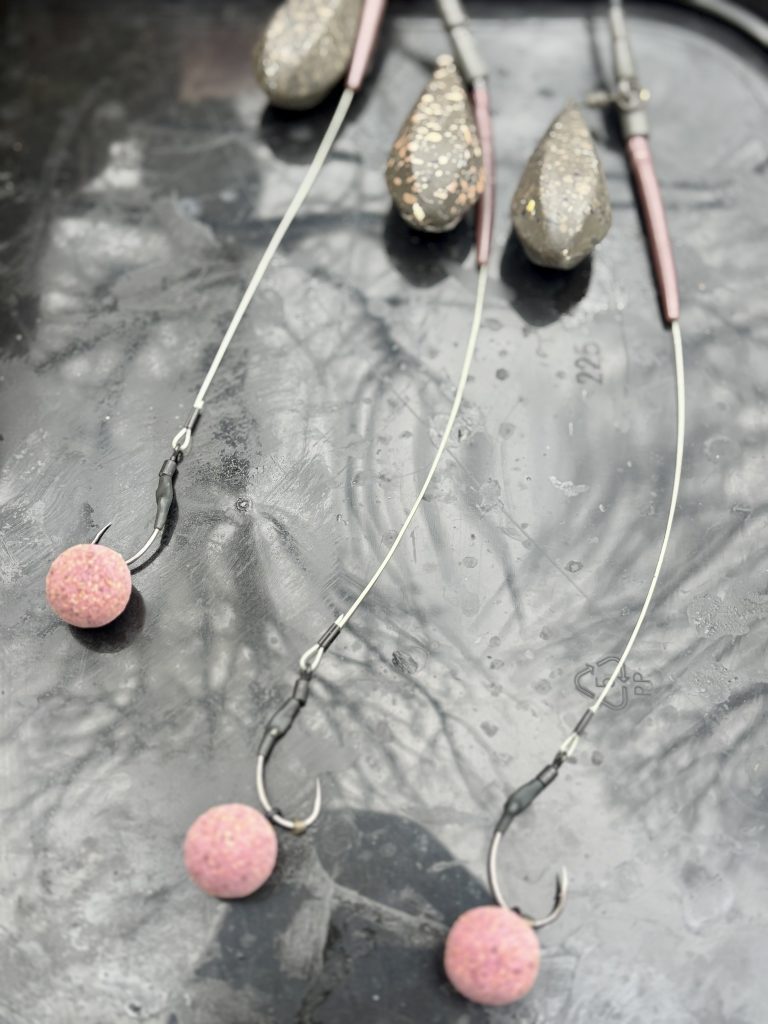
Research on recreational angling has shown that hook size can affect hooking efficiency and the size of fish captured; in one controlled bluegill study, intermediate circle-hook sizes performed better than the smallest and largest sizes tested. The useful lesson is not that one numbered hook size is universally best, but that hook size needs to suit the fish and presentation.
When missed bites continue, try changing the bait profile first. Shortening the bait often preserves the presentation while making it harder for a fish to bite an unhooked portion.
Stop Reacting to Every Tap
One of the easiest ways to miss fish is to treat every movement as a fully committed bite.
Small fish often peck at bait. A fish may also pick up an edge of the bait, reposition it, or briefly mouth it before taking more of it.
Striking immediately at the first tiny signal can pull the bait away before the hook is properly inside the mouth.
That does not mean every fish should be given several seconds to swallow the bait. Waiting unnecessarily long with conventional bait fishing can increase the chance of a deeply hooked fish.
Instead, learn the difference between interest and commitment.
A series of tiny taps generally calls for more patience or a bait adjustment. A float that travels steadily, a line that tightens decisively, or a rod that begins to load is a much stronger indication that the fish has the rig.
Use the Correct Hook-Set Technique
There is no single hook set that works with every hook and presentation.
Conventional J-Hooks
With a conventional hook, remove excessive slack and use a controlled sweep to drive the point home once the fish has taken the bait.
A violent overhead strike is rarely necessary. It can create problems of its own, particularly with light tackle.
The important part is transferring pressure to the hook quickly and cleanly.
Circle Hooks
Circle hooks work differently.
They are designed to move toward the corner of a fish’s mouth as the line tightens. Government fisheries guidance specifically advises anglers not to make the normal sharp hook-setting strike with a circle hook. Instead, point toward the fish and reel until steady pressure develops.
| Hook type | When a fish takes the bait | Basic response |
|---|---|---|
| Conventional J-hook | Confirm a committed bite | Remove slack and sweep the rod |
| Circle hook | Let the fish move and line tighten | Reel steadily; do not make a hard strike |
If missed hookups started after switching from conventional hooks to circle hooks, hook-setting technique should be one of the first things checked.
Control Slack Without Making the Bait Feel Wrong
Excessive slack makes bites harder to interpret and delays pressure reaching the hook.
Too much tension can cause a different problem. With some natural-bait presentations, constant resistance can move the bait unnaturally or make a cautious fish drop it.
The goal is controlled contact, not necessarily a guitar-string-tight line.
With float fishing, manage excess line so a bite can move the float clearly without a large bow of slack between rod and float.
When fishing on the bottom, take up unnecessary slack after the rig settles, but avoid constantly dragging the bait every time the line moves.
With moving lures, enough contact should be maintained to feel when the lure is struck and to load the rod when the fish commits.
If Fish Are Stealing Your Bait, Change the Bait Presentation
Repeatedly retrieving an empty hook is a strong clue.
The fish may not be failing to get hooked after taking the bait. They may simply be eating around the hook.
Try:
- shortening long pieces of worm or other soft bait,
- using a smaller bait portion,
- positioning the bait so the hook is closer to where fish are biting,
- using a tougher bait when small fish repeatedly tear soft bait apart,
- or changing the presentation if nuisance fish are reaching the bait before the target species.
Do not automatically respond by hiding more of the hook inside the bait. That may protect the bait while making hook penetration worse.
If a smaller bait suddenly produces hookups, the original offering was probably giving fish too much food to grab without reaching the hook.
Treat Lure Short Strikes Differently
Artificial lures create a slightly different version of the same problem.
A fish may strike behind a moving lure, swipe at it from the side, or hit only the tail of a soft plastic. Surface lures can produce particularly obvious misses because the splash looks more decisive than the actual contact. If the fish are breaking the surface but not actually striking your lure, see our guide to fish jumping but not biting.
When fish repeatedly hit without loading the rod:
- try a slightly smaller or shorter-profile lure,
- change retrieve speed,
- add or lengthen pauses where appropriate,
- check that the hooks are not fouled,
- and avoid reacting to the visual splash before the fish actually loads the rod.
A strike tells you the lure is getting a reaction. That usually means it is worth making a small presentation adjustment before abandoning the lure entirely.
Consider Whether the Wrong Fish Are Biting
Tiny bluegill, perch, baitfish, and other small species can make surprisingly obvious bite signals.
If large pieces of bait are being repeatedly nipped apart while nothing gets hooked, the problem may simply be that the fish feeding on it are much smaller than expected.
Before downsizing the entire rig to catch them, decide whether those fish are actually the target.
If not, tougher bait, a different bait size, a different presentation, or moving away from nuisance fish may make more sense than optimizing the tackle for them.
A Simple Troubleshooting Order
If you have fish biting but not getting hooked, work through the problem in this order:
- Inspect the hook. Check the point and remove weed or debris.
- Inspect the bait. Make sure fish cannot easily grab a large unhooked portion.
- Check hook size. Match it to the bait and likely fish.
- Identify the bite pattern. Are these taps, committed pulls, short strikes, or stolen bait?
- Adjust timing. Strike only once the bite develops appropriately for the presentation.
- Confirm hook type. Never use a hard conventional hook set just because a circle hook is getting bites.
- Improve line control. Remove unnecessary slack without applying excessive resistance.
- Change presentation. Downsize, shorten, slow, pause, or reposition the bait or lure based on what the fish are doing.
If you are still learning the basics of choosing tackle, presenting bait, reading bites and adjusting your approach, start with our beginner fishing tips before troubleshooting more specific bite problems.
Changing one variable at a time makes it much easier to identify the actual cause.
Common Mistakes That Lead to Missed Fish
Setting the hook harder instead of fixing the problem
More force will not help if the fish never has the hook in its mouth.
Using a sharp hook with the point covered
Hook sharpness means little if weed, bait, scales, or debris prevent the point from touching the fish.
Striking a circle hook
A hard strike can pull the hook away instead of allowing its shape to work as intended.
Leaving too much bait beyond the hook
A fish can remove or bite the free portion without contacting the hook.
Assuming every twitch is the target species
Small bait thieves can create plenty of activity without producing the bite expected from a larger fish.
Changing several things at once
If hook size, bait, rig, and location all change simultaneously, there is no way to know what solved the problem.
Frequently Asked Questions
Why do fish keep stealing my bait without getting hooked?
The fish may be too small to take the entire bait, or too much bait may extend beyond the hook. Shorten the bait and make sure the hook is positioned where the fish is actually feeding. If the problem continues, nuisance fish may be responsible.
Should a hook be smaller if fish keep biting but not getting hooked?
Sometimes, but not automatically. A smaller hook can help when the current hook is too large for the fish, while a larger or differently proportioned hook may be needed when the hook is undersized for the bait. Match the hook, bait, fish, and technique rather than downsizing by default.
How long should you wait before setting the hook?
There is no universal number of seconds. With conventional hooks, wait for a genuinely committed bite rather than reacting to every small tap, but avoid unnecessarily allowing a fish to swallow the bait deeply. With circle hooks, do not use a conventional strike; let the line tighten and reel steadily.
Why does my bobber keep moving but I catch nothing?
Small fish may be pecking at the bait, the fish may only be carrying part of it, or the bait may be too large. Watch for sustained movement rather than treating every tiny dip as a hook-set signal.
Why are fish hitting my lure but not getting hooked?
They may be short-striking, hitting the lure from an awkward angle, or striking only part of a long lure. Check the hooks for fouling, then experiment with lure size, retrieve speed, and pauses.
What if the fish gets hooked but keeps coming off?
That is slightly different from missing the initial bite. Check hook sharpness, hook penetration, drag, and line tension. Once a fish is hooked, maintaining controlled pressure becomes more important than the initial hook-set timing.
What should you do if a fish swallows the hook?
Avoid aggressive attempts to retrieve a deeply embedded hook if removal would cause additional injury. NOAA’s current catch-and-release guidance recommends cutting the line close to a swallowed hook when it cannot be removed easily. What happens afterward depends heavily on the hook material; our guide to whether fish hooks dissolve explains how corrosion, hook ejection and stainless steel affect a retained hook.
Final Takeaway
When you have fish biting but not getting hooked, the answer is usually not to strike harder.
Start with the simplest problems: check the hook, check how the bait sits on it, and make sure the hook size suits the fish and presentation. Then use the bite pattern to decide whether the problem is timing, small bait thieves, short strikes, or line control.
Most importantly, match the hook-setting method to the hook being used. A conventional hook normally requires positive pressure from the angler; a circle hook is designed to work as the line tightens.
Treat each missed bite as information, change one variable at a time, and it becomes much easier to turn repeated taps and pulls into actual hookups.

One Comment