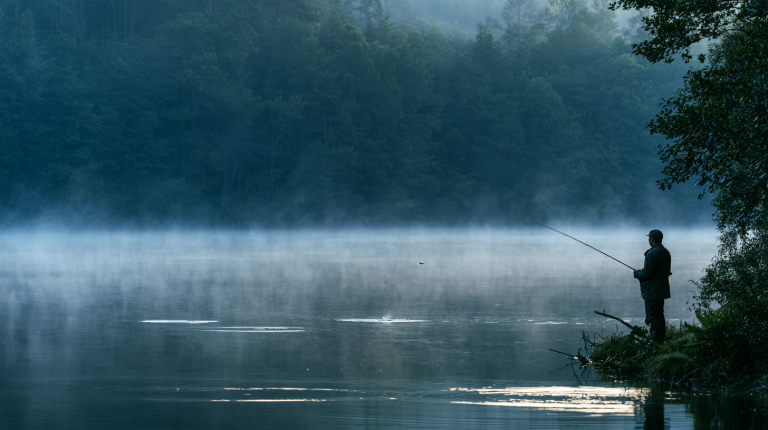
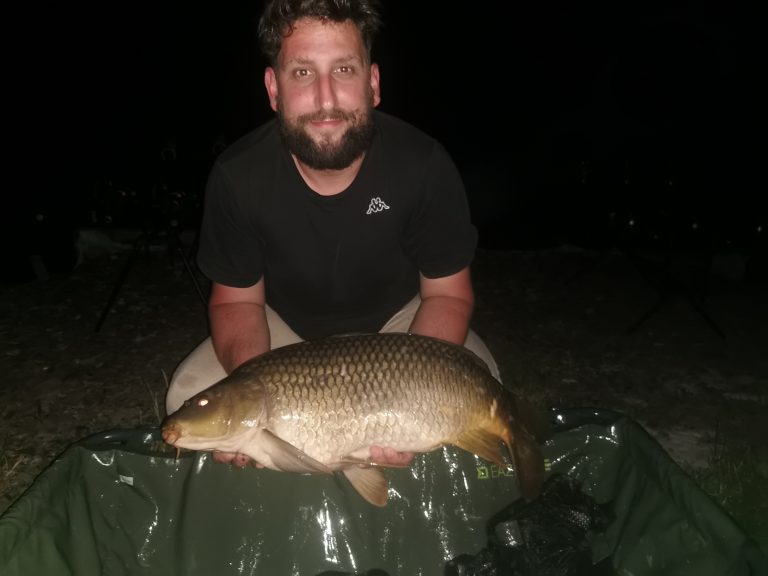
Fishing on a full moon saltwater can be excellent, poor, or completely ordinary depending on where and how you fish. The full moon does change the marine environment, but it does not simply switch fish into feeding mode.
The most important difference is tidal. Around both the full moon and new moon, the sun, moon, and Earth are roughly aligned, producing larger tidal ranges known as spring tides. A full moon also provides more nighttime illumination, which can influence how predators and prey move after dark.
For anglers, that makes tide, current, location, and target species more useful than the moon phase by itself.
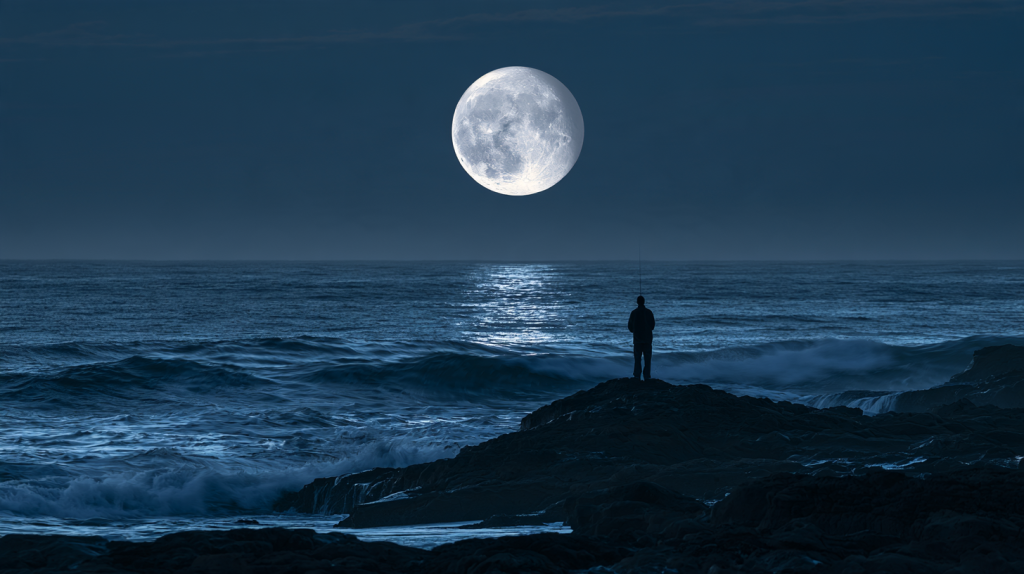
Is Fishing on a Full Moon Saltwater Good?
Yes, it can be very good—but not simply because the moon is full.
In saltwater, the moon has a much clearer physical connection to fishing conditions than it does on an inland lake or pond because the moon and sun influence the tides.
That does not mean every full moon produces better catches.
A larger tidal range can create more water movement in some locations, which may move bait through inlets, channels, points, cuts, reefs, grass edges, and other areas where predators can intercept it. In another location, that same stronger flow may make a normally productive spot difficult to fish.
The effect also differs between species.
Some fish may benefit from increased nighttime visibility. Others may feed differently under bright moonlight, move to different depths, or respond more strongly to the changing current than to the light itself.
This is why the useful question is not simply whether a full moon is good.
It is what the full moon changes at the place you are fishing.
What Does a Full Moon Change in Saltwater?
Full Moons Produce Spring Tides
The biggest practical change is the tide.
During the full moon and new moon, the gravitational effects of the sun and moon combine to produce spring tides. Average high tides become somewhat higher and low tides somewhat lower, creating a larger tidal range than during the first- and third-quarter moon phases.
That matters because tidal movement controls far more than water depth.
Current can move bait, expose or cover feeding areas, open access to shallow flats, concentrate prey around structure, and change where predators can comfortably hold.
There Is More Light at Night
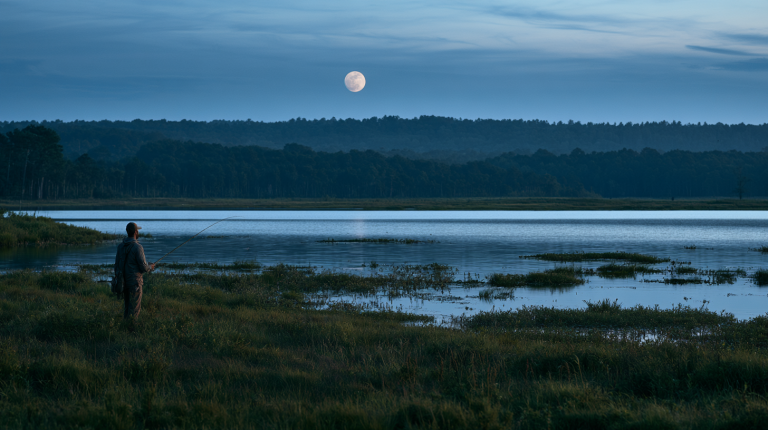
A clear full-moon night can be dramatically brighter than a dark new-moon night.
That can change how both predators and prey use shallow water.
Fish that hunt visually may be able to continue feeding efficiently after sunset. At the same time, prey species can also see predators more easily, and some organisms may change their movement or depth in response to moonlight.
There is no universal direction to that effect.
Research into marine fisheries has found exactly that kind of inconsistency. Lunar phase has been associated with catch-rate changes in some species while others in the same study showed no detectable lunar effect.
Treat the extra light as another environmental change, not evidence that every predator will feed harder.
When Is the Best Time to Fish a Full Moon?
For most saltwater situations, moving water is the better starting point than a specific hour on the clock.
Check the local tide prediction before the trip.
A location may fish best during the incoming tide, the outgoing tide, near the upper part of the tide, or when current first begins moving after slack water. Those patterns are determined by the location and species rather than by a universal full-moon rule.
A productive inlet that funnels bait on an outgoing tide does not suddenly become an incoming-tide spot because the moon is full.
Likewise, a shallow flat that only becomes accessible to fish above a certain water level may benefit from the higher portion of a spring tide.
Full Moon Saltwater Fishing Quick Reference
| Full-moon condition | What may change | Practical adjustment |
|---|---|---|
| Larger tidal range | More difference between high and low water | Check whether your normal spot becomes shallower or deeper than usual |
| Strong current | Bait and predators may concentrate around current breaks | Fish seams, points, edges, and protected pockets rather than the hardest flow |
| Bright night | Greater underwater visibility in clear, shallow water | Start with natural presentations and avoid unnecessary disturbance |
| Slack water | Reduced movement despite the moon phase | Wait for current to restart or move to an area where water is still moving |
| Strong wind or changing weather | Local conditions can overwhelm any moon-phase pattern | Let actual water and weather conditions guide the session |
The full moon gives you information about the type of tide cycle you are dealing with. It does not tell you exactly when the fish will bite.
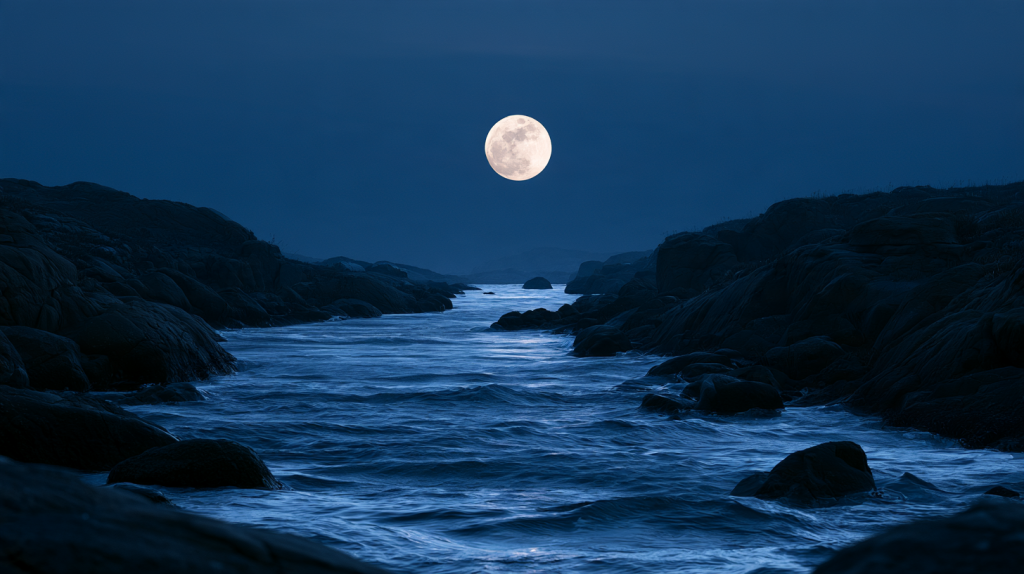
Is Full-Moon Night Fishing Better Than Day Fishing?
Night fishing is one of the most interesting parts of fishing on a full moon saltwater, but it should not automatically be assumed to be better.
A bright full moon can allow predators that depend heavily on vision to hunt under conditions that would normally be much darker.
That can make the night productive.
However, the often-repeated claim that fish will feed all night during a full moon and therefore refuse to feed the next morning is far too simple.
Fish do not all feed on one schedule. Different species use different prey, habitats, depths, and tidal windows. Water temperature, current, spawning behavior, forage movements, and weather can all change the pattern.
If the night bite is productive, take advantage of it.
If you are fishing during daylight, do not abandon the trip simply because the previous night had a full moon.
Watch the water instead.
Where Should You Fish During a Full Moon?
Look for places where the changing tide does useful work for you.
An inlet or narrow channel can funnel moving water and bait through a relatively small area. A point can create a current seam where fast water meets slower water. Rocks, jetties, bridge structure, reef edges, troughs, cuts, grass lines, and drop-offs can all create similar opportunities.
The important feature is not the structure by itself.
It is the combination of structure and moving water.
Fish do not always want to sit in the strongest part of the current. Predators often hold beside it, behind structure, along an edge, or in another position where they can intercept prey without constantly fighting the flow.
During larger spring tides, spots you know from normal tidal conditions may also change.
A shallow area may have considerably more water over it at high tide. A normally comfortable current may become much stronger. A beach trough or cut may behave differently as more water moves through it.
Do not assume yesterday’s productive position will be identical just because the structure has not moved.
Should You Change Baits or Lures on a Full Moon?
There is no special full-moon lure or bait that suddenly becomes necessary.
Start with what matches the forage and fishing situation.
In clear water under bright moonlight, a realistic presentation can make sense because fish may have better visibility. Natural baitfish profiles, appropriately sized live or dead bait, and lures that move naturally through the current are all reasonable starting points.
In darker or dirtier water, vibration, displacement, scent, or a stronger silhouette may become more useful.
The key is to avoid making tackle decisions based on moon folklore.
If fish are feeding on small bait, using an oversized lure simply because the moon is full makes little sense.
If strong current prevents a light lure or rig from reaching the productive zone, adding enough weight to maintain control matters far more than choosing a supposedly ideal full-moon color.
Fish the water in front of you.
Does a Full Moon Affect Every Saltwater Species the Same Way?
No.
This is one of the strongest reasons not to treat moon phases as universal fishing forecasts.
Research using Gulf of Mexico reef-fish catch data found evidence of lunar effects for red grouper and tilefish, but not for several other species examined. Even where an effect existed, its timing was not identical between species.
Other marine fisheries have also produced different lunar patterns.
That does not make moon-phase information useless. It means an angler targeting a particular species should value local and species-specific patterns over broad statements such as “full moons are always best.”
If your target consistently feeds around a certain tidal stage in your area, keep using that information.
The full moon simply tells you that the tide cycle and nighttime light may differ from what you experience during other parts of the month.
What Matters More Than the Full Moon?
The moon should rarely be the first factor deciding whether you fish.
Wind can determine whether an exposed shoreline is comfortable or unfishable. Water temperature can influence fish location. Cloud cover changes light penetration. Seasonal migrations and spawning behavior can completely alter where fish are found.
The barometric pressure trend can also accompany major weather changes, although there is no single pressure number that guarantees good fishing.
Most importantly, you still need fish to be present.
Perfectly timed moon phase, tide, and moonrise information will not rescue a session spent in empty water.
If you mostly fish inland waters, full moon fishing in freshwater is a different question because tidal movement is largely removed from the equation.
For saltwater anglers, the better planning order is generally:
- Find the seasonal location of the target species.
- Check weather and safety.
- Check the local tide.
- Identify the tidal stage that normally suits the location.
- Use moon phase and moonlight as additional context.
That keeps the moon in its proper place—as useful information rather than a fishing prediction.
Is the Full Moon Better Than the New Moon for Saltwater Fishing?
Not universally.
Both full and new moons are associated with spring tides because the sun, Earth, and moon are approximately aligned during both phases.
The major difference for an angler is light.
A full moon can provide substantial illumination at night when the sky is clear. A new moon provides very little moonlight.
Which one fishes better depends on the species, location, prey behavior, water clarity, tide, and fishing method.
Some fisheries may show repeatable patterns around a particular phase. Others may show little meaningful difference at all.
Keep notes if you fish the same area regularly. Over time, your own records of species, tidal stage, current, time, weather, and moon phase are much more useful than a generic moon calendar.
Final Takeaway
Fishing on a full moon saltwater is worth taking seriously, but not because a full moon guarantees feeding fish.
The practical effect begins with the tide. Full moons coincide with spring tides, producing a larger average difference between high and low water. That can change current strength, access to shallow areas, bait movement, and where predators position themselves.
The brighter night can matter too, but its effect is species- and location-dependent.
Use the moon to understand the conditions you are likely to encounter. Then let the tide, current, weather, bait, and actual fish activity decide how and where you fish.
That approach is far more reliable than choosing a fishing day simply because the calendar shows a full moon.