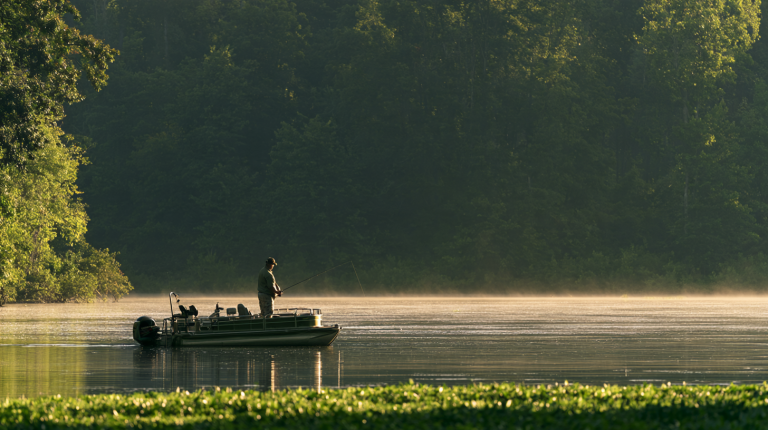
Bass fishing from shore does not mean settling for whatever fish happen to swim within casting distance. In many lakes, ponds and rivers, some of the most useful bass habitat is right beside the bank.
The challenge is approaching it correctly.
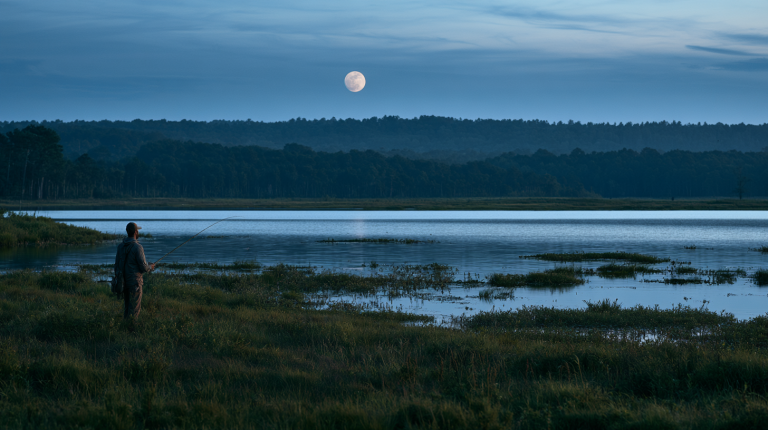
Shore anglers often make their first mistake before the lure even hits the water: they walk directly to the edge, disturb the shallows, and then cast as far toward the middle as possible. A better approach is to treat the shoreline itself as fish-holding water.
Good bank fishing is built around finding accessible cover, approaching quietly, using several casting angles and staying mobile when an area is not producing.
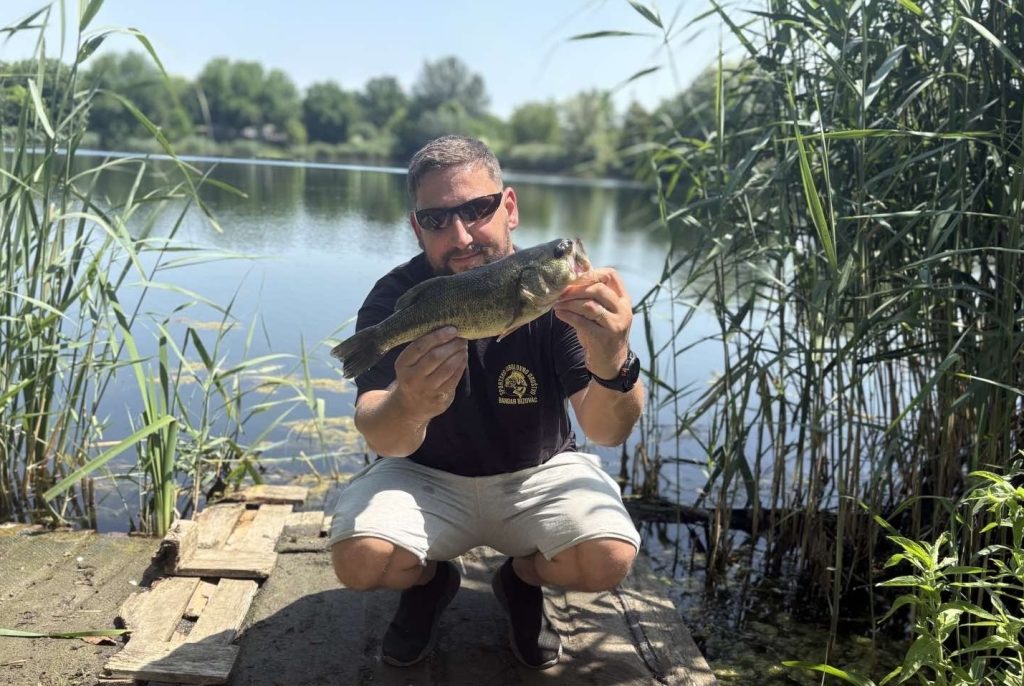
Bass Fishing From Shore Starts Before Your First Cast
The edge of the water should be treated as part of the fishing area, not simply as the place where you stand.
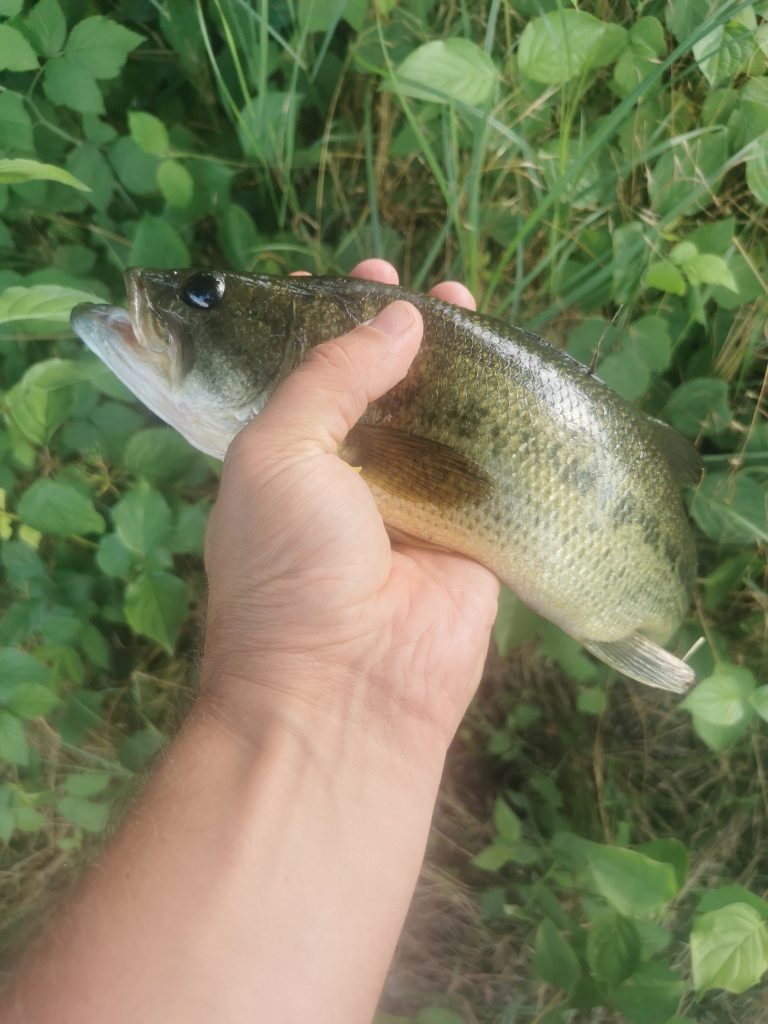
Largemouth bass commonly use shallow vegetation, submerged wood, rocks and other cover. That puts plenty of potentially productive water within reach of a shore angler.
Before walking right to the water, stop several feet back and look.
Can you see submerged grass? A dark patch suggesting deeper water? Reeds extending away from shore? A fallen branch? Shade from an overhanging tree? A small point?
Fish that water first.
A bass sitting two metres from shore is easily disturbed by footsteps, shadows or an angler suddenly appearing directly above it. Casting into the near-shore water before moving closer costs nothing and occasionally produces a fish that would otherwise have been spooked.
Where to Cast When Bass Fishing From Shore
Finding productive bank fishing is mostly a matter of finding differences.
A featureless stretch of identical shallow water gives bass little reason to concentrate in one particular place. Anything that changes the habitat deserves attention.
Weed Edges, Reeds and Lily Pads
Vegetation provides shade, ambush cover and habitat for many of the smaller creatures bass feed on.
Do not only cast directly into the thickest vegetation.
The outer edge can be equally important because it creates a clear boundary between cover and open water. Cast along that boundary whenever your position allows it.
Small openings inside vegetation are also worth targeting.
Where heavy vegetation makes exposed hooks frustrating to use, a weedless soft plastic or another lure designed to travel cleanly through cover can keep the presentation fishing rather than constantly collecting plants.
Fallen Trees and Overhanging Cover
A tree entering the water creates several potential targets at once.
The trunk provides structure. Branches create shade and cover. The outer branches may extend considerably farther underwater than they appear to from shore.
Start with the outside edges rather than immediately throwing deep into the branches.
If nothing responds, work progressively closer.
This reduces unnecessary snags and lets you fish the easiest parts of the tree before risking a lure inside the thickest cover.
Points and Shoreline Changes
A point allows a shore angler to reach several depths from one position.
Fish both sides as well as the tip.
Also pay attention to smaller changes that do not look dramatic above water: rock turning into mud, grass ending abruptly, a steeper bank beside a shallow flat, or a narrow pocket opening into the main lake.
Bass do not need a huge piece of structure. Sometimes the first meaningful change along an otherwise uniform bank is enough.
Docks, Bridges, Riprap and Boat Ramps
Man-made structure can be particularly useful because it is easy to identify from shore.
Dock posts provide shade and vertical structure. Riprap creates irregular rocky cover. Bridge areas may combine depth, shade and current, while the edges of boat ramps create hard-bottom transitions.
Fish where permitted and avoid interfering with boat traffic or private property.
Inflows and Moving Water
Where a creek, drainage channel or other inflow enters a lake, conditions can differ from the surrounding shoreline.
Current may create a defined edge, carry food through the area or position fish around nearby cover.
In rivers, current becomes even more important. Smallmouth bass in particular are commonly associated with rocky habitat and current breaks, while largemouth often favour slower water, vegetation and protected cover.
Casting Angle Matters More Than Casting Distance
There is nothing wrong with making a long cast when the useful water is farther offshore.
The mistake is assuming the longest cast is automatically the best cast.
From shore, three angles are worth using.
| Casting angle | What it covers | When to use it |
|---|---|---|
| Parallel to shore | Shallow cover and the first break along the bank | Weed edges, reeds, riprap, shade and cruising bass |
| Roughly 45° from shore | Shallow water through intermediate depth | Excellent general search angle |
| Straight outward | Offshore cover and deeper accessible water | Points, drop-offs, deep weed edges and hot-weather situations |
Begin with the casts that keep the lure in productive water for the longest time.
If a weed edge runs parallel to the shoreline, casting along it may keep the lure beside cover for most of the retrieve. Casting directly across it might place the lure in the productive zone for only a few seconds.
Once those angles have been covered, fan casts farther offshore can reveal depth changes or submerged cover that cannot be seen.
Best Lures for Bass Fishing From Shore
Shore fishing rewards versatility more than a huge tackle collection.
A lure that catches fish but becomes permanently stuck every third cast is not particularly useful when there is no boat available to retrieve it.
Weedless Soft Plastics
A Texas-rigged worm or other weedless soft plastic is one of the most adaptable choices available.
It can be worked around vegetation, wood, docks and bottom cover, while weight can be adjusted depending on depth and presentation.
A weightless stick-style bait is particularly useful around shallow cover where a slower fall is wanted.
Spinnerbaits and Chatterbaits
Moving baits are useful when covering shoreline and trying to locate active fish.
Spinnerbaits handle many forms of wood and mixed cover well. Chatterbaits or other bladed jigs are especially useful around submerged grass and along vegetation edges.
Both allow an angler to cover considerably more water than a slowly worked bottom presentation.
Topwater Lures
Topwater can be extremely useful when bass are willing to move upward to feed, particularly around shallow vegetation and during lower-light periods.
Frogs also allow heavily vegetated surface cover to be fished with relatively little snagging.
Do not treat sunrise and sunset as the only possible topwater windows. Cloud cover, shade, vegetation and fish activity can extend the opportunity.
Crankbaits and Other Hard Baits
Shallow-running crankbaits and similar hard baits cover water quickly and can be excellent around rock and relatively open shoreline.
The disadvantage from shore is obvious: treble hooks can become expensive when submerged branches or dense vegetation lie between the lure and the angler.
Choose them when the water in front of you allows them to be retrieved cleanly.
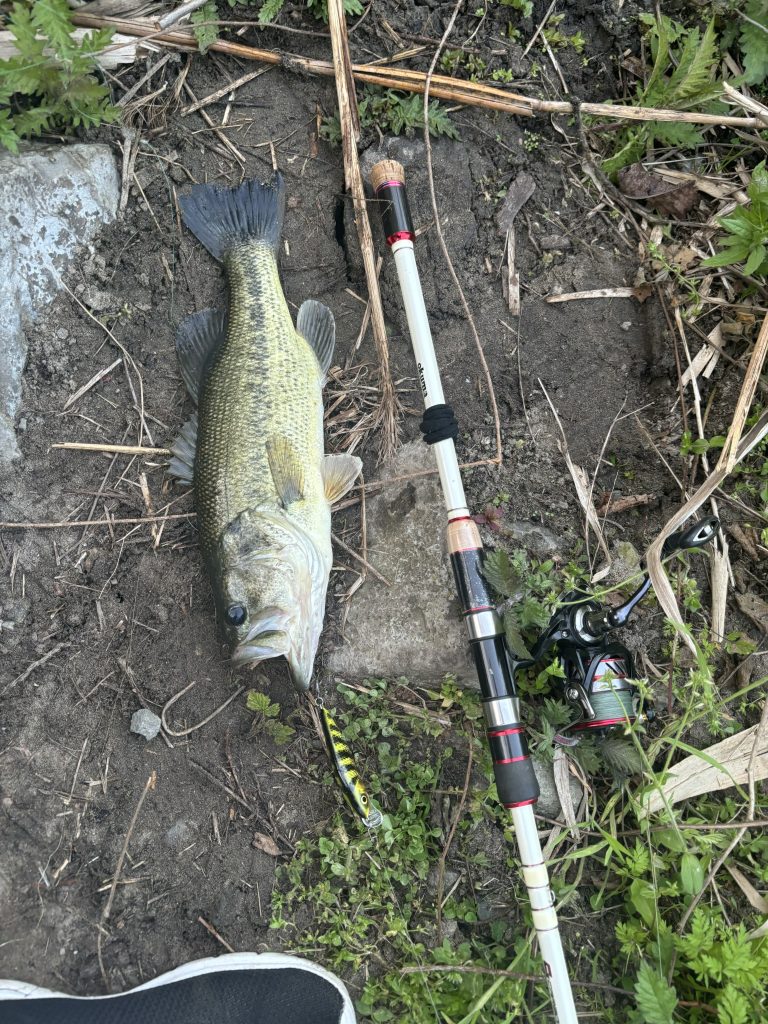
Keep Your Shore Fishing Setup Simple
A bank angler usually benefits from carrying less equipment.
Mobility is one of the biggest advantages of shore fishing, and it disappears quickly when every move requires transporting several rods and a large tackle box.
One versatile spinning setup can handle a surprising amount of bass fishing. A second rod can be useful when the water demands both a lighter presentation and something stronger for heavy cover, but there is little reason to carry an entire boat-sized tackle collection around the lake.
A practical shore kit might include:
- one or two rods;
- a compact selection of soft plastics and moving baits;
- spare hooks and weights;
- pliers;
- line cutters;
- polarized sunglasses;
- a small landing net where the bank makes hand-landing difficult;
- water and basic personal gear.
The lure selection should follow the water being fished rather than a generic checklist.
If the shoreline is covered in thick grass, carrying six exposed-treble-hook lures makes little sense. If it is mostly rock and open water, the selection can change completely.
Stay Mobile Until You Find Bass
A boat angler can move hundreds of metres in a few minutes. Shore anglers have to create the same advantage with their feet.
Do not abandon obviously good cover after two casts, but do not spend most of the session repeatedly throwing into featureless water either.
Cover each useful angle, change presentation when there is a reason to, and move.
On an unfamiliar pond or lake, the first session can be treated partly as scouting. Note where vegetation ends, where water appears deeper, which sections have access, where fallen trees lie and which banks receive wind or shade.
That information makes every future visit easier.
Mobile fishing is also one reason a backpack or small tackle bag usually works better than carrying equipment designed for a stationary session.
Adjust to the Season Instead of Following One Shore Pattern
Shore access becomes easier to exploit when bass are using shallow water, but bass do not remain in exactly the same places all year.
Spring can bring largemouth into shallow areas for feeding and spawning activity.
During hot summer periods, some fish may use deeper water, deeper weed edges, heavy shade or thick vegetation. Shore anglers should look for banks that provide access to those conditions instead of continuing to fish featureless shallows simply because they are easy to reach.
Cooling water in autumn can again make shallow feeding areas productive.
These are patterns rather than guarantees. Local water depth, vegetation, water clarity, weather, forage and fishing pressure can change where bass actually position. Changes in weather and pressure trends can also affect bass activity and positioning.
The best response is observation.
If baitfish are present along one bank, vegetation looks healthy and several useful pieces of cover occur close together, that is a stronger reason to keep fishing than the calendar alone.
Plan How You Will Land the Fish
A perfect cast is not useful if the fish cannot be safely reached after it is hooked.
Check the bank before fishing steep walls, dense reeds, high docks or large rocks.
Know where a hooked fish can be brought in.
Avoid lifting larger bass a long distance by the line. Move toward a lower landing position where possible or use an appropriate net.
Have pliers ready before the fish is landed, especially when using treble-hook lures.
If the fish will be released, minimizing unnecessary handling and getting it back into the water promptly should take priority over arranging equipment or taking repeated photographs.
Common Shore Bass Fishing Mistakes
Walking Straight to the Water
The first fish may be much closer than expected.
Fish the edge before standing on it.
Casting Only Toward the Middle
Deep water can certainly hold bass, but constantly throwing straight outward ignores most of the shoreline habitat beside you.
Use parallel and diagonal casts too.
Carrying Too Much Equipment
More tackle does not create more productive water.
Carry enough to adjust to the conditions while remaining mobile.
Ignoring Small Pieces of Cover
A single branch, isolated clump of reeds or tiny change in bottom composition can matter when little other cover exists.
Do not wait for an enormous fallen tree before making a targeted cast.
Using the Wrong Lure for the Cover
A lure should allow you to fish the water effectively.
When repeated snags or vegetation prevent a proper retrieve, change the presentation rather than repeatedly forcing the same lure through unsuitable cover.
Staying in One Unproductive Area Too Long
Bank access may be limited, but that makes mobility more important, not less.
Walk, observe and build a collection of productive shoreline spots.
Bass Fishing From Shore FAQ
Can you catch big bass from shore?
Yes. Large bass use shoreline cover just like smaller fish, particularly where suitable vegetation, wood, depth or forage is available. Being shore-bound does not automatically restrict an angler to small fish.
What is the best lure for bass fishing from shore?
There is no single best lure. A weedless soft plastic is one of the most versatile options, while spinnerbaits, chatterbaits, topwaters and crankbaits are useful when conditions suit them. Choose according to cover and depth.
How far should you cast from shore?
Only as far as necessary to reach productive water. Make short and parallel casts first when useful cover exists close to the bank, then work progressively farther outward.
Is bass fishing from shore better in the morning or evening?
Low-light periods can be productive, but bass can be caught from shore throughout the day. During bright conditions, concentrate on shade, vegetation, deeper accessible water and other cover rather than assuming fishing must stop.
Do you need a special rod for shore bass fishing?
No. A versatile spinning or baitcasting setup suitable for the lure and cover can work well. Portability and the ability to cast the presentations actually being used matter more than owning a dedicated “shore fishing” rod.
Final Takeaway
Successful bass fishing from shore is less about reaching the middle of the lake and more about understanding the water that can actually be reached.
Start close. Fish cover from several angles. Carry tackle suited to the shoreline, and keep moving until useful habitat and active fish are found.
The most important variable is location.
For a broader approach covering location, lure selection, retrieve speed and seasonal changes, see our bass fishing tips guide.
A carefully presented lure beside productive cover will usually give a shore angler a better opportunity than another maximum-distance cast into featureless water.