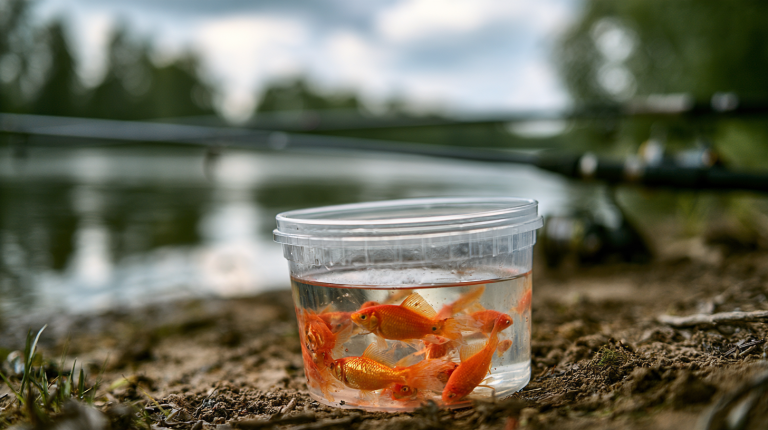
Finding a few worms while digging in the garden is easy. Finding enough when you actually need fishing bait can be a completely different story.
If you want to know how to get earthworms out of the ground, the biggest factor is not how hard you dig. It is choosing damp ground where worms are active and then using the right collection method.
Cool, moist soil can make hand collection surprisingly easy. If the worms remain below the surface, vibration — commonly called worm grunting or worm charming — can bring some species up without digging. Careful digging is the simplest reliable fallback, while mustard water can be used when you specifically need worms to leave their burrows.
There are also several methods worth avoiding entirely, particularly electricity and harsh chemicals.
How to Get Earthworms Out of the Ground: Start With Damp Soil
Before trying any special technique, choose the right patch of ground.
Earthworms need moisture, so dry, baked soil is rarely a productive place to start. After a long dry spell, many worms will be deeper and far harder to collect.
Look instead for ground that is:
- moist but not flooded,
- shaded for at least part of the day,
- covered with leaves, mulch or decaying vegetation,
- rich in organic material,
- relatively loose rather than heavily compacted.
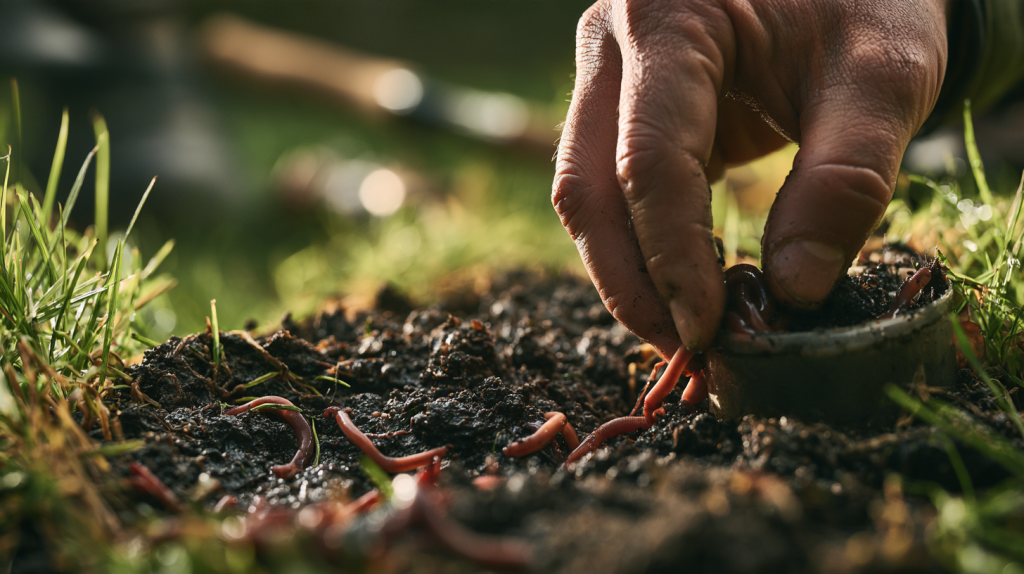
Garden beds, compost edges, shaded lawns and soil underneath old leaves or pieces of wood can all be productive.
Timing matters too. Evening, nighttime and the period after rainfall normally give you a much better opportunity than the middle of a hot, dry afternoon.
Before doing anything more complicated, lift loose surface cover and look.
| Method | Best Situation | Ground Disturbance | Practical Use |
|---|---|---|---|
| Night hand-picking | Damp ground after rain | Very low | Easiest first option |
| Watering beforehand | Dry surface with suitable soil underneath | Very low | Prepares an area for collection |
| Worm grunting | Moist soil with active worms | Low | Encourages some worms to surface |
| Careful digging | Loose garden or compost-rich soil | Moderate | Reliable for collecting a small amount |
| Mustard water | Small targeted area | Low | Flushes active worms from burrows |
Method 1: Look for Worms at Night or After Rain
The simplest method requires almost no equipment.
When the ground is damp after rain, inspect lawns, gardens, paths beside vegetation and other areas where earthworms are likely to be active close to the surface.
Night can be particularly productive because the ground is cooler and direct sunlight is no longer drying the surface.
Move slowly and watch for worms lying partly or completely above ground. A headlamp or flashlight makes them much easier to spot, but avoid constantly shining an intense beam directly onto a worm while approaching it.
If a worm is still partly inside its burrow, do not suddenly yank it.
Earthworms can hold surprisingly firmly inside their tunnels. Pulling aggressively can injure or tear them. Give the worm time to move farther out or apply only gentle, steady pressure if you are collecting it.
For a handful of fishing worms, this may be all you need.
Method 2: Water a Small Area Before Collecting
If the ground is suitable but the surface has become dry, watering can improve your chances.
Do this during the late afternoon or evening rather than immediately before searching under strong midday sun.
Wet a relatively small patch thoroughly enough to moisten the upper soil without turning it into a pond. The goal is to create the damp conditions earthworms prefer near the surface, not to drown them out of the ground.
Then give the moisture time to penetrate.
Water alone does not guarantee that dozens of worms will suddenly crawl onto the lawn. It is better viewed as preparation for night collecting, grunting or shallow digging.
Another slow but simple option is leaving a damp piece of cardboard or an old board over moist ground. Check underneath later. A cool, protected layer at the soil surface can sometimes give you an easy place to find worms without excavating a large area.
Method 3: Try Worm Grunting or Worm Charming
Worm grunting sounds like fishing folklore, but the basic technique is real.
It is also known as worm charming, worm fiddling or worm calling.
The idea is to transmit repeated vibrations through the soil.
How to grunt worms out of the ground
- Choose a patch of damp ground where earthworms are likely to be present.
- Drive a sturdy wooden stake into the soil.
- Rub or scrape the exposed portion of the stake rhythmically with another hard object so that the stake vibrates.
- Keep the vibration going rather than making only a few short scrapes.
- Watch the surrounding soil for worms beginning to emerge.
- Collect worms once they have moved far enough out of their burrows to be handled safely.
Do not expect identical results everywhere.
Different earthworm species behave differently, soil transmits vibration differently, and worms that are inactive deep in very dry or cold ground may not respond particularly well.
If nothing appears after several minutes, changing location can be more productive than spending half an hour vibrating the same empty patch.
The study directly demonstrated emergence following grunting vibrations, although it investigated particular earthworms in Florida rather than proving that every species everywhere will respond equally.
Method 4: Dig Carefully in the Right Places
Digging is not as clever as worm charming, but sometimes it is the quickest answer.
The trick is to avoid digging random holes.
Start around:
- compost and decomposing vegetation,
- moist garden soil,
- underneath deep leaf litter,
- shaded areas,
- edges of mulch beds,
- other loose ground containing plenty of organic matter.
Lift a small section with a garden fork or spade and break the soil apart gently by hand.
A fork is often useful because it can loosen a wider section of ground, although you still need to work carefully to avoid spearing worms.
If you only need half a dozen worms for a short fishing session, methodically sorting one productive patch can be faster than trying to force an entire lawn to produce worms.
Put the soil back when you are finished rather than leaving unnecessary holes behind.
Method 5: Use Mustard Water to Bring Worms Up
Mustard-water extraction is a more controlled way to encourage earthworms to leave their burrows.
This is not the prepared yellow condiment squeezed onto food. The method uses plain ground yellow mustard seed or dry mustard powder mixed with water.
The mustard compounds irritate earthworms, causing active worms to move toward the surface.
A commonly used research mixture is about 40 grams of ground yellow mustard seed in 4 liters of water. University of Minnesota Duluth’s Great Lakes Worm Watch uses this approach for earthworm sampling.
How to use mustard water
Choose a relatively small patch rather than treating a large area.
Mix the mustard powder thoroughly into the water, then pour some of the solution evenly over the ground.
Watch closely.
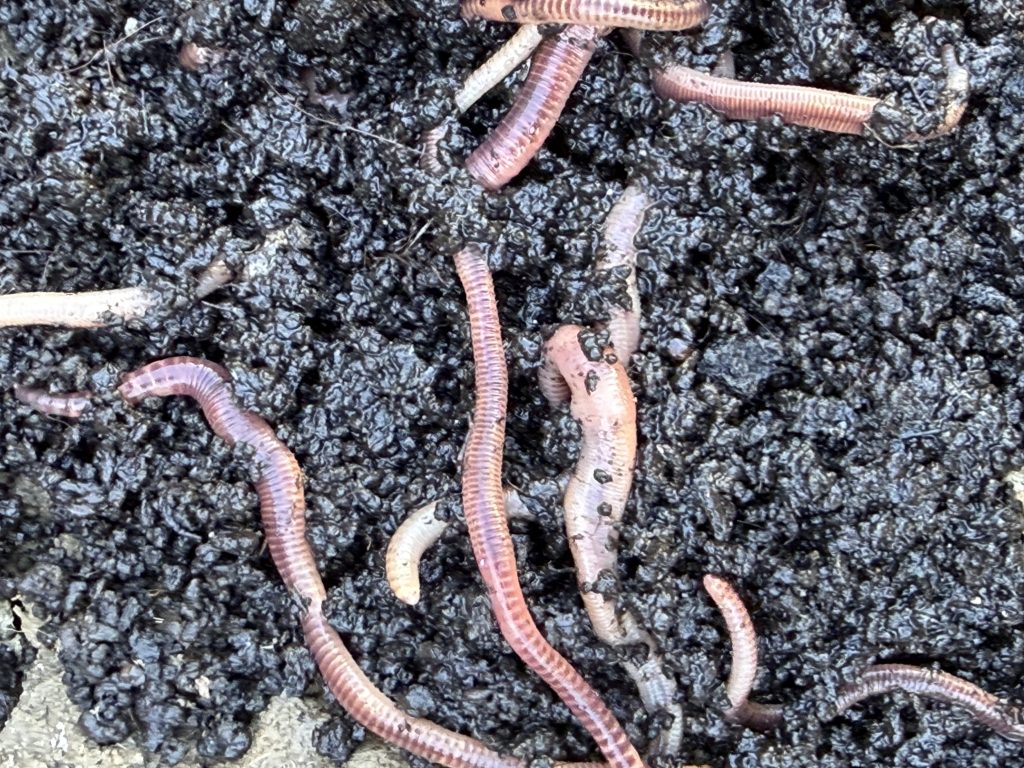
Worms may begin appearing as the solution moves through their burrows. Wait until each worm is properly above the surface before collecting it.
Apply the remainder gradually if necessary rather than dumping excessive amounts into one spot immediately.
Worms collected for fishing should be rinsed with clean water afterward and transferred into clean, damp bedding.
Mustard extraction can be effective, but for routine bait collecting it makes sense to try ordinary hand-picking, moisture and vibration first.
Supporting technical source: University of Minnesota Duluth — Sampling Earthworms
Methods You Should Not Use to Force Worms Out
There are plenty of improvised worm-catching tricks online. That does not make all of them good ideas.
Electricity
Do not use homemade electrical probes, mains electricity, car-battery arrangements or similar devices to electrify the soil.
Even if electrical stimulation can cause worms to move, intentionally putting electrical current into wet ground creates an unnecessary shock hazard.
There are much safer ways to collect fishing bait.
Salt, bleach or ammonia
Do not pour strong household chemicals or salt solutions into the ground to irritate worms.
The objective is to collect healthy bait, not chemically damage the worms and the soil around them.
Strong detergent or soap solutions
Soap and detergent methods have been used for earthworm extraction, but detergents can harm the worms.
For anglers, there is little reason to choose that option when vibration, careful digging and mustard-water extraction are available.
Excessive flooding
More water is not automatically better.
Flooding the ground wastes water, creates mud and still may not produce many worms if the soil or location was poor to begin with.
Target a good area first.
How to Keep Collected Earthworms Alive for Fishing
Getting worms out of the soil is only useful if they are still in good condition when you reach the water.
Use a container that allows some air exchange and contains cool, damp material. Soil from the collection area can work for short-term storage.
The bedding should feel moist rather than saturated.
Do not store worms submerged in water, leave the container in direct sunlight or put them inside a hot vehicle. Heat can ruin a container of bait very quickly.
For a normal fishing trip, collecting reasonably close to the session and using the worms while they are fresh keeps things simple.
Earthworms and nightcrawlers can be especially useful for channel catfish and other freshwater species. The FishingChief guide to fishing tips for catfish covers where worms fit alongside cut bait and prepared baits.
And if fish repeatedly nibble pieces of worm without actually becoming hooked, the problem may be the bait presentation rather than the bait itself. The guide to fish biting but not getting hooked covers bait size, exposed hook points and bite timing in more detail.
Do not dump unused worms into a different natural area when the trip is over. Where non-native earthworms are a concern, moving live bait between locations can contribute to their spread.
Common Mistakes When Collecting Earthworms
Searching dry ground in hot weather
Technique cannot compensate for a terrible location.
Start with cool, damp and organic-rich ground whenever possible.
Pulling a worm while it is still firmly inside its burrow
A worm that has only partly emerged can hold onto the sides of the burrow. Aggressive pulling can damage it.
Wait or use gentle pressure.
Assuming water automatically makes worms surface
Moisture improves the conditions, but simply pouring water onto random ground is not a guaranteed extraction method.
Use watering to prepare a productive area.
Giving up after one grunting attempt
Vibration does not affect every soil, location or species equally.
Try another likely patch before deciding the technique does not work.
Using too much irritant
More mustard solution is not necessarily more effective.
Work on a defined patch and apply it gradually.
Storing worms in standing water
Earthworm bedding should be damp, not flooded.
Frequently Asked Questions
What is the fastest way to get earthworms out of the ground?
If worms are already active near the surface, collecting them at night after rain is usually the quickest method. When they remain underground, shallow digging in rich, damp soil or worm grunting can be faster than waiting for conditions to change.
Does vibrating the ground really make worms come up?
Yes, it can. Experimental research has shown earthworms emerging in response to seismic vibrations created by worm grunting. However, the effectiveness varies with worm species, soil and environmental conditions.
Does pouring water on the ground make worms come out?
Sometimes it helps, but water is more reliable for improving soil moisture than as an instant worm extractor. Water a suitable area before evening and then combine that with hand collection, grunting or another method.
Can you use soapy water to get worms out?
Soap and detergent solutions can make earthworms emerge, but they can also harm them. They are not a good first choice for collecting healthy fishing bait.
When is the best time to collect earthworms?
Cool, damp periods are easiest. Evening, nighttime and the period following rainfall are generally much better than hot, dry daytime conditions.
Can you use mustard water for worms you intend to fish with?
Mustard-water extraction can bring worms to the surface. Collect the worms promptly and rinse them thoroughly with clean water before placing them into fresh, damp bedding.
Final Takeaway
The easiest way to learn how to get earthworms out of the ground is to stop treating digging as the only option.
Start with cool, damp ground and look for naturally active worms. If they remain below the surface, try worm grunting before disturbing a large area. Careful digging provides a reliable backup, and mustard water is useful when you specifically need to flush worms from their burrows.
Good ground and good timing usually matter more than using an aggressive extraction method.