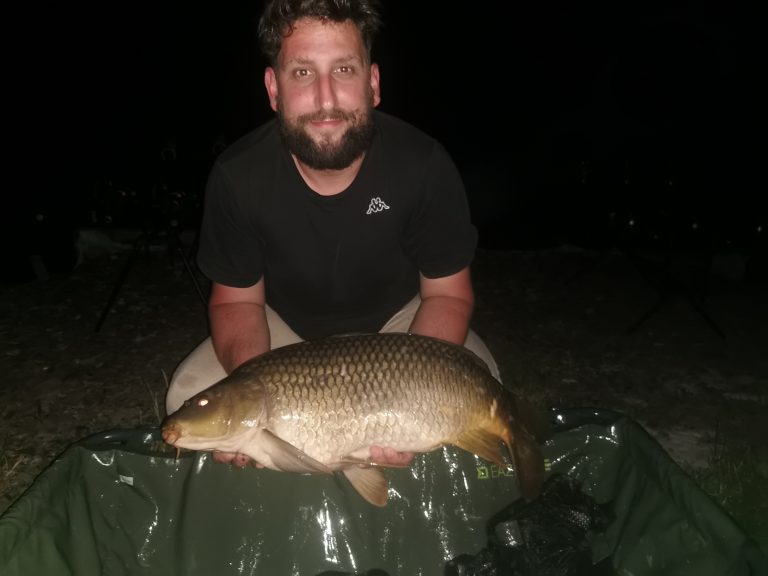
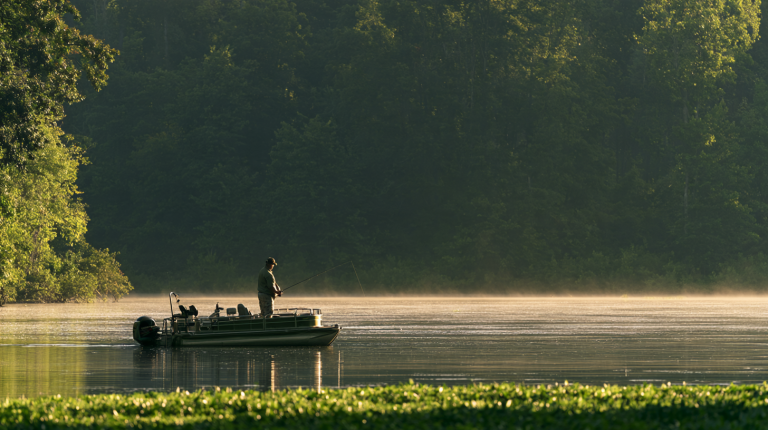
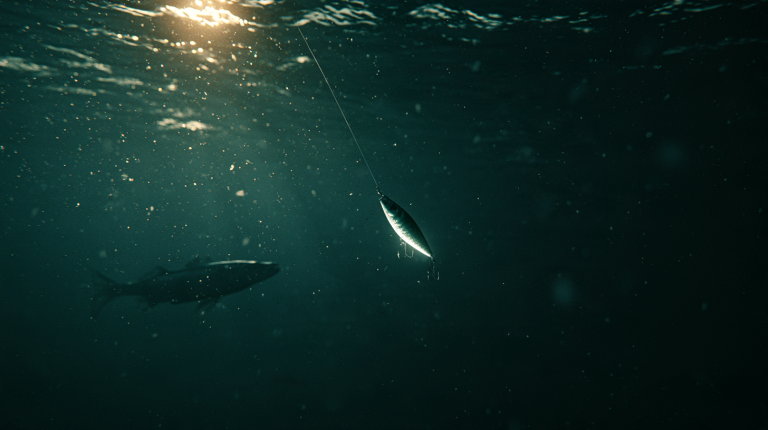
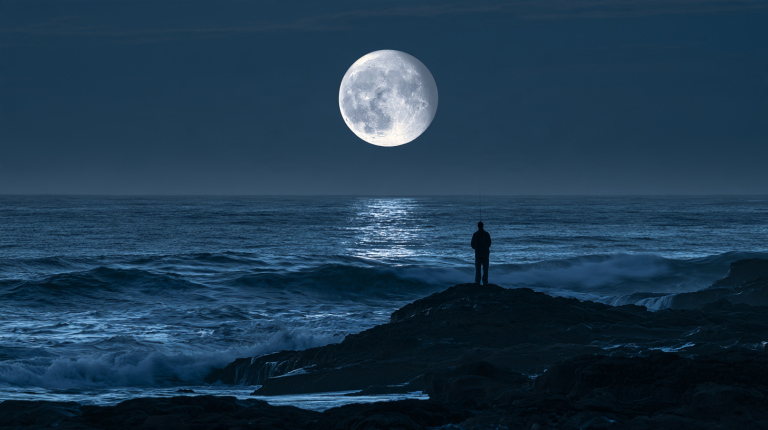
Bass fishing on a full moon has a reputation for producing some of the best nighttime catches. Some anglers plan entire trips around the lunar calendar, while others believe a bright moon makes bass harder to catch.
The reality is less predictable.
A full moon changes the amount of natural light available at night, and research suggests lunar cycles can influence certain aspects of largemouth bass behavior. However, that does not mean bass automatically feed more aggressively whenever the moon is full.
Successful full-moon bass fishing still depends on finding fish, understanding available cover, choosing the right presentation, and adapting to conditions. The moon can be part of that equation, but it should not make every other decision for you.
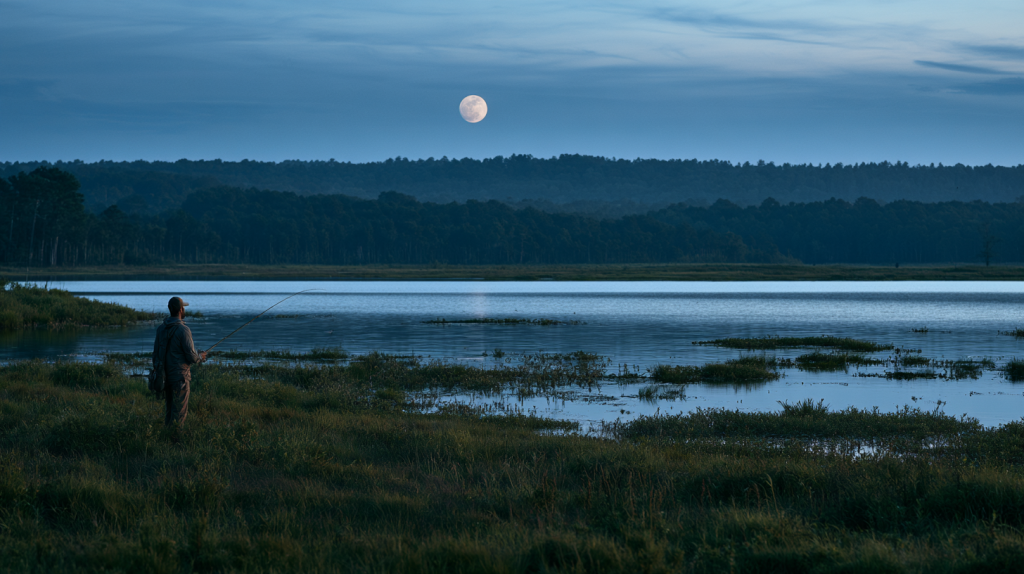
Is Bass Fishing on a Full Moon Actually Better?
A full moon can create excellent bass fishing opportunities, but there is no reliable evidence that it consistently produces more bites than other moon phases.
The distinction matters.
Fish movement, feeding activity, and the number of fish caught by anglers are related but different things.
A bass can become more active without necessarily feeding more. It can also feed successfully while remaining difficult for an angler to locate or catch.
For example, bass that spend daylight hours close to heavy vegetation may become more accessible after dark. That does not automatically mean the moon caused them to move.
Water temperature, food availability, seasonal conditions, and fishing pressure can also influence that behavior.
Research has identified some relationships between lunar cycles and largemouth bass activity, but those relationships have not been consistent throughout the year.
This is also why broader advice about fishing on a full moon should not be treated as a universal rule for every freshwater species.
For bass anglers, the better approach is to understand what the moon actually changes.
How a Full Moon Can Affect Bass Behavior
More Natural Light After Dark
The most obvious difference between a full moon and a new moon is nighttime illumination.
On a clear night, a full moon can provide considerably more natural light at the water’s surface.
This may affect how easily bass locate prey, how prey fish use exposed areas, and how predator and prey movement patterns interact.
However, the amount of useful light underwater also depends on water clarity, cloud cover, surface conditions, and depth.
A clear lake under an unobstructed full moon is very different from a muddy pond beneath thick clouds.
That means moon phase alone tells you relatively little about the visibility available to a feeding bass.
Bass May Change Their Position at Night
Bass do not necessarily remain in the same positions throughout a 24-hour period.
Some fish move between deeper and shallower areas as light conditions change. Others remain associated with similar structure while adjusting their depth or exact holding position.
Research from Table Rock Lake in Missouri provides a useful example.
Scientists tracking 70 largemouth bass found that the fish selected shallower water at night than during daylight. Selection for shoreline structure remained important during both periods.
That does not prove the full moon caused those movements, but it demonstrates why nighttime fishing locations deserve attention.
A productive daytime spot may still hold bass after sunset, while another area becomes more accessible as fish change depth.
Best Time for Bass Fishing on a Full Moon
There is no scientifically established hour when bass must feed during a full moon.
Instead of treating the lunar calendar as a strict schedule, divide your session into several useful fishing windows.
Sunset and Early Evening
The transition from daylight into darkness is an excellent starting point.
During this period, changing light can alter visibility around cover, shoreline vegetation, and shallow feeding areas.
Start fishing before sunset rather than arriving only after the moon becomes visible.
This allows time to identify structure, observe baitfish, establish casting references, and learn which areas are producing activity.
Shallow weed edges, points, isolated cover, and nearby depth changes are sensible places to begin.
After Dark
A full moon generally rises around sunset, although the exact timing varies by date and location.
When it is above the horizon and not obscured by clouds, moonlight can improve visibility across the water.
At night, concentrate on areas where bass can move between cover and accessible feeding water.
Productive possibilities include submerged grass edges, docks, rocky banks, shallow points, and transitions into deeper water.
Do not assume every bass moves shallow or that the best bite must occur at midnight.
If a promising area remains quiet, change retrieve speed or depth before concluding that the fish are absent.
Early Morning
The period around sunrise remains worth fishing even after a bright night.
One popular theory claims bass feed heavily during a full moon and become less interested in food the following morning.
That can sound convincing after a difficult session, but it is not a dependable rule.
Bass feeding activity depends on more than the previous night’s illumination.
If conditions are favorable and fish are using productive cover, early morning can still offer opportunities.
What About Fishing During the Day?
A full moon is not a reason to abandon daytime bass fishing.
During bright daylight, bass may use shade, vegetation, docks, deeper structure, or other cover suited to the conditions.
The correct adjustment is to locate the fish rather than assume they are inactive because of the lunar phase.
Where to Find Bass During a Full Moon
Location matters more than choosing a supposedly perfect moon-phase lure.
A good starting point is to identify areas providing bass with access to prey, shelter, and different depths.
Vegetation Edges
The boundary between submerged vegetation and open water gives bass a useful place to position themselves.
Look for irregular weed edges, openings in dense vegetation, and areas where grass extends toward deeper water.
A lure worked parallel to the vegetation often remains in potentially productive water longer than one retrieved straight across it.
During nighttime fishing, it is particularly important to know where the weed edge lies before darkness.
Shallow Points and Drop-Offs
Points extending into deeper water create transitions that bass can use while moving between different depths.
Rather than automatically fishing the shallowest part, work the point from several angles.
Pay attention to places where the bottom changes from shallow to deep or where rock meets vegetation.
These transitions are useful regardless of whether the moon is full.
Docks and Submerged Wood
Docks, fallen trees, and other submerged structure can continue holding bass after sunset.
They provide cover and often create recognizable locations that can be fished repeatedly.
However, fishing unfamiliar wood in darkness increases the risk of snagging or losing tackle.
Use presentations that can be controlled effectively around the available cover.
Shoreline Cover
Shore anglers do not need a boat to take advantage of full-moon conditions.
Bass may occupy water surprisingly close to shore, especially where vegetation, rocks, overhanging branches, or depth changes provide useful habitat.
Before making long casts, check the water within easy casting distance.
Our guide to bass fishing from shore explains how to approach shoreline cover, choose casting angles, and avoid disturbing fish close to the bank.

Best Lures for Bass Fishing on a Full Moon
There is no lure that becomes automatically superior because the moon is full.
Instead, select a presentation that bass can locate and that can be retrieved effectively through the available habitat.
The following combinations provide a practical starting point.
| Lure | When to Use It | Starting Presentation |
|---|---|---|
| Spinnerbait | Wood, mixed cover, stained water | Steady retrieve or slow roll near cover |
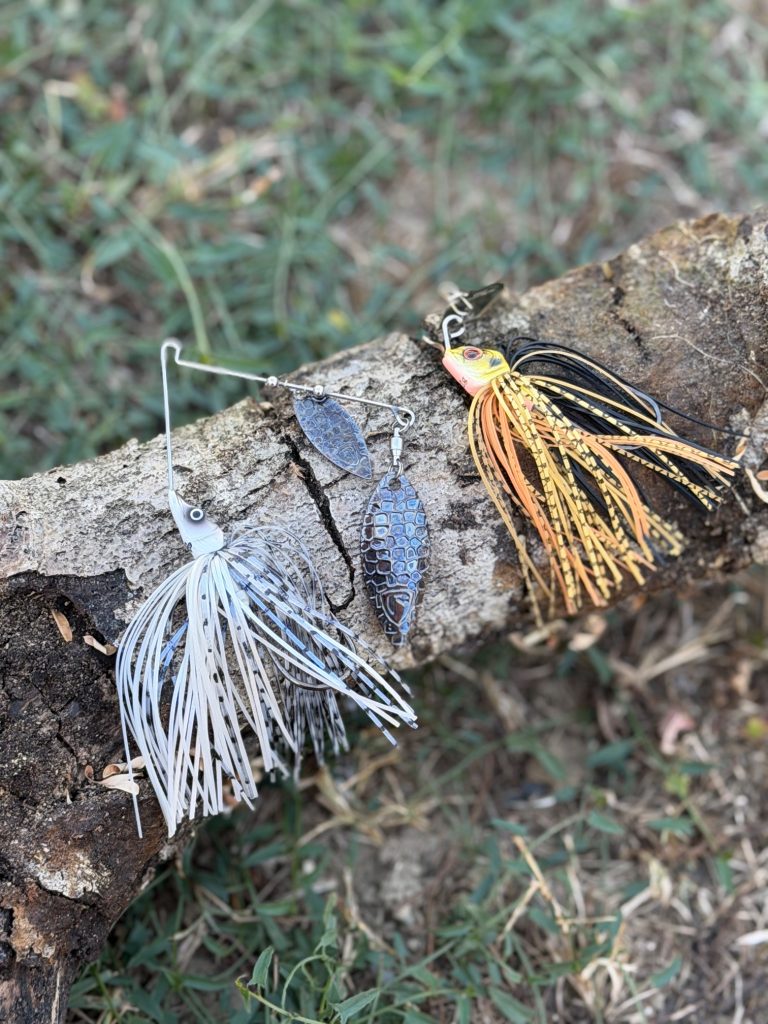
| Bladed jig / Chatterbait | Grass edges, shallow flats | Retrieve alongside vegetation with occasional speed changes |
| Texas-rigged worm | Isolated cover, slower fishing | Work gradually around wood, rocks, and weed edges |
| Topwater frog or buzzbait | Shallow water with surface activity | Controlled retrieve over suitable cover |
| Crankbait | Rock, points, relatively open water | Retrieve along structure without dragging hooks through heavy snags |
These are starting points rather than guaranteed full-moon combinations.
Do Dark Lures Work Better at Night?
Dark lures can produce a strong silhouette when viewed against a lighter background.
That makes black and other dark finishes reasonable options for nighttime bass fishing.
However, dark colors are not automatically the best choice under a full moon.
When water is relatively clear and enough light is available, natural-looking finishes may also work.
In stained water, lure vibration, displacement, and overall profile can become particularly useful.
The important question is whether bass can locate the lure and whether its movement creates an opportunity for a strike.
Do You Need Glow-in-the-Dark Lures?
No.
Glow finishes may help visibility under certain conditions, but they are not required for full-moon bass fishing.
A properly presented spinnerbait, bladed jig, soft plastic, or other conventional lure can work without glowing.
If choosing between moving lures, the FishingChief comparison of chatterbait vs spinnerbait explains how cover, vibration, flash, and depth should influence the decision.
Adjust Your Strategy to the Actual Conditions
A full moon is only one part of the fishing environment.
Its practical effect can change substantially depending on the conditions encountered.
Clear Water and Clear Skies
Under clear skies, a full moon can create relatively bright nighttime conditions.
Start with areas offering a combination of cover and accessible feeding water.
Try natural presentations where appropriate, but do not hesitate to use darker or more noticeable profiles if fish are not responding.
Approach shallow cover carefully and avoid unnecessary disturbance.
Cloudy Conditions
Cloud cover can greatly reduce the moonlight reaching the water.
Even though the lunar phase has not changed, the fishing environment may become considerably darker.
This is a good reason to avoid rigid rules about full-moon lure colors.
If visibility is poor, consider presentations with noticeable vibration or movement, especially where bass are likely to be holding close to cover.
Stained or Muddy Water
In stained water, limited underwater visibility may matter more than the amount of moonlight overhead.
Bass may need to encounter a lure at shorter distances.
Work likely holding areas thoroughly rather than relying exclusively on long, fast retrieves through open water.
Wind and Surface Movement
Wind can change where baitfish concentrate, how easily a lure is detected, and how much light penetrates the water.
A productive windblown bank may be worth more attention than a sheltered shoreline simply because it reflects the moon more clearly.
However, strong wind also creates practical difficulties for nighttime casting, boat positioning, and detecting bites.
Choose locations and presentations that remain manageable and safe.
Does a Full Moon Trigger Bass Spawning?
Moon phases are frequently associated with bass spawning, particularly in discussions about spring fishing.
However, there is an important distinction between a possible lunar influence and a reliable spawning schedule.
Largemouth bass spawning is strongly linked to seasonal conditions, particularly water temperature and suitable nesting habitat.
Some anglers use the full moon as an additional timing indicator during spring.
It should not replace observation of actual water conditions or fish behavior.
A full moon occurring when the water is unsuitable for spawning does not mean bass will suddenly begin nesting.
Similarly, bass may spawn during other lunar phases when environmental conditions are appropriate.
Where bass are nesting, avoid unnecessary disturbance and follow local seasonal restrictions and fishery guidance.
Common Full Moon Bass Fishing Mistakes
Assuming the Moon Guarantees a Bite
A full moon is not a substitute for locating fish.
If suitable structure is available and baitfish are present, those observations should influence your decisions more than a favorable-looking lunar calendar.
Fishing Only After Midnight
There is no universal rule requiring bass to feed most actively around midnight.
Sunset, early evening, sunrise, and daytime can all produce fish.
Plan your session around conditions and accessible locations instead of one supposedly magical hour.
Changing Lures Too Frequently
Night fishing makes it tempting to experiment with different colors and unusual presentations.
Before changing everything, check whether your lure is reaching the correct depth and moving through productive water.
A familiar lure presented accurately often makes more sense than constant experimentation.
Ignoring Nighttime Safety
Identify hazards before darkness.
Keep your landing net and essential equipment accessible, use suitable lighting, and avoid making blind casts toward people or unfamiliar obstacles.
When fishing from a boat, wear appropriate flotation equipment and use required navigation lighting.
Also verify that nighttime access and fishing are permitted at your location.
Bass Fishing on a Full Moon FAQ
Are bass more active during a full moon?
Lunar phase can influence largemouth bass activity and depth, but research has not identified a consistently repeatable full-moon activity pattern. Season, habitat, light, and other environmental conditions remain important.
Is full moon bass fishing better than new moon fishing?
Neither phase is consistently superior. A full moon offers more potential nighttime illumination, while a new moon produces darker conditions. The better fishing opportunity depends on local conditions and how bass respond.
Can you catch bass during the day on a full moon?
Yes. Bass remain catchable during daylight regardless of moon phase. Focus on cover, structure, depth, weather, and observed feeding activity.
Should you use black lures under a full moon?
Black lures can create useful contrast, but they are not mandatory. Natural colors, vibrating lures, and soft plastics can also work. Water clarity, cover, lure action, and fish response should guide your choice.
Does a full moon make bass move shallow?
Some bass use shallower water at night, but that does not establish a universal full-moon movement pattern. The available habitat, season, and local conditions determine whether shallow water is worth targeting.
Final Takeaway
Bass fishing on a full moon can be rewarding, particularly when clear skies create useful nighttime visibility and bass are accessible around productive cover.
However, the full moon does not guarantee stronger feeding activity or a predictable bite window.
Find suitable habitat before dark, work vegetation edges and depth transitions, and choose lures according to the conditions.
The most important variable remains finding bass and presenting a lure where they can reach it.
Treat the moon as useful context, not the deciding factor.