Good fishing tips for bass should help you answer three questions before you make a cast: where are the fish likely to be, what presentation can reach them effectively, and what should you change if they do not respond?
Bass fishing can become unnecessarily complicated because there are hundreds of lures, specialized rods, seasonal patterns and techniques to choose from. Most of them can work, but none matter much if the lure is being presented where there are no bass.
A simpler approach is to start with habitat and fish position. Find vegetation, wood, rocks, shade, depth changes or other features that give bass somewhere to feed or ambush prey. Then choose a lure that can fish that water cleanly and adjust based on what the fish actually do.
This guide focuses mainly on largemouth bass, although many of the same principles apply to other freshwater black bass.
Fishing Tips for Bass Start With Location, Not the Lure
One of the most useful fishing tips for bass is also one of the easiest to ignore: decide where a bass is likely to be before deciding what to throw.
Bass rarely distribute themselves evenly across a lake, pond or river.
A long stretch of featureless water may contain relatively little to target, while one fallen tree, weed edge, dock, rock pile or change in depth can concentrate fish into a much smaller area.
Start by looking for differences.
Where does thick vegetation end and open water begin? Does a shallow flat suddenly drop away? Is one section shaded while the rest is exposed to bright sun? Does a hard rocky bank change into mud? Is there a branch, stump or dock sitting beside deeper water?
Those transitions are usually more useful than casting randomly across identical-looking water. If you are fishing from a larger family boat, this guide to bass fishing from a pontoon boat explains how to work those same transitions while managing wind, positioning and casting space.
The same principle applies when bass are feeding away from obvious cover. Look for activity from baitfish, birds feeding over the water, surface disturbance or areas where wind and current may concentrate food.
A Simple Starting Point for Different Conditions
| Conditions | First Area to Check | Useful Starting Approach |
|---|---|---|
| Bright, calm conditions | Shade, deeper edges, thick vegetation | Slower or tighter presentation around cover |
| Windy conditions | Wind-affected banks, points, cover edges | Moving bait such as spinnerbait, bladed jig or crankbait |
| Stained water | Shallow cover and defined structure | Strong vibration, profile or contrast |
| Clear water | Vegetation edges, shade, deeper visible structure | Longer casts and more natural presentations |
| Heavy grass | Weed edges, holes and the top of vegetation | Weedless soft plastic or grass-friendly moving bait |
| Fallen trees and wood | Outside branches, shade and nearby depth | Spinnerbait, jig or weedless soft plastic |
None of these are guarantees.
They are simply places to begin instead of treating the entire water as equally productive.
Fish the Edge of Cover, Not Just the Cover Itself
Seeing a large patch of weeds or a fallen tree makes the target obvious.
What matters more is identifying the part of that cover a bass can actually use.
With vegetation, fish the outside edge, inside pockets, openings, points where the weed line extends farther out and places where two different vegetation types meet.
A large uniform weed bed can contain fish anywhere. An irregular edge narrows the possibilities.
With fallen timber, avoid automatically casting directly into the thickest branches. Start around the outside, especially where the end of the tree reaches deeper water. Then progressively work farther into the cover if the tackle allows it.
The same idea works around docks, rocks, reeds and artificial structure.
Bass often use an edge because it allows them to remain close to cover while still having access to open water where prey can be intercepted.
Depth Is Part of the Cover
Cover visible above the surface is only half the picture.
A small bush beside a sharp drop may be much more useful than a spectacular fallen tree sitting in extremely shallow featureless water.
Try to understand what happens beneath the surface.
If possible, note where the bottom drops, where vegetation stops growing, where a point extends underwater or where a channel approaches the bank.
One of the most transferable fishing tips for bass is to look for combinations rather than individual features.
Vegetation beside deeper water is more interesting than vegetation alone.
Wood beside a drop is more interesting than wood alone.
Shade combined with structure gives a fish several reasons to occupy the same small area.
Do Not Fish the Same Depth All Day
Bass position can change even when they never leave the general area.
A shallow edge that produces at first light may become quiet later. Fish may move deeper, push beneath heavier cover or remain nearby but become less willing to chase.
The reverse can happen later in the day or as conditions change.
That makes depth one of the first variables worth adjusting.
Before abandoning a productive area entirely, try working above the cover, through it and along its deeper edge.
A shallow lure that receives no attention does not prove that the area is empty.
That does not mean you should automatically fish a predetermined depth at a particular hour.
Water clarity, vegetation, weather, available prey, local depth and fishing pressure all change the pattern.
Use the idea as a reminder to adjust rather than as a depth chart.
Choose a Bass Lure That Fits the Cover
Bass can be caught on soft plastics, jigs, crankbaits, spinnerbaits, bladed jigs, topwaters, jerkbaits and countless other presentations.
That variety becomes easier to manage when lure selection begins with the water rather than the tackle box.
Dense grass immediately eliminates some poor choices.
A lure covered in vegetation after every cast cannot fish effectively regardless of how popular it is.
Heavy vegetation often favors weedless soft plastics, frogs over surface mats, or moving lures that can be worked along the edge or through less-dense sections.
Wood creates a different problem. An exposed treble-hook lure may constantly snag branches, while a spinnerbait or weedless plastic can often be worked through the same area more effectively.
Open rocky water gives you far more freedom to use crankbaits and other hard lures.
The point is not to identify one universal “best bass lure.”
The best lure is one that reaches the fish, works at the required depth and can be retrieved properly through the available cover.
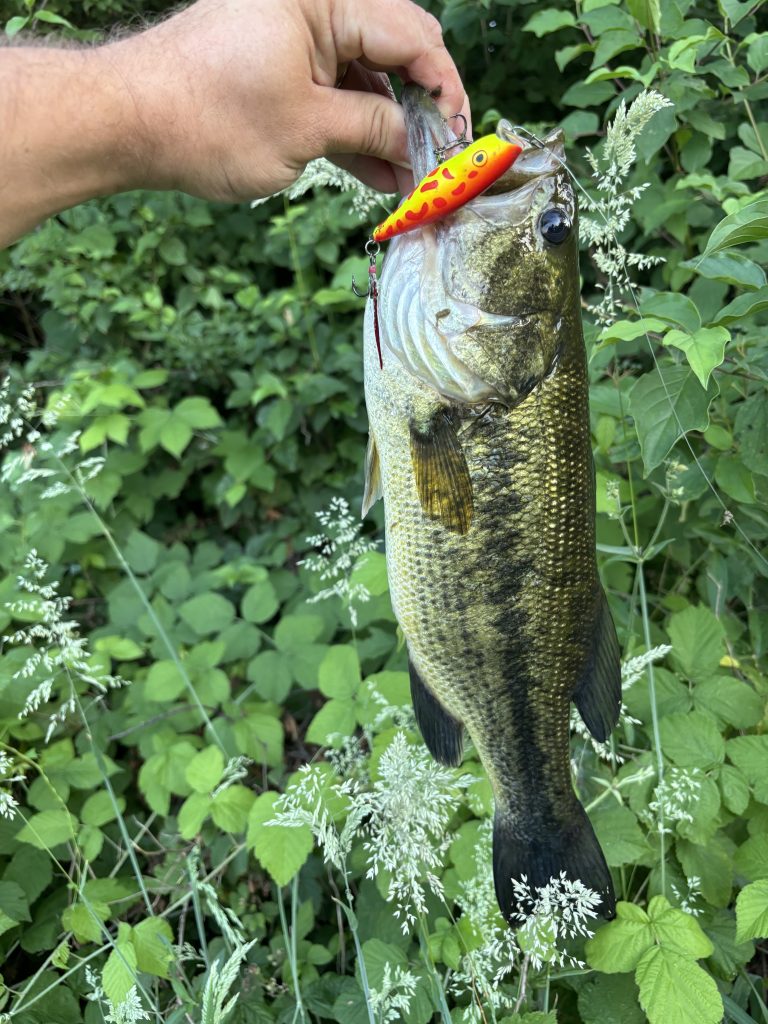
If you are choosing between two common moving presentations, our guide to chatterbait vs spinnerbait explains how grass, wood, depth and retrieve style can make that choice much easier.
Use Moving Baits to Search
Moving lures allow you to cover water quickly.
Spinnerbaits, bladed jigs, crankbaits and similar presentations are useful when bass are active or when you are trying to locate fish across a larger area.
Do not simply cast them straight out and reel at exactly the same speed every time.
Bring them beside cover.
Follow weed edges.
Change the retrieve speed.
Allow the lure to contact rock or occasionally change direction where it can be done without constantly snagging.
Bass may respond to the disruption rather than a perfectly repetitive retrieve.
Slow Down When Fish Will Not Chase
A slower presentation becomes useful when you have found promising water but moving baits receive no response.
A Texas-rigged soft plastic, stick bait, jig or another slower presentation lets you spend far more time around a particular piece of structure.
This is especially useful around isolated cover.
Instead of making five fast casts past the same stump, put something close to it and give a nearby fish time to react.
Neither approach should become permanent.
Fast presentations help locate active fish. Slower presentations help thoroughly work areas where there is a strong reason to believe bass are present.
Change Retrieve Speed Before Changing Everything Else
One of the easiest mistakes in bass fishing is changing lure after lure without learning anything from the previous one.
Retrieve speed can completely change how the same lure behaves.
A faster retrieve may keep a moving lure above vegetation and trigger aggressive fish.
A slower retrieve can keep it deeper or give less-active bass more time to intercept it.
Soft plastics are even more flexible.
They can be dragged steadily, hopped, shaken, paused or allowed to fall beside cover.
If a lure has already produced a follow, bump or missed strike, changing the speed or pause is often more logical than immediately cutting it off.
The fish has already shown that the presentation is close enough to attract attention.
Let Bass Tell You What to Change
A completely dead area gives you little information.
A fish following a lure but refusing to strike gives you much more.
So does a bass that bumps a lure, misses it, strikes only when it pauses or repeatedly appears beside the same piece of cover.
Treat those reactions as information.
If bass follow but will not commit, try changing retrieve speed, size or profile.
If strikes occur immediately after the lure contacts vegetation, rock or wood, try deliberately creating more of those changes in direction.
If fish repeatedly strike behind a moving bait, slowing down or reducing the profile may help.
And if the rod is receiving obvious strikes but the fish are not staying attached, do not assume lure selection is the problem. The guide to fish hitting your lure but not getting hooked covers hook condition, short strikes and hook-setting problems in more detail.
Good fishing tips for bass should make this process simpler: change one meaningful variable at a time.
Otherwise, when a fish finally bites, you will have no idea which change actually mattered.
Approach Shallow Water Quietly
Not every bass is twenty metres from the bank.
Shallow cover can hold fish surprisingly close, particularly where vegetation, shade, wood or a depth transition gives them somewhere useful to sit.
Walking straight to the edge and immediately launching a maximum-distance cast can disturb precisely the water that should have been fished first.
Approach quietly.
Look into the near-shore water before stepping directly onto the bank.
Make short casts to close cover first where appropriate, then progressively work farther away.
This is especially important on smaller ponds and clear water where your movement can be much more obvious.
For a complete bank-specific approach, see our guide to bass fishing from shore. It covers casting angles, shoreline cover, tackle selection and mobility in much more detail.
Pay Attention to Shade, Wind and Light
Bass fishing conditions do not remain static throughout a session.
A shoreline that looks unremarkable at midday may become useful when the sun moves and creates shade.
A calm bank can change rapidly when wind begins pushing onto it.
Cloud cover can reduce light penetration and allow bass to use water differently than they did under strong sunshine.
Instead of thinking only in terms of “good weather” or “bad weather,” ask what has physically changed.
Has visibility changed?
Has the location of shade changed?
Is wind creating surface disturbance?
Has bait moved?
Has water started moving through an inflow?
Those changes can reposition both bass and the prey they are looking for.
The response should be practical.
Follow the changing conditions instead of remaining attached to the place that worked three hours earlier.
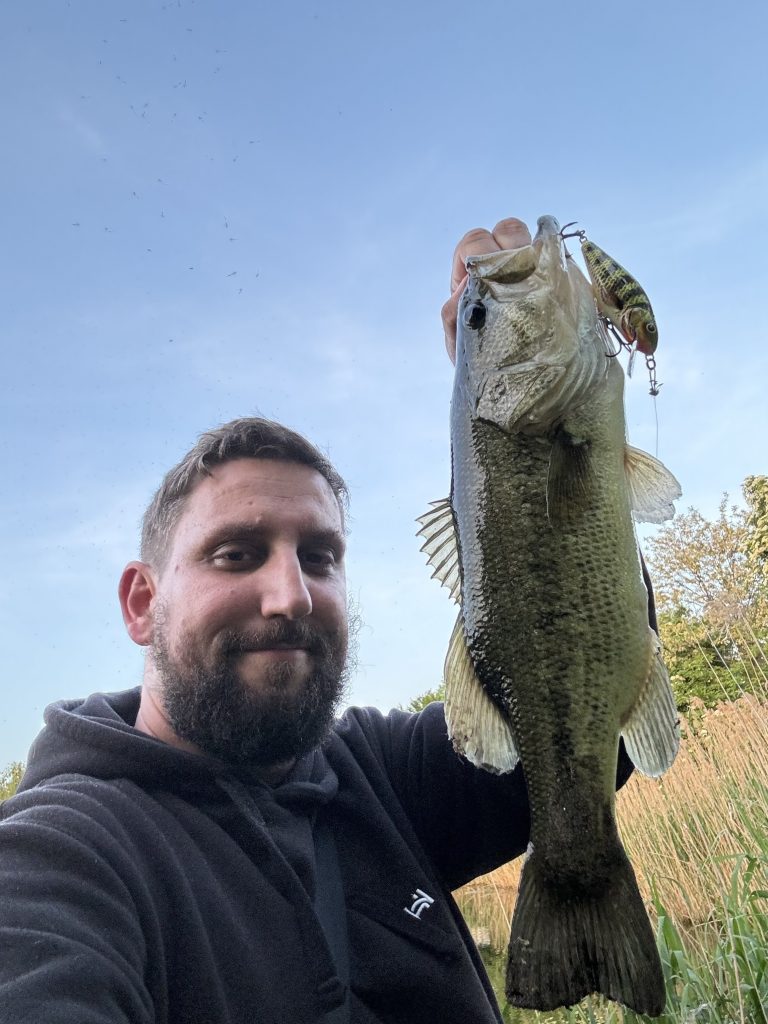
Seasonal Fishing Tips for Bass
Season matters, but the calendar should not replace observation.
Bass respond to water conditions, and the same date can produce very different temperatures and fish positions in different regions.
Spring
As water warms, largemouth bass commonly spend increasing amounts of time in shallower areas.
Protected bays, flats, vegetation, wood and other shallow cover become important areas to investigate.
Spawning behavior can also dramatically affect fish position.
The exact timing varies with climate and local water conditions, so temperature and visible fish behavior are more useful than a specific month.
Summer
Warm conditions can spread bass across several different types of habitat.
Early and late periods may produce shallow activity, while bright daytime conditions can push some fish toward deeper edges, heavy vegetation, shade or other protected areas.
Do not interpret a quiet shallow flat at midday as proof that bass have stopped feeding completely.
Check nearby depth and cover.
Autumn
Cooling water and moving forage can bring bass into areas that appeared empty during hotter periods.
This is a useful time for moving presentations because actively feeding fish may be scattered across larger areas.
Follow bait activity rather than assuming the exact location that worked during summer will remain productive.
Winter
Cold water normally calls for a different pace.
Bass may spend more time in deeper or more stable water and may become less willing to chase fast-moving presentations for long distances.
Slowing down, concentrating on high-percentage structure and making fewer but more deliberate changes becomes more useful.
These seasonal fishing tips for bass are starting points, not rigid rules. Local water conditions should always override the calendar.
Do Not Ignore Small Pieces of Cover
Large objects attract anglers.
Bass do not require them.
A single isolated clump of grass can be important when the surrounding bottom is bare.
One branch lying in otherwise featureless water may hold a fish.
A tiny patch of shade can become significant on a bright afternoon.
The relative difference matters more than the absolute size of the object.
If one piece of cover is the only useful feature for twenty metres in either direction, fish it carefully.
That principle is particularly valuable on heavily fished water where every large dock and obvious tree receives constant attention.
Common Bass Fishing Mistakes
Choosing a Lure Before Looking at the Water
A favorite lure is useful until the conditions make it difficult to fish properly.
Look first. Choose second.
Fishing Only Obvious Cover
Large trees, weed beds and docks deserve attention, but subtle transitions can be equally useful.
Watch for changes in depth, bottom type, shade and vegetation.
Using One Retrieve All Day
Even the correct lure can be presented at the wrong speed.
Change pace, depth and pauses before abandoning a presentation that appears suitable for the water.
Changing Too Many Things at Once
Switching location, lure, color and retrieve simultaneously teaches you nothing.
Make deliberate adjustments.
Staying Too Long Without a Reason
Persistence is useful around productive-looking habitat.
Repeatedly casting to featureless water simply because a fish was caught there last month is different.
Move when the available evidence gives you no reason to stay.
Ignoring What a Missed Fish Told You
A follow, short strike or missed hookup is still information.
The fish was interested enough to react.
Try a small adjustment before starting again with a completely different setup.
Fishing Tips for Bass FAQ
What is the best lure for bass fishing?
There is no single best lure for every condition. Choose according to cover, depth and fish activity. Weedless plastics are extremely versatile around cover, moving baits help search larger areas, and slower jigs or soft plastics are useful when bass are reluctant to chase.
Where should beginners look for bass first?
Start with obvious changes in habitat: weed edges, fallen trees, rocks, docks, shade, points and depth changes. Bass are much easier to target when you reduce a large body of water into a collection of smaller high-percentage areas.
Is bass fishing better in the morning or evening?
Low-light periods can be productive, particularly for shallow and surface activity, but bass can be caught throughout the day. During brighter conditions, check shade, vegetation, deeper edges and other areas that provide suitable habitat.
Should you fish fast or slow for bass?
Use fish response to decide. Faster presentations are useful for locating active fish and covering water. Slow down when promising areas receive no response or when bass appear interested but unwilling to chase.
What are the most important fishing tips for bass beginners?
The most important fishing tips for bass are to find productive habitat before worrying about lure details, choose a presentation suitable for the cover, fish several depths and retrieve speeds, and use every follow, strike or missed fish as information about what to change next.
Final Takeaway
The best fishing tips for bass are rarely secret lure tricks.
Find a reason for the fish to be where you are casting.
Look for cover, edges, shade, depth changes, bait and combinations of those features. Choose a lure that can fish that water properly rather than selecting one because it happens to be popular.
Then adjust.
Fish higher or deeper. Speed up or slow down. Move from the middle of the cover to its edge. Switch from a searching presentation to something slower when the location looks right but bass will not chase.
Most importantly, watch what happens after every cast.
Bass that follow, strike, miss, move or repeatedly appear around the same feature are giving you information.
Learning to use that information will catch far more fish than constantly searching for one perfect lure.