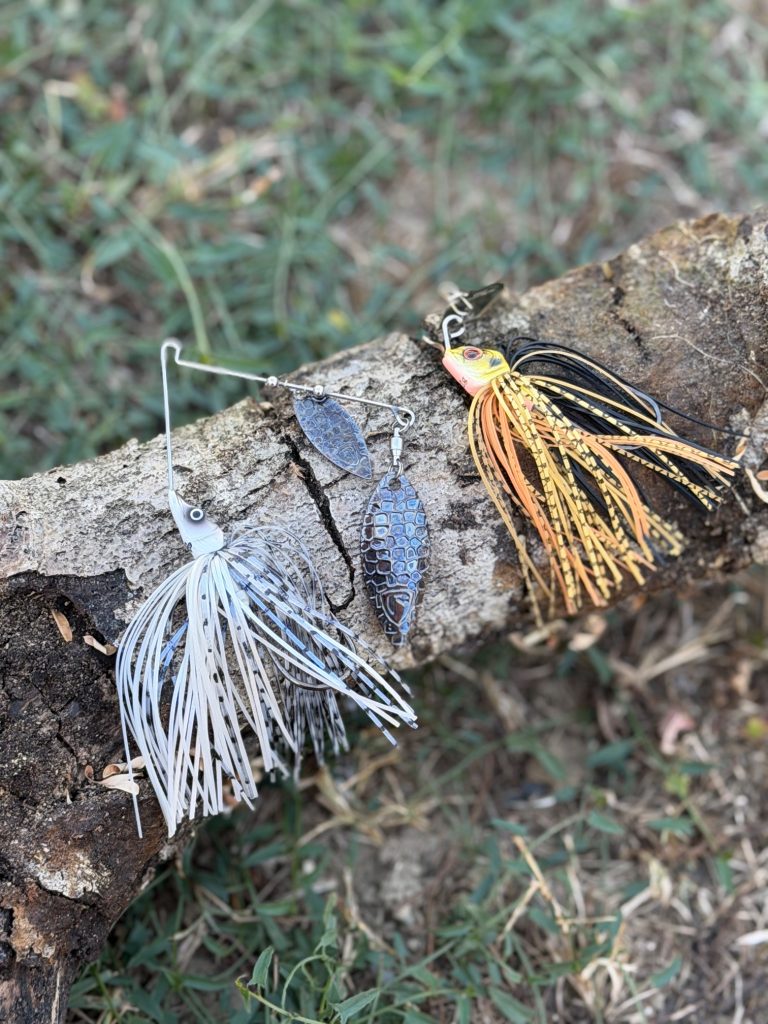
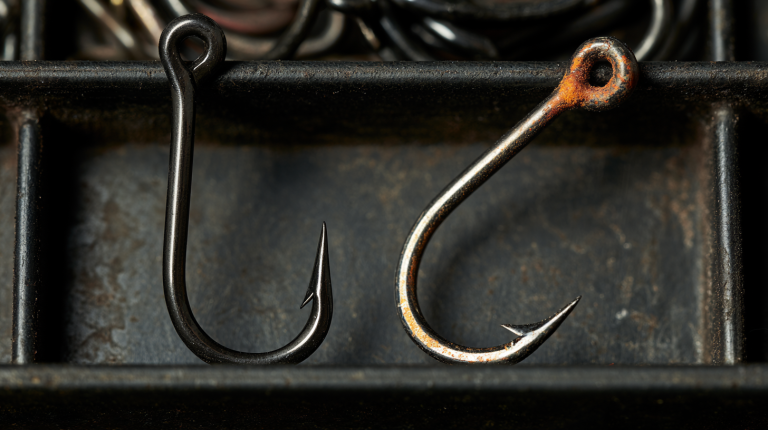
Fishing hook color is easy to overthink. Walk through enough tackle aisles and you will find hooks that appear black, bronze, silver, gold, red and even fluorescent colors, often with anglers claiming that one catches more fish than another.
The truth is less dramatic.
Fish can perceive color, and the appearance of an exposed hook can theoretically change how noticeable it is. But there is no good reason to treat hook color as more important than hook size, shape, sharpness, wire diameter or how the bait or lure is presented.
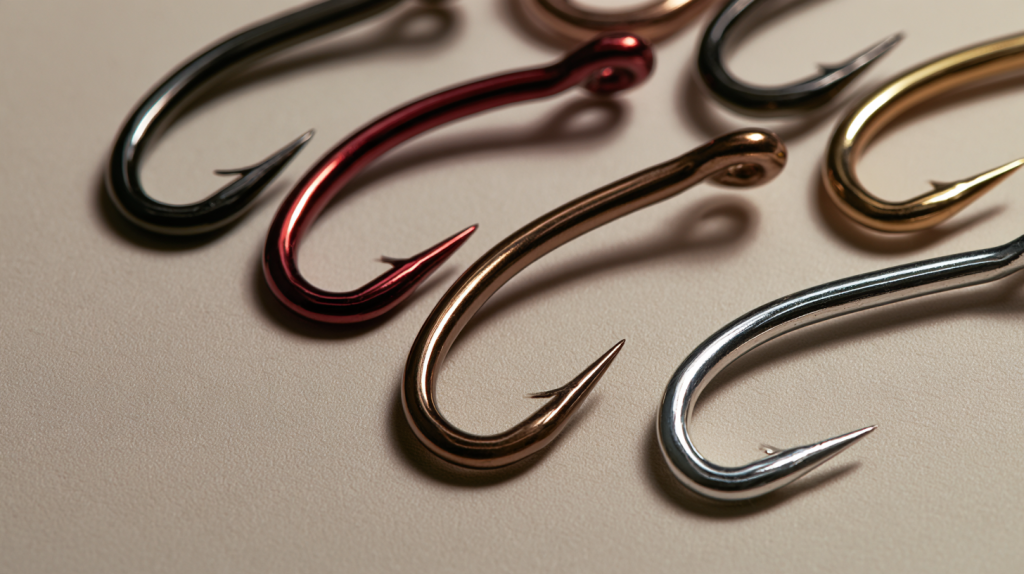
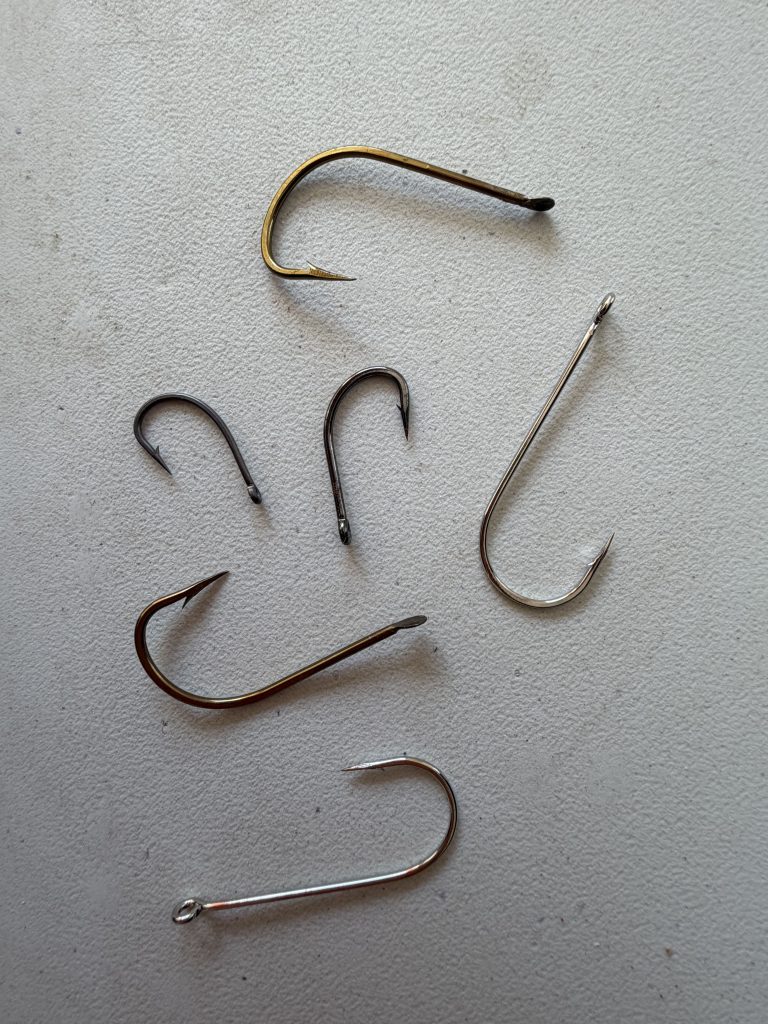
There is another important distinction too: many of the “colors” anglers see on hooks are actually surface finishes, plating or coatings applied to the metal. A gold, silver or dark hook is not necessarily made from a differently colored metal.
Does Fishing Hook Color Matter?
Fishing hook color can matter, but usually not enough to make it the first thing you should change.
An exposed hook is part of the complete visual presentation seen by a fish. Change the hook from dull black to reflective silver and the appearance of that presentation changes slightly. Make it red or fluorescent and the difference can become more noticeable under suitable lighting.
That does not automatically mean the fish prefers one version.
Fish species also do not all see the underwater world in exactly the same way. Their visual systems differ, as do water clarity, depth, available light and the background against which the hook is viewed.
The size of the hook relative to the overall presentation matters as well.
A small hook almost completely hidden by a large piece of bait is unlikely to dominate what the fish sees. An exposed hook beside a tiny bait or finesse presentation represents a much larger part of the visual target.
That is why fishing hook color is better considered a presentation variable than a rule.
Fish Can See Color — But That Does Not Mean They Prefer a Colored Hook
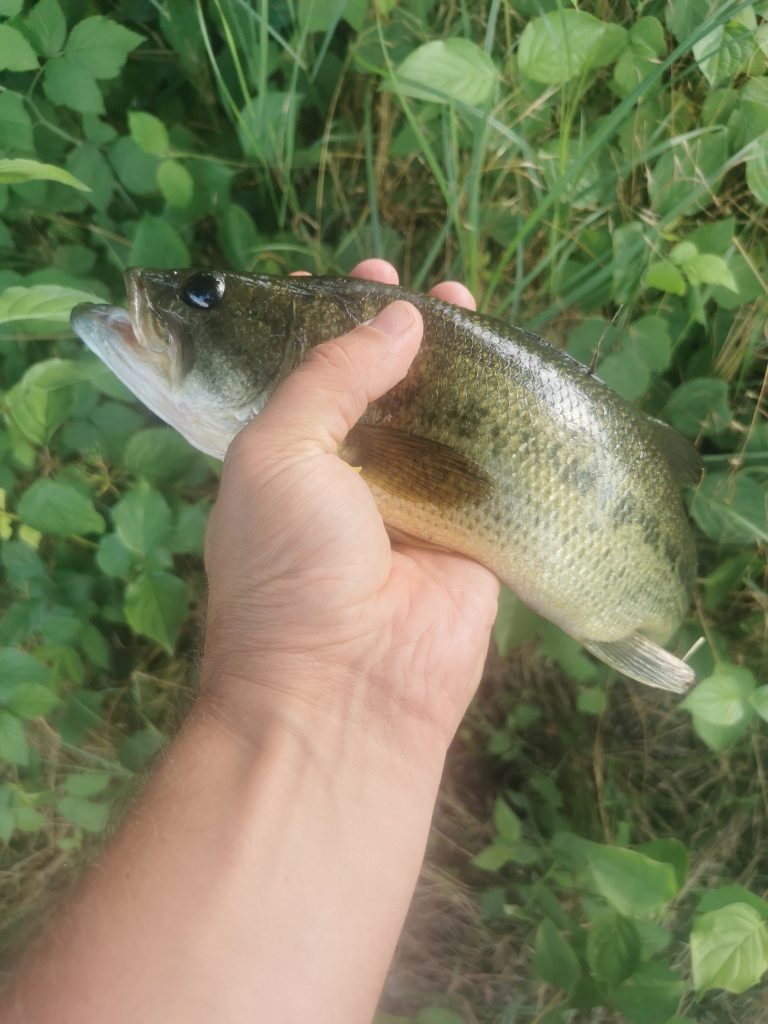
Largemouth bass provide a useful example.
Scientific research examining the bass visual system found that largemouth bass possess color vision based around green- and red-sensitive cone cells. Behavioral experiments also showed that bass could distinguish red and green from several other visual targets.
So the idea that bass cannot see the color of a red hook is wrong.
However, being capable of seeing red does not tell us whether a bass is more likely to attack a red hook.
Recognition and preference are two different things.
A fish can notice an object without finding it attractive.
Fishing Hook Color vs Hook Finish
This is where the terminology becomes confusing.
When anglers talk about fishing hook color, they may actually be comparing different finishes.
Common examples include:
- black nickel or other dark finishes;
- bronze;
- nickel or silver-colored finishes;
- gold finishes;
- red coatings;
- fluorescent coatings.
The finish can affect more than appearance. Depending on the hook, plating or another protective coating may also help protect the underlying steel from corrosion.
That means two hooks that appear different may still be manufactured from similar underlying material.
Your gold, silver and dark hooks are a good real-world example. Photographing them together works perfectly for this article precisely because they show how three hooks can have distinctly different appearances because of their finishes.
Color and corrosion resistance should still be treated as separate questions. A dark hook is not automatically more corrosion resistant than a silver one, and a shiny finish does not tell you everything about the steel underneath.
Anyone interested in durability as well as appearance should also understand how hook material and protective coatings affect corrosion.
What Different Fishing Hook Colors Actually Change
The most useful way to think about hook color is in terms of contrast, reflection and visibility.
| Hook finish/color | Typical visual effect | Good reason to choose it |
|---|---|---|
| Black / black nickel | Dark, low reflection | Neutral general-purpose option |
| Silver / nickel | Bright, reflective | When some flash is acceptable or desirable |
| Gold | Warm metallic reflection | Alternative visible/reflective finish |
| Red | Strong color accent in suitable light | When deliberately testing added visual contrast |
Dark and Black Nickel Hooks
Dark hooks are probably the easiest general-purpose choice.
A black or black-nickel hook does not guarantee that fish cannot see it. Against some backgrounds it can actually create a strong silhouette.
What it generally avoids is bright metallic reflection.
That makes dark finishes particularly easy to use when the hook is exposed beside natural-looking soft plastics, worms or other baits and you do not deliberately want the hook itself to become part of the attraction.
If there is no specific reason to choose another color, a quality dark hook is a perfectly sensible default.
Silver and Nickel Hooks
Bright nickel and silver-looking hooks can reflect available light more strongly.
That can make the hook more noticeable, especially in relatively clear water and good light.
Whether that is good or bad depends on the presentation.
A small flash next to a bait may be irrelevant, may contribute attraction, or may simply be another visible piece of terminal tackle.
There is no universal rule saying shiny hooks scare fish.
The important point is that a reflective silver hook and a dull dark hook do not necessarily present exactly the same visual signal.
Gold Hooks
Gold finishes create another reflective option.
Gold hooks are particularly familiar in some bait-fishing and small-fish applications, but the finish should not be treated as having some inherent ability to make fish bite.
The same principle applies as with silver.
If the exposed hook reflects light, it may become part of what attracts the fish’s attention. In another situation, the angler may prefer a less conspicuous hook.
That is something to test rather than assume.
Red Fishing Hooks
Red hooks generate more mythology than almost any other fishing hook color.
One common claim is that red resembles blood and therefore makes a fish attack.
That sounds plausible enough to become fishing folklore, but it should not be presented as established fact.
With bass, we know something much more useful: they can see red.
That means a red hook may genuinely create a visible accent in the presentation.
Whether the fish interprets that accent as prey, injury, danger or nothing particularly important is another question entirely.
Another common claim is that red hooks become “invisible” underwater.
That is also too simplistic.
Red wavelengths are absorbed relatively quickly as light travels through water, so a red object can lose its bright red appearance as conditions change. The physical hook does not disappear. It can simply become darker and provide a different contrast against its surroundings.
What Is the Best Hook Color for Bass Fishing?
For most bass fishing, there is no need to build a tackle box around different hook colors.
If choosing one general-purpose option, black nickel or another dark finish is a practical starting point.
That is not because research has proved black hooks catch more bass.
It is because a dark quality hook works with almost every soft-plastic presentation without deliberately adding a bright reflective or colored element.
Then experiment when there is a reason to.
A red hook can be tested when you want an additional visible accent.
A bright finish can be tried when the exposed hook forms part of a small finesse presentation.
A dark hook can be preferred when the goal is to keep the hardware visually understated.
What should not change is the order of priorities.
For bass fishing, select:
- the correct hook style for the technique;
- an appropriate hook size;
- suitable wire strength;
- a genuinely sharp point;
- and only then worry about fishing hook color.
A perfectly colored hook of the wrong size is still the wrong hook.
When Hook Color Is Most Likely to Matter
Fishing hook color becomes more worth considering when the hook makes up a noticeable part of what the fish sees.
Clear Water
Clear water gives fish more opportunity to visually inspect a presentation.
That makes differences in reflection, silhouette and contrast more relevant than they would be when visibility is only a few inches.
An Exposed Hook
The more hook that is visible, the more logical it becomes to consider how that hook looks.
A largely concealed bait hook and a completely exposed finesse hook are two very different visual situations.
Small or Minimal Presentations
On a large lure, the hook may be only a tiny part of the complete package.
Beside a very small natural bait, fly or finesse presentation, the hook can represent a much greater proportion of what the fish sees.
Slow Presentations
A fish following or inspecting something slowly has more opportunity to see individual details than a fish making an immediate reaction strike.
That still does not prove hook color controls the decision, but it gives color a more believable opportunity to influence the presentation.
When Fishing Hook Color Probably Matters Very Little
There are plenty of situations where changing hook color should be far down the list.
If the hook is largely hidden inside or behind bait, changing from black to red is unlikely to transform the overall presentation.
The same applies when water visibility is extremely poor. Once the fish has very little visual information to work with, subtle differences between metal finishes become less useful to obsess over.
Color is also unlikely to fix a mechanical problem.
If you have fish biting but not getting hooked, inspect hook sharpness, bait placement, hook size and hook-setting technique before assuming the fish dislike the finish.
A dull red hook is still dull.
A perfectly sharp black hook that is completely buried inside an oversized piece of bait can still struggle to penetrate.
Function comes first.
How to Choose Fishing Hook Color Without Overthinking It
Start with the hook itself rather than the finish.
Pick a hook pattern suitable for the technique and fish being targeted.
Then choose the right size and wire strength.
Check that the point is sharp.
Only after those decisions are correct should fishing hook color become part of the equation.
For most fishing, there is nothing wrong with simply using the finish available on your preferred hook.
If two otherwise identical hooks are available in different colors, then experimentation becomes worthwhile.
Fish one for a meaningful period under the same conditions.
Then switch.
If one consistently produces better results, keep using it.
What does not help is changing hook color, bait, location, depth and presentation simultaneously and then crediting the first fish caught to the red hook.
Common Hook Color Myths
“Red Hooks Look Like Blood”
Maybe they create a red visual cue.
That is not the same as proving fish interpret a red hook as an injured prey animal.
Use red hooks because you want that visible accent or because you have confidence in them, not because the blood explanation has been scientifically established.
“Red Hooks Become Invisible”
No.
Their appearance changes as the underwater light environment changes, but the hook does not cease to create shape or contrast.
“Shiny Hooks Always Spook Fish”
There is no universal basis for that rule either.
A reflective hook may be more noticeable under certain conditions. More noticeable does not automatically mean less attractive.
“Black Hooks Are Invisible”
Black hooks can still contrast strongly against bright water, sky or bait.
Dark should mean less reflective, not invisible.
Frequently Asked Questions
Does fishing hook color really matter?
Sometimes, but usually as a secondary factor. Color can affect how visible or reflective an exposed hook appears, particularly in clear water. Hook size, style, sharpness and presentation normally deserve attention first.
What is the best hook color for bass fishing?
There is no scientifically proven best color. Black nickel or another dark finish makes a practical all-purpose choice, while red or brighter hooks can be tested when you intentionally want the hook to provide additional visual contrast.
Are red hooks better for bass?
Not universally. Largemouth bass can perceive red, so red hooks are genuinely visible to them under suitable conditions. That does not prove bass consistently prefer a red hook or interpret it as blood.
Are gold fishing hooks good?
Yes. A quality gold-finished hook can catch fish perfectly well. The gold appearance may reflect more light than a dull dark finish, but there is no reason to assume gold is inherently better or worse in every situation.
Does a black hook scare fish less?
Possibly in some presentations, but black hooks are not invisible. A dark finish reduces bright metallic reflection, which is one reason many anglers use black-nickel hooks as a neutral default.
Is hook color the same as hook coating?
Not always, but they are closely connected. Many hooks get their visible appearance from plating, protective finishes or colored coatings applied over the underlying metal.
Final Takeaway
Fishing hook color is worth understanding, but not obsessing over.
Fish can see colors, and changing from a dull dark finish to reflective silver, gold or bright red can change how an exposed hook looks underwater.
What the evidence does not give us is a universal winning color.
Start with the right hook style, size, wire and sharpness. Use a dark finish as an easy general-purpose choice if you have no reason to do otherwise, and experiment with brighter colors when you deliberately want more visibility.
A hook has to function properly before its color has any chance of helping.