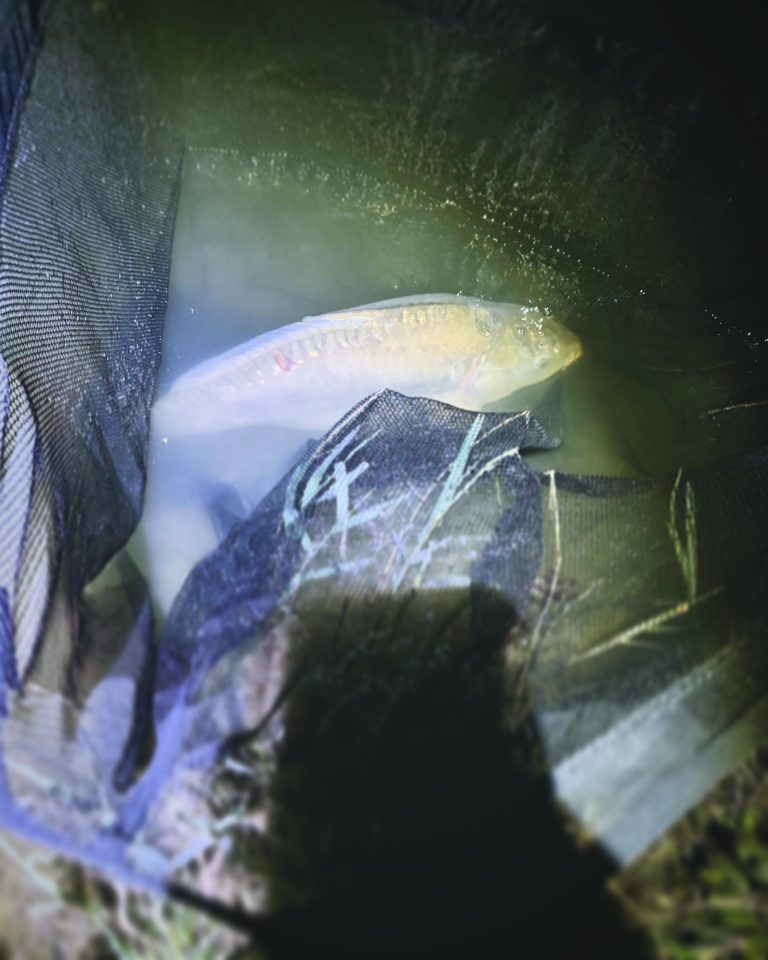
Do glow in the dark lures work? Yes, they can—but not because fish are automatically attracted to anything that glows.
A glow finish can make a lure easier to detect when natural light is limited, including at night, in deeper water, and during other low-light situations. Whether that extra visibility produces more bites depends on the species, water clarity, lure action, glow intensity, and whether the fish actually want a more visible target.
What Does “Glow in the Dark” Actually Mean?
It helps to separate three types of fishing lure that often get grouped together.
A true glow-in-the-dark lure normally uses a phosphorescent material. The lure absorbs energy from sunlight, a flashlight, UV light, or another light source and then releases some of that energy as visible light after the original light source is removed.
That is why you can charge a glow jig with a flashlight, turn the flashlight off, and still see the jig.
A fluorescent or UV-reactive lure behaves differently. It can appear exceptionally bright while suitable light is hitting it, but it does not necessarily continue producing visible light in complete darkness.
The same principle applies to fluorescent fishing line, which can become extremely visible under a black light without continuing to glow after the UV source is removed.
An LED lure is different again. It contains an active light source rather than relying on a coating that has been charged.
For ordinary fishing, the important distinction is simple: a phosphorescent glow lure can remain visible for some time after you charge it.
The strength and duration of that glow vary considerably between materials and products.
Why Can Glow Help a Fishing Lure?
Fish cannot strike a lure they cannot locate.
That does not mean every fish needs a clear visual view before attacking. Predatory fish can also use vibration, pressure changes, scent, movement, and other cues depending on the species.
But vision still matters for many fish.
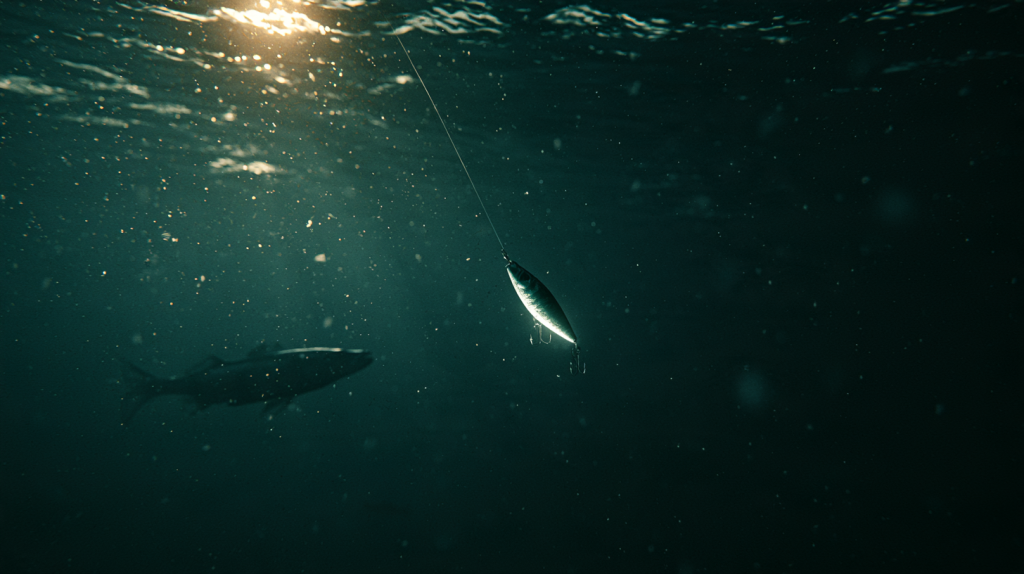
A glowing lure gives the fish another cue to work with when ambient light is limited. Instead of relying entirely on reflected sunlight or moonlight, the lure produces a small amount of visible light of its own.
Think of glow as a visibility tool, not a feeding trigger.
If a fish is already hunting near your lure, a faint luminous target may make the presentation easier to track. If the fish is not present, is not feeding, or dislikes the presentation, making the lure brighter will not solve the underlying problem.
Do Glow in the Dark Lures Work Better in Certain Conditions?
Definitely.
Glow has much more logical value in some situations than others.
| Fishing condition | Value of glow | Why |
|---|---|---|
| Night fishing | High | Gives fish an additional visual target when ambient light is limited |
| Dawn and dusk | Moderate to high | Useful as available light falls |
| Deep water | Moderate to high | Can help where considerably less surface light reaches the lure |
| Under ice / snow cover | Moderate | Useful where the water below receives reduced natural light |
| Stained water | Moderate | May improve close-range visibility, although suspended material also limits light |
| Very muddy water | Limited / situational | Vibration, scent, contrast, or displacement may become more important |
| Bright, shallow, clear water | Usually low | A standard natural or reflective finish is often already easy to see |
The important word is situational.
A glow lure does not suddenly become visible across a muddy lake. Suspended particles still scatter and absorb light, so the lure may only be detectable from a short distance.
Likewise, in shallow clear water during bright daylight, there may be little advantage in generating additional light when the fish can already see the lure easily.
Can Fish Actually See Glow Lures in Low Light?
Yes—provided the light emitted by the lure falls within wavelengths and intensities the particular fish can detect.
Fish vision differs considerably among species.
Walleye provide a useful example because they are particularly well adapted to low-light feeding. Recent measurements of adult walleye vision found peak low-light spectral sensitivity around 500–550 nm, within the green portion of the visible spectrum.
That helps explain why a greenish luminous target can remain visually relevant to a fish such as walleye in dim conditions.
But it does not prove that a glowing lure automatically catches more walleye.
Artificial light can create very different responses depending on the animal involved. Research with krill and cod, for example, found strong attraction of krill to certain light conditions while the cod themselves did not show the same direct attraction.
That distinction matters.
The practical lesson is not that green is always the best fishing lure color.
It is that fish can remain visually capable in surprisingly dim environments, and different species respond differently to light.
Glow Is Only One Part of the Presentation
A fish still has to interpret the lure as something worth attacking.
This is where anglers can put too much emphasis on color.
A glow finish cannot compensate for:
- fishing well above or below the fish,
- using the wrong retrieve speed,
- presenting an unnatural action,
- repeatedly fouling the lure with weed,
- fishing an unproductive area,
- or using a profile the fish simply are not responding to.
A lure combining useful action with subtle visibility usually makes more sense than choosing a poor lure purely because it glows.
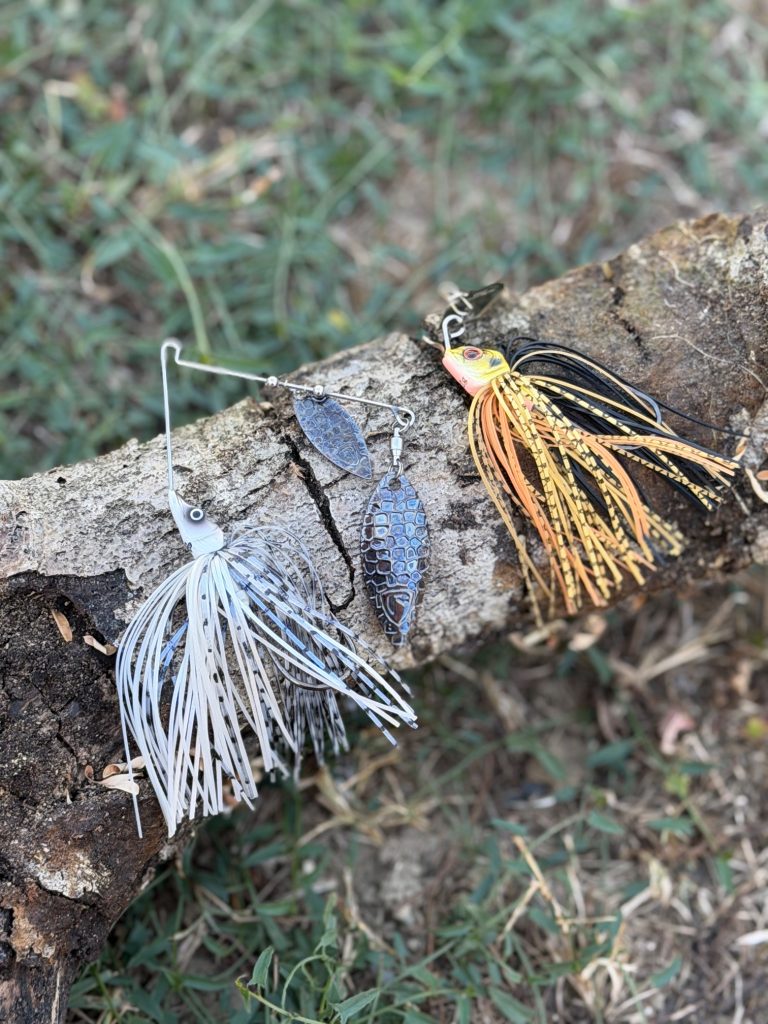
That same principle applies to other moving lures. The FishingChief guide to chatterbait vs spinnerbait explains how vibration, flash, cover, and lure action can matter just as much as color.
How Bright Should a Glow Lure Be?
Brighter is not automatically better.
A freshly charged lure may be extremely obvious. That can be useful when fishing deep or in particularly dark conditions, but a glaring lure in clear, shallow water may look very different from the prey fish normally encounter.
If fish are reluctant to commit, try allowing the lure to fade slightly before casting again.
You can also compare:
- fully charged glow,
- partially faded glow,
- and the same or similar lure with no glow.
That tells you considerably more than repeatedly fishing the brightest possible lure and assuming glow either “works” or “doesn’t.”
How to Charge a Glow Fishing Lure
Most phosphorescent lures need exposure to light before they produce a useful glow.
Sunlight and ordinary flashlights may work, while UV flashlights can be particularly effective with many glow materials.
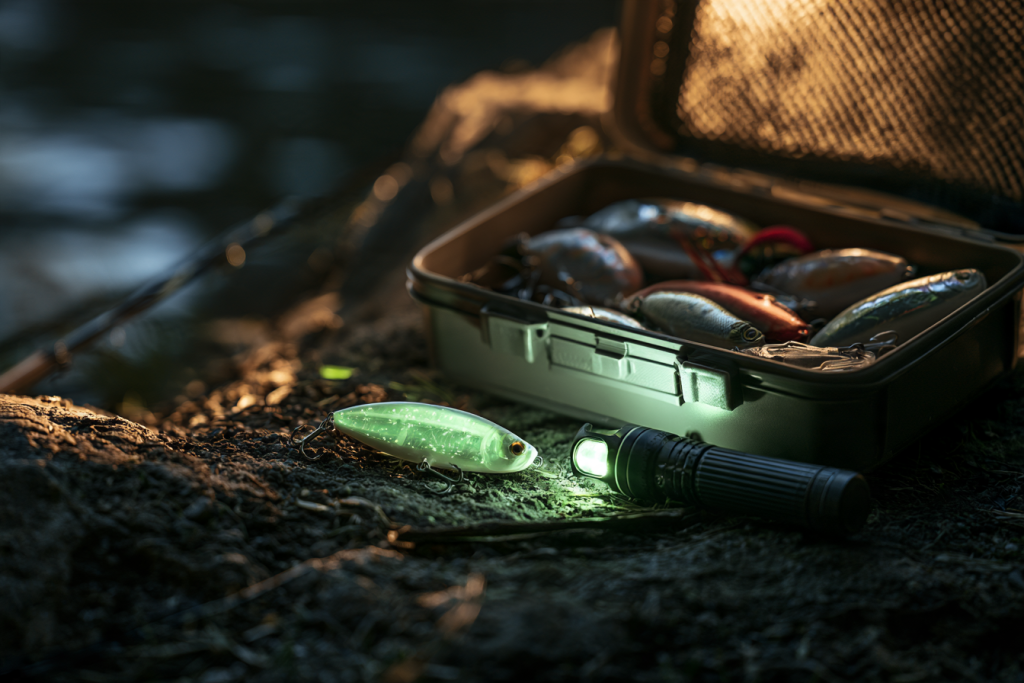
There is no universal charging time because different coatings behave differently.
Instead:
- Expose the lure evenly to the light source.
- Check the lure in darkness before casting.
- Fish it normally rather than constantly stopping to recharge it.
- Recharge when the glow has faded enough that you want more visibility.
- Experiment with different brightness levels instead of assuming maximum brightness is best.
A small light kept with your tackle makes the process much easier when fishing after dark.
When Should You Try a Glow Lure?
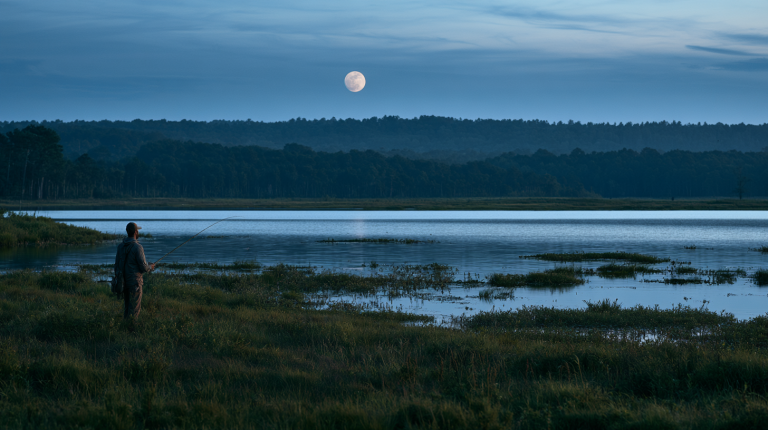
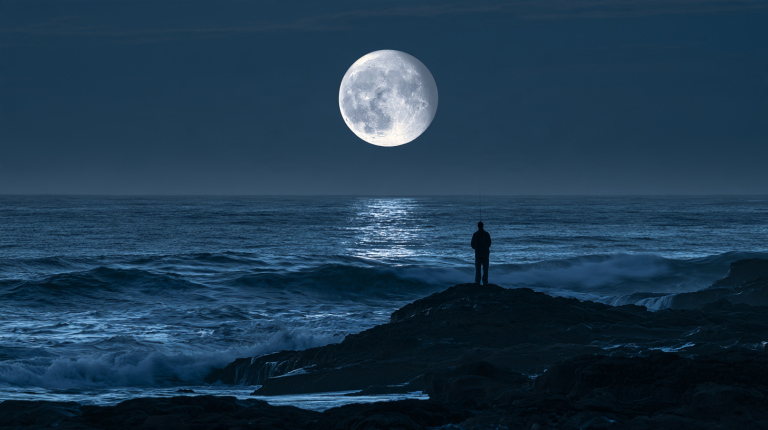
Night fishing
This is the most obvious application.
A glow jig, spoon, soft plastic, or other luminous lure provides a visible point that does not depend entirely on moonlight or shoreline lighting.
That can be particularly useful when fish are already hunting actively after dark.
Deep-water jigging
Depth removes light progressively from the underwater environment.
When fishing vertically well below the surface, adding a small luminous element can give fish another way to locate the lure.
This is one reason glow finishes are commonly associated with jigging.
Dawn and dusk
You do not need complete darkness before glow becomes useful.
The transition periods around sunrise and sunset reduce underwater illumination quickly, especially when clouds, waves, stained water, or depth are involved.
A lure that remains visible as conditions darken can therefore be worth testing.
Under ice
Ice, snow, depth, and the position of the sun can combine to create surprisingly dim water below the surface.
Glow jigs give ice anglers another visual option when fishing those conditions.
Stained water
Glow can be worth experimenting with, but expectations should remain realistic.
If suspended particles are heavily reducing visibility, they also reduce how far the lure’s light travels.
Use glow alongside a presentation that fish can detect in other ways rather than depending on illumination alone.
Can Glow Lures Be Too Bright?
Possibly.
A fish’s response to artificial light depends on the species and situation, so there is no universal brightness setting.
In very dark water, a freshly charged lure may be useful.
In relatively clear water with some moonlight or remaining daylight, a strong glow may be unnecessarily conspicuous.
The easiest solution is experimentation.
If a strongly charged lure is not producing, let it fade rather than immediately changing the whole setup. If that still fails, switch to a standard finish.
One of the advantages of phosphorescent tackle is that the brightness naturally declines, giving you several levels of glow without changing lures.
Do Glow Lures Work in Muddy Water?
Sometimes, but this is one area where glow is often oversold.
Muddy water limits light transmission.
That means a glow lure may be easier to see at close range while still being invisible to a fish farther away.
Predatory fish in poor visibility can also use cues other than sight.
A lure producing strong vibration or water displacement may therefore be easier for a fish to locate than a quiet lure that simply glows.
Do not treat muddy water as an automatic reason to reach for your brightest lure.
Think about the complete presentation.
Which Fish Can Be Caught on Glow Lures?
There is no useful list of species for which glow universally “works.”
Walleye are a logical candidate because of their excellent low-light vision. Glow jigs are also widely used for several species targeted through ice or in deep water.
Bass, trout, pike, crappie, perch, salmonids, and many saltwater predators can certainly strike luminous tackle.
But catching a species on a glow lure is not proof that the glow caused the strike.
The better question is whether extra visibility suits the conditions and feeding behavior you are seeing.
Use glow as one variable.
If two similar lures are available, fishing one with a glow finish and one without it is a much better test than comparing two completely different lure designs.
A Simple Way to Test Whether Glow Is Helping
Fishing does not need to become a laboratory experiment, but changing one variable at a time is useful.
Start with a lure you already trust.
Fish it normally.
Then use a comparable glow version at the same depth and roughly the same speed.
If the glow lure begins producing more consistently, keep using it. If the difference disappears as daylight increases—or the standard lure starts outperforming it—you have learned something about those particular conditions.
The fish get the final vote.
Glow Lure FAQ
Do glow in the dark lures work during the day?
They can catch fish during the day, but the glow itself normally offers less benefit when plenty of natural light already makes the lure easy to see. Deeper water or heavy cloud cover can make glow more relevant even during daylight.
Are glow lures good for night fishing?
Yes. Night fishing is one of the strongest situations for trying them because the lure can provide its own visible cue after being charged.
Does a UV flashlight make fishing lures glow?
A UV flashlight can efficiently charge many phosphorescent lure materials and can also make UV-reactive or fluorescent finishes appear extremely bright. Those are separate effects: a true glow lure continues emitting visible light after the flashlight is removed.
Are green glow lures better than other colors?
Not universally. Different fish have different visual systems, and water conditions also affect light transmission. Green glow is common and can be highly visible, but there is no reason to assume it is always the best color.
How long should a fishing lure glow?
There is no universal duration. Materials differ, and useful brightness fades gradually. Recharge the lure when you want more visibility rather than following an arbitrary number of casts or minutes.
Final Takeaway
So, do glow in the dark lures work? They can—and low-light conditions are where they make the most sense.
Treat glow as an additional visual cue rather than a secret fish-attracting ingredient. Night fishing, deep water, dawn, dusk, and other dark conditions are good times to test it.
But location, depth, action, vibration, retrieve speed, and fish behavior still matter more than whether the lure glows.
When in doubt, compare the glow version with a normal lure and let the fish decide.