
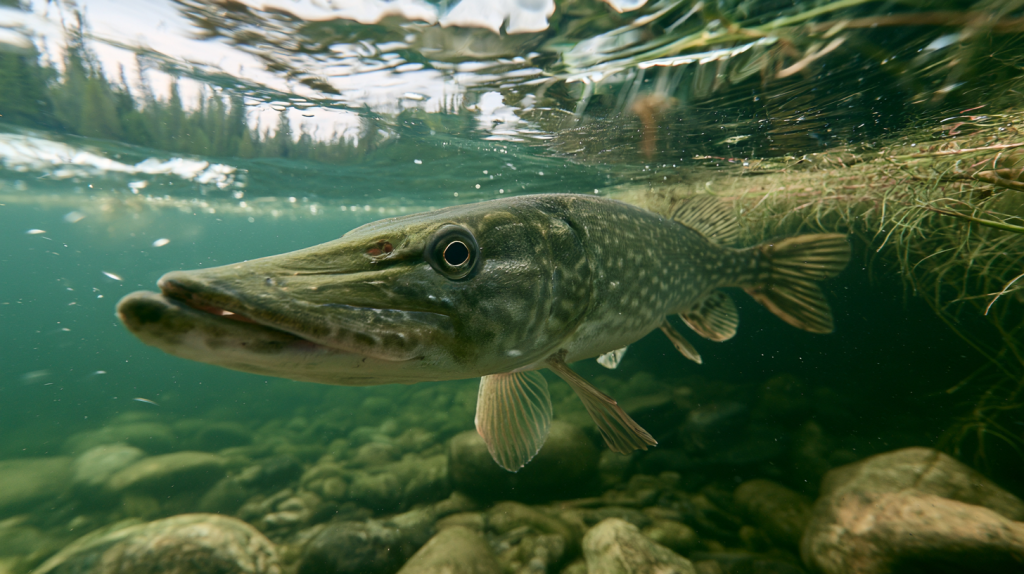
Do pike have teeth? Absolutely. Northern pike have an impressive collection of sharp teeth designed to grab slippery prey and keep it from escaping. Some are large and obvious along the jaws, while many smaller teeth are found farther inside the mouth.
For anglers, those teeth matter for more than appearance. They can damage fishing line, turn routine unhooking into a painful mistake, and explain why a bite-resistant leader is often part of a pike setup.
Do Pike Have Teeth Everywhere in Their Mouth?
A northern pike does not simply have one neat row of teeth around the edge of its jaw.
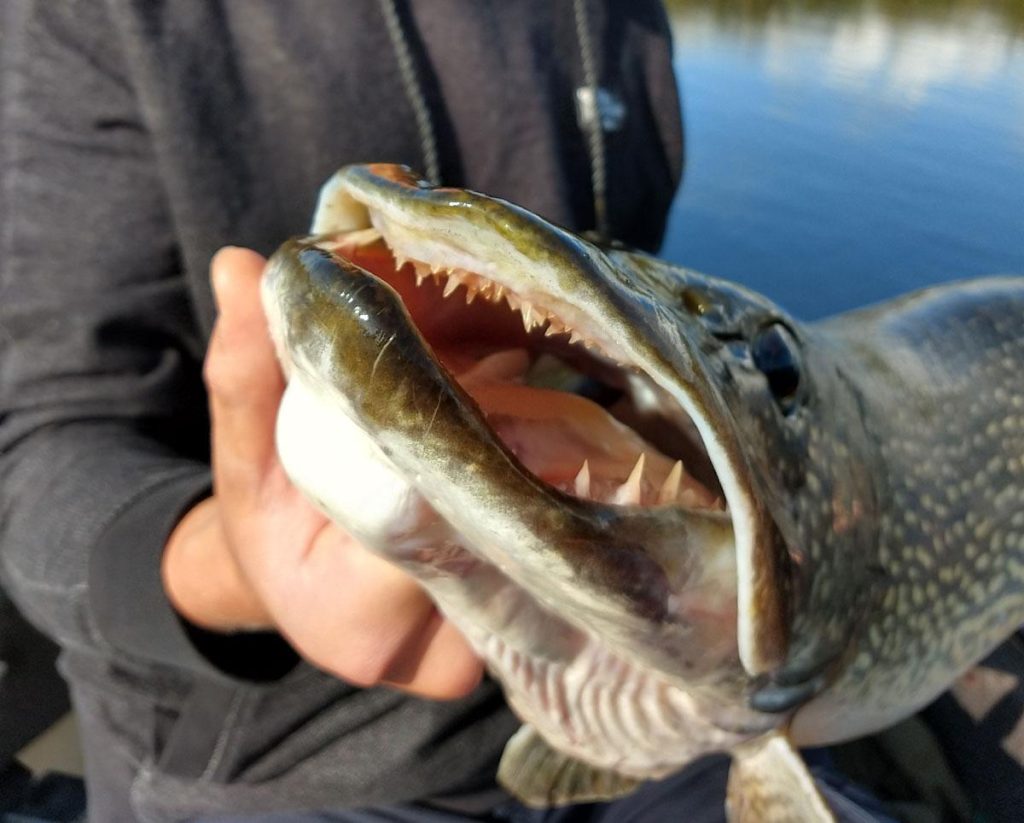
The most obvious teeth are the larger, pointed teeth associated with the jaws. The lower jaw carries particularly noticeable canine-like teeth. Farther inside the mouth are shorter, closely packed teeth on the roof of the mouth, and pike also have teeth associated with the tongue.
The Wisconsin DNR’s northern pike life-history profile describes pointed canine teeth around the lower jaw along with shorter, sharp, brushlike teeth on the roof of the mouth and tongue. A published microscopy study of the northern pike tongue also found numerous teeth across its surface.
That arrangement makes sense for an ambush predator. A pike attacks quickly and needs to prevent a struggling fish from sliding back out of its mouth.
Do pike have big teeth?
Some of them are certainly big enough to get an angler’s attention.
The prominent jaw teeth are considerably larger than the numerous smaller teeth farther inside the mouth. Looking only at those obvious outer teeth therefore gives a misleading impression of how much of the pike’s mouth is actually armed.
Pike also have sharp or tooth-like structures around the gill arches. These are not simply another row of ordinary jaw teeth, but they are another reason to be careful when handling the head of a fish. Missouri’s Department of Conservation describes tooth-like projections on the gill arches, while the U.S. Fish and Wildlife Service similarly warns that the area inside the gill cover can be sharp.
What are pike teeth actually for?
Pike are built to catch prey rather than chew it into pieces.
The larger teeth help pierce and secure a fish during the strike. The smaller teeth deeper in the mouth provide additional grip and make it much harder for prey to work its way free.
Once a prey fish is under control, a pike can reposition and swallow it rather than grinding it with molar-like teeth.
| Pike tooth feature | Practical function |
|---|---|
| Large pointed jaw teeth | Pierce and grip prey |
| Smaller teeth inside the mouth | Help stop prey escaping |
| Teeth on the roof and tongue | Add grip farther inside the mouth |
| Tooth-like gill-arch structures | Another sharp area anglers should avoid |
| Continually replaced teeth | Maintain effective dentition despite wear and damage |
How Many Teeth Does a Pike Have?
There is no single tooth count worth treating as a universal fact.
Figures in the hundreds are regularly repeated online, with 300 to 700 teeth being an especially common claim. The problem is that the authoritative fisheries and scientific sources reviewed for this article generally describe northern pike as having many or numerous teeth rather than providing that fixed range.
Pike also carry teeth of different sizes in several areas of the mouth, and individual teeth are replaced during the fish’s life. Exactly what is counted can therefore matter.
For FishingChief, the responsible answer is simple: a northern pike has a large number of sharp teeth, but there is no need to pretend that every pike carries an exact, reliably established number.
What matters to an angler is that even the small teeth can grip, scrape, and cut.
Do Pike Lose Their Teeth?
Yes, individual pike teeth can be lost and replaced. No, healthy pike do not normally become toothless at a particular time of year.
This distinction matters because one of the longest-running pike-fishing myths claims that the fish lose their teeth during summer—or sometimes at another specific point in the season—and temporarily stop feeding.
Northern pike are polyphyodont, meaning teeth are replaced over the course of their lives. Scientific literature on pike tooth development supports continuous replacement rather than one synchronized event in which the fish suddenly loses its entire set.
A Montana fisheries publication addressing the same myth quotes a fisheries biologist who had handled tens of thousands of northern pike without encountering the supposedly seasonal, toothless fish. Individual teeth can be lost and replaced, but not as a wholesale annual shedding event.
So if pike fishing becomes difficult in midsummer, blaming missing teeth is not a useful explanation. Fish location, water temperature, available forage, fishing pressure, and presentation are all more productive things to investigate.
Can Pike Teeth Cut Fishing Line?
Yes. This is where pike teeth stop being an anatomy curiosity and become a tackle issue.
The Iowa DNR’s northern pike species page specifically notes that rows of sharp pike teeth can cut through most fishing line.
That does not mean every pike immediately cuts every line it touches. The angle of contact, line material, diameter, fish size, lure position, and how much the fish moves during the fight all matter.
But when deliberately fishing for pike, relying on ordinary main line all the way to the lure introduces an avoidable weak point.
Use a bite-resistant leader when targeting pike
Wire and titanium leader materials are designed specifically for toothy fish and offer strong bite protection. Heavy fluorocarbon leader material is also widely used for pike, especially where anglers want a less visible and more flexible connection.
Manufacturers sell both wire and heavy fluorocarbon specifically for pike and muskie applications.
Whichever leader material you choose, inspect it after a fish. A nicked or rough leader is cheaper to replace than a lost lure—or a pike swimming away with tackle in its mouth.
How to Unhook a Pike Without Getting Cut
A northern pike should not be handled like a largemouth bass.
Do not place your thumb or fingers inside its mouth. Even a relatively small fish has enough sharp teeth to cause a nasty cut, and a pike that suddenly twists while being unhooked can make the injury worse.
A safer routine is straightforward:
- Have long-nose pliers ready before the fish is landed.
- Keep the pike low and controlled rather than allowing it to thrash around the boat or bank.
- Keep fingers away from the mouth and gill filaments.
- Use the pliers to remove the hook without reaching deep into the mouth.
- If a hook is badly positioned, consider cutting the hook rather than repeatedly manipulating the fish.
- Return a fish being released to the water promptly once the hook and photographs are dealt with.
A rubberized landing net or suitable unhooking surface can also make controlling the fish easier.
The U.S. Fish and Wildlife Service specifically cautions that both the mouth and the area inside the gill cover contain sharp structures capable of cutting a handler.
The key is preparation. Looking for pliers after a lively pike is already on the deck is how fingers end up too close to the teeth.
Do Pickerel Have Teeth Too?
Yes. Pickerel belong to the same broader esocid group and are toothy predators as well.
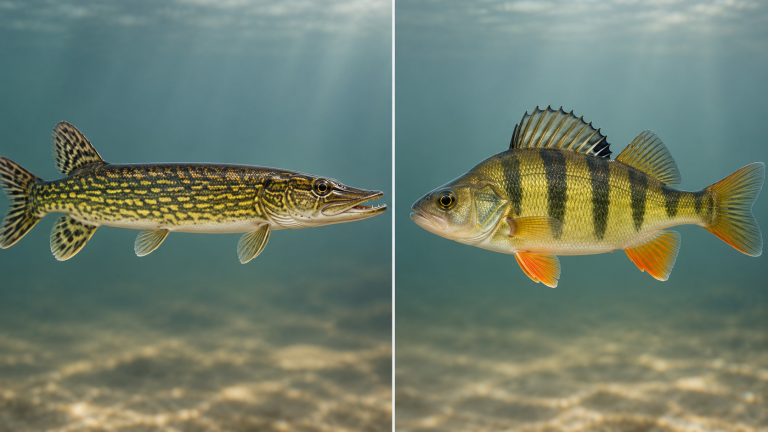
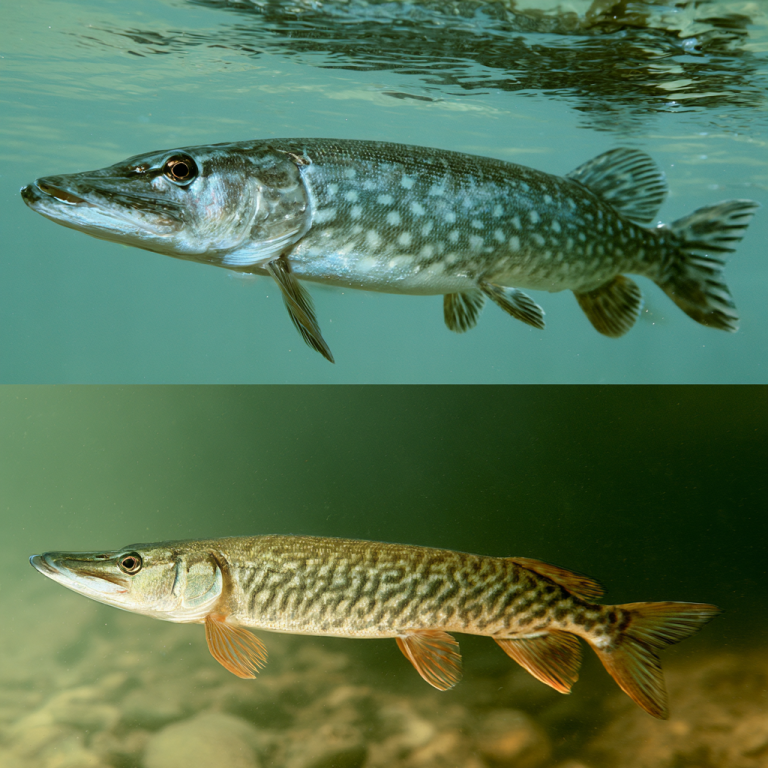
That can create another problem for anglers: a smaller northern pike and a chain pickerel can look similar at first glance, and both have enough teeth that putting a thumb in the mouth is a poor identification technique.
If you are trying to identify a toothy fish rather than study its mouth, the FishingChief pickerel vs pike comparison covers the body markings, facial features, fins, and other field clues that separate the two.
Pike Teeth FAQ
Do pike have teeth on their tongue?
Yes. Scientific examination of northern pike tongues has found numerous teeth on the tongue surface, and fisheries references also describe smaller teeth on the tongue and roof of the mouth.
Do pike lose all their teeth in summer?
No. Individual teeth are lost and replaced, but there is no established seasonal event in which healthy northern pike lose all their teeth and stop feeding.
Can pike bite through braided line?
Their teeth can damage or cut fishing line, including line that is otherwise very strong under straight pulling pressure. When pike are the target, use a leader designed to resist contact with teeth rather than depending on main-line breaking strength alone.
Are pike teeth dangerous to anglers?
They can cause significant cuts during handling. The practical danger is usually a hooked fish twisting while somebody has a hand too close to its mouth, so keep fingers clear and use long-nose pliers.
Final Takeaway
So, do pike have teeth? Yes—plenty of sharp ones, spread across more of the mouth than the obvious jaw teeth suggest.
The exact tooth count matters far less than what those teeth do. They grip prey extremely well, can damage fishing line, and deserve respect when a fish is being unhooked.
Use a bite-resistant leader when targeting pike, have long-nose pliers ready before landing one, and keep your fingers out of its mouth.

One Comment